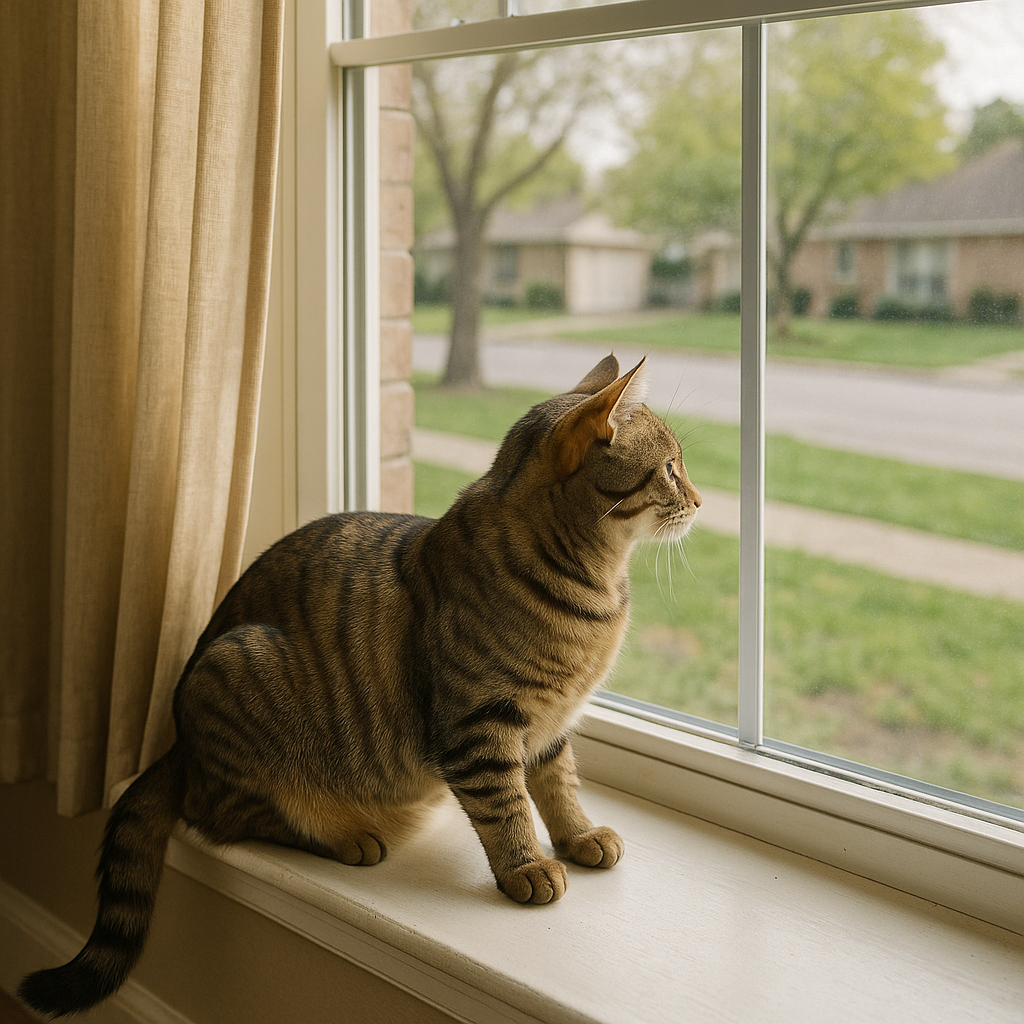
Eye traits in cats serve as genetic markers and breed signatures, often associated with coat color or pigment mutations. Some breeds carry genes that prevent melanin from developing in the eyes, while others have unexpected color changes or rare combinations that breeders have worked hard to preserve. These characteristics can also reveal parts of a cat’s ancestry or how a breed evolved.
Here are ten cat breeds whose eyes stand out for reasons beyond simple beauty.
Siamese
The reason Siamese cats have such striking blue eyes is due to a temperature-sensitive pigmentation gene. That same gene does not allow pigment to form in the iris, which leaves the eyes clear and light‑reflective rather than truly blue. Light scattering within the eye creates the color people see. This genetic trait also gives rise to the breed’s distinctive pointed coat pattern.
Russian Blue
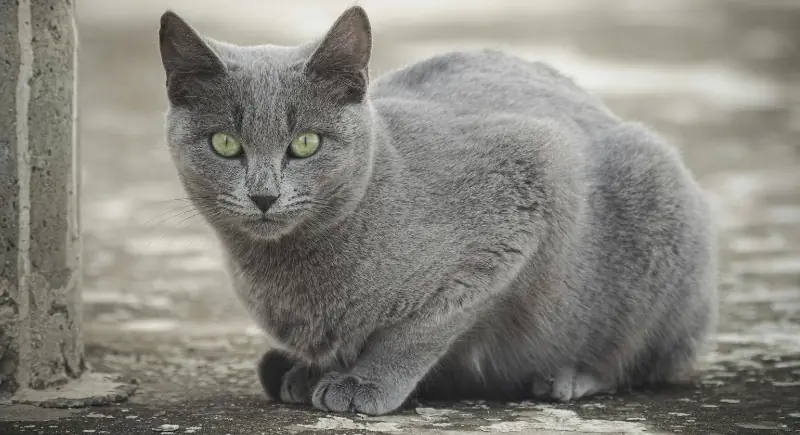
You may think that Russian Blues are born with those vivid green eyes, but they actually start out with yellow. Over the first few months, melanin gradually builds up in the iris, transitioning the hue toward a transparent, bright green. The final shade contrasts sharply with their silvery-grey fur and makes up one of the breed’s most recognizable traits.
Turkish Angora
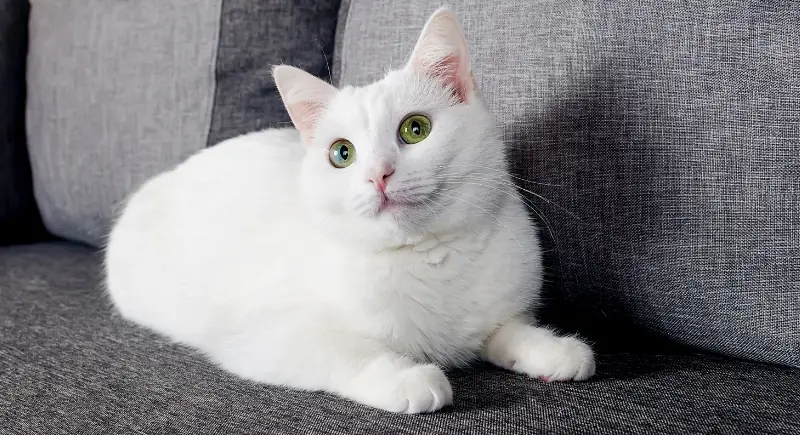
The odd‑eyed trait in Turkish Angoras happens because pigment doesn’t distribute evenly to both eyes during development. In many cases, one iris receives pigment while the other does not, which results in a blue eye paired with gold or amber. This pattern appears most often in white‑coated Angoras that carry the dominant white gene, which interferes with regular pigment migration.
Ragdoll
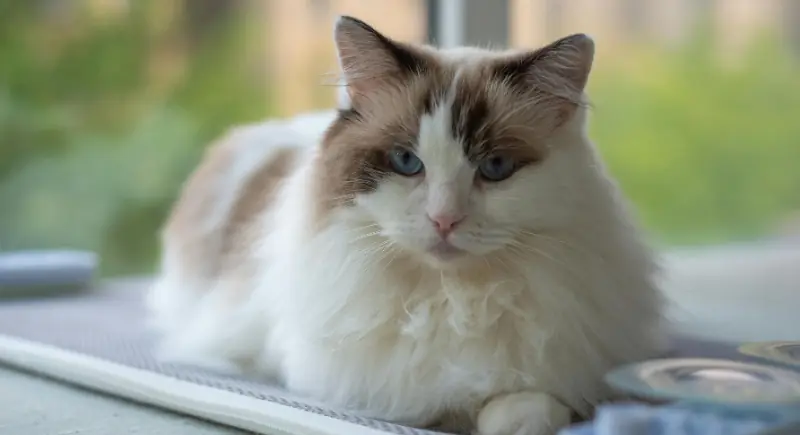
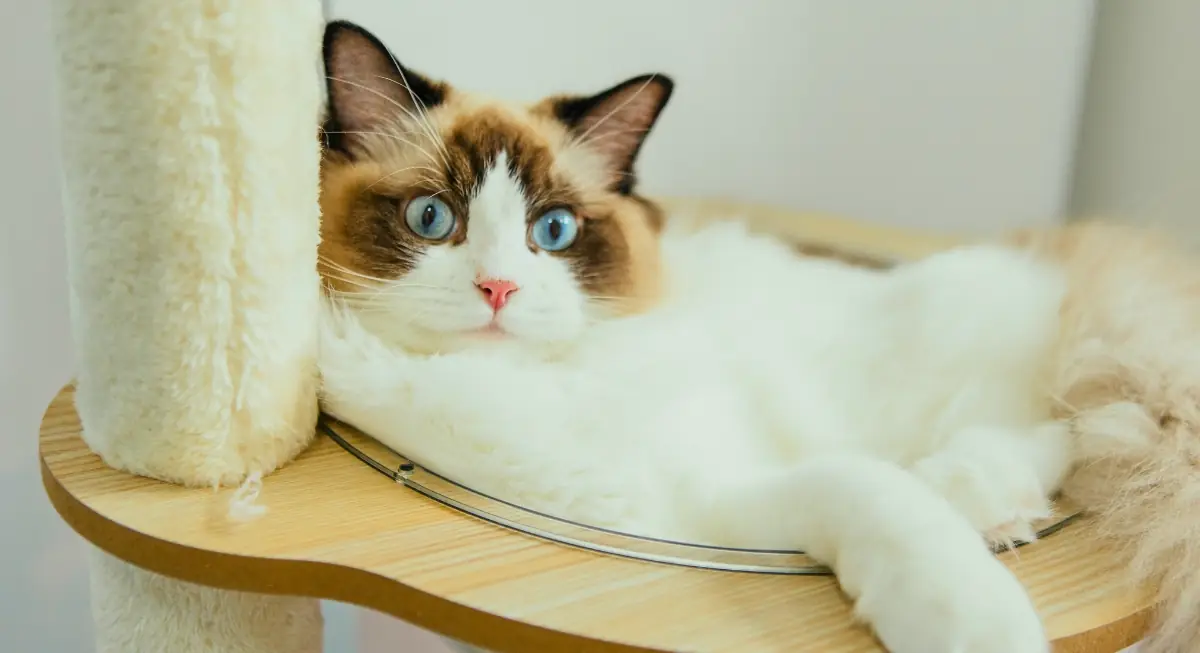
Regardless of their coat pattern, all Ragdoll cats have blue eyes. Breeders specifically opted for this look because they were aiming for a deep sapphire tone that became a defining feature. In show standards, lighter blues are acceptable but less preferred. And while the eye color itself isn’t rare, it stands out because it’s genetically locked.
Tonkinese
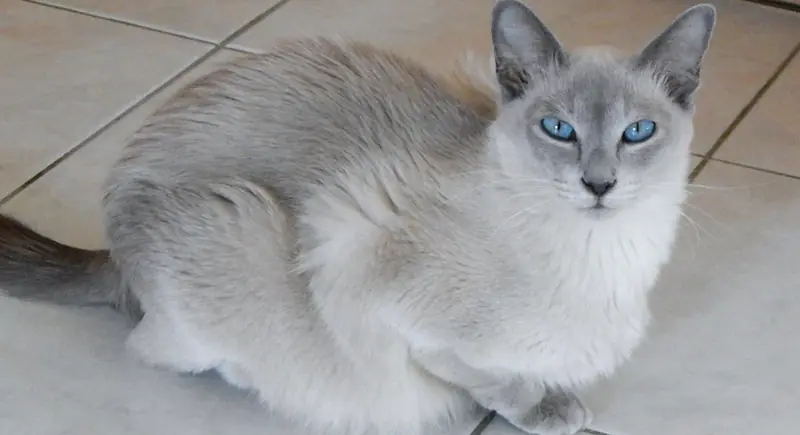
Tonkinese cats get their signature aqua eyes from a mix of Siamese and Burmese genetics. The Siamese influence reduces melanin in the iris, while the Burmese side adds more pigment. Together, they settle into a middle ground that creates a shade between blue and green. Lighting can shift how the color looks, which is part of what makes their eyes so striking.
Scottish Fold
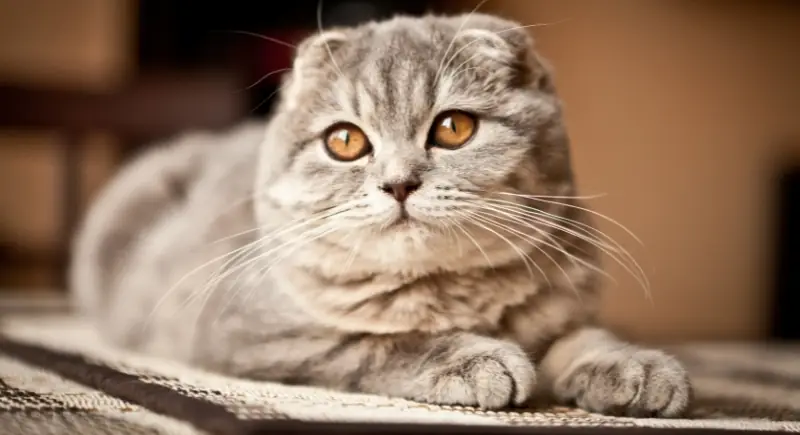
Folded ears make Scottish Folds instantly recognizable, but their eyes play an equally important role in their appearance. Large, round, and wide-set, the eyes often appear in deep copper, gold, or blue. The broad face and soft coat give those eyes a gentle, open expression.
Cornish Rex
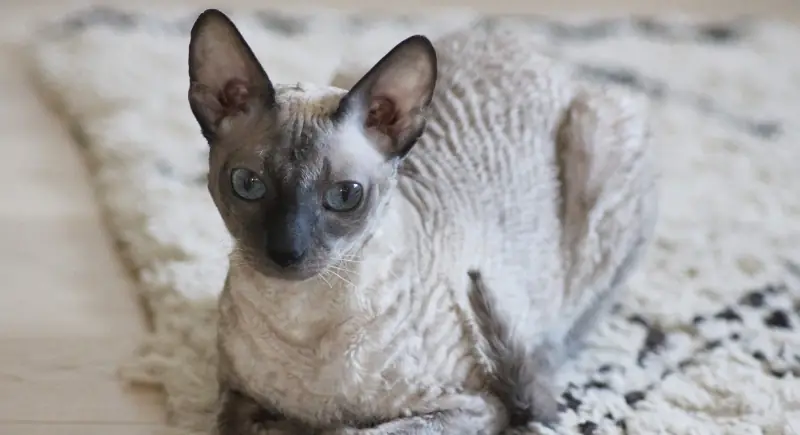
Dating back to the 1950s, the Cornish Rex cat originated from a natural genetic mutation that gave it its signature wavy coat. Their eyes are positioned slightly high and forward, in the shape of an oval. You will mainly see them in shades of gold or green.
Himalayan
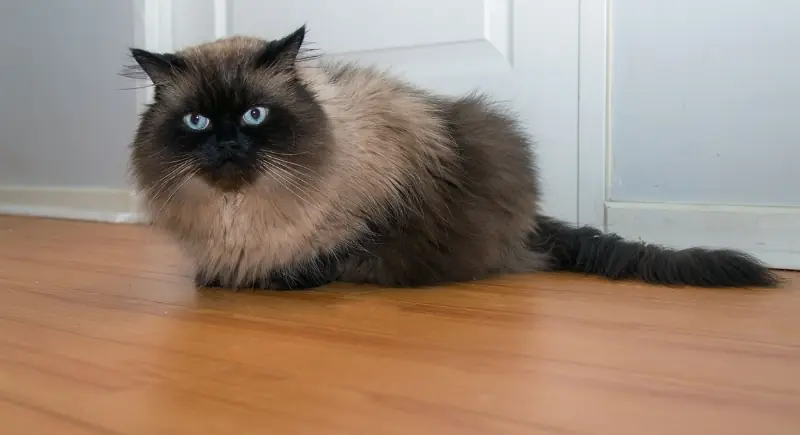
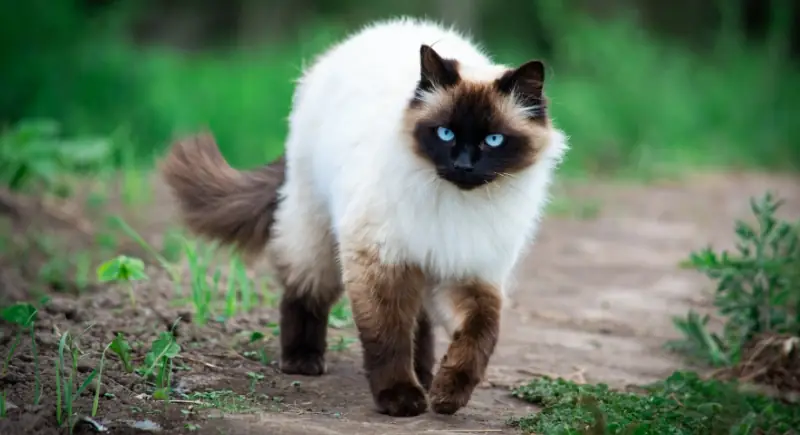
Every Himalayan cat has blue eyes because the hue is associated with the same gene that produces their colorpoint coat. This gene blocks melanin production in cooler areas of the body, including the iris, and results in eyes without pigment. The result is a consistent blue shade across the breed. Himalayans were developed by crossing Persians with Siamese cats, which gave them their long fur and round build, paired with Siamese eye tint.
Oriental Shorthair
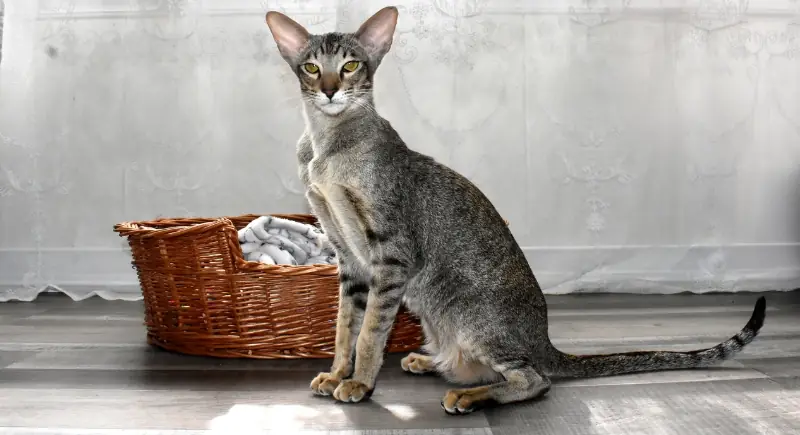
In comparison to other breeds, Oriental Shorthairs exhibit a remarkable variety in coat color and pattern, with over 300 combinations existing, but their eye shape remains consistent. The eyes are almond-shaped, slightly tilted, and set to match their long, slender heads. Green is the most common eye tone, although blue and amber also appear; however, it mostly depends on the coat type.
Ojos Azules
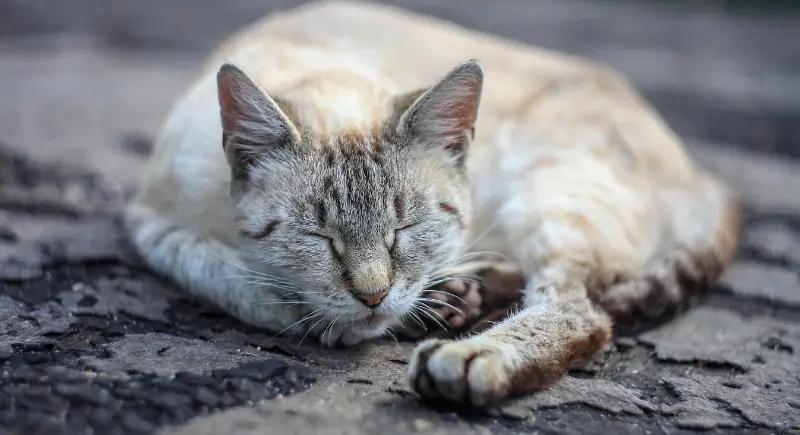
Possibly the rarest eye-specific breed ever recorded, the Ojos Azules began with a blue-eyed feral cat discovered in New Mexico during the 1980s. Unlike typical blue-eyed cats, this one had a dark coat, which broke the usual genetic link. The gene responsible is dominant but also risky because two copies can cause physical defects.