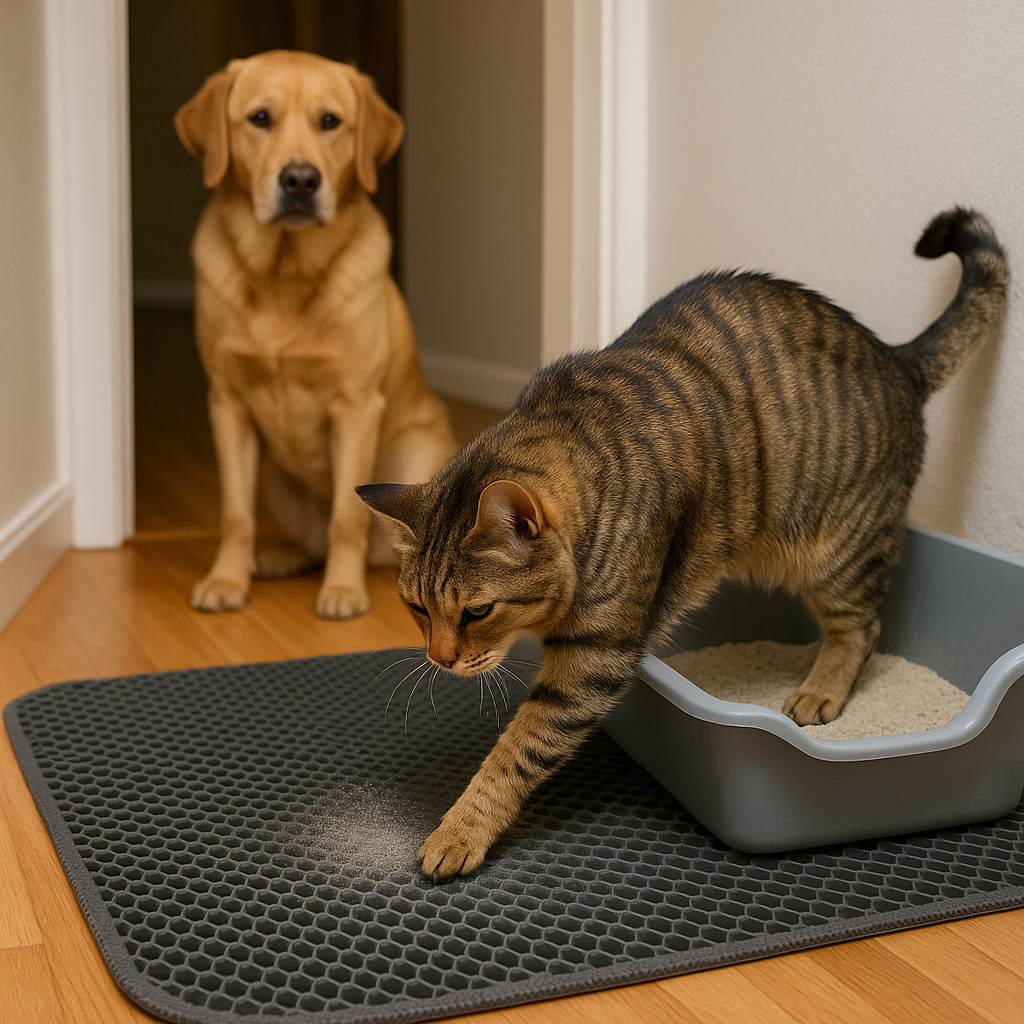
Watch the tip of the tail during a wand session and you’ll know whether to speed up, pause, or quit before claws come out.
Wand-toy tempo is written in the tail tip
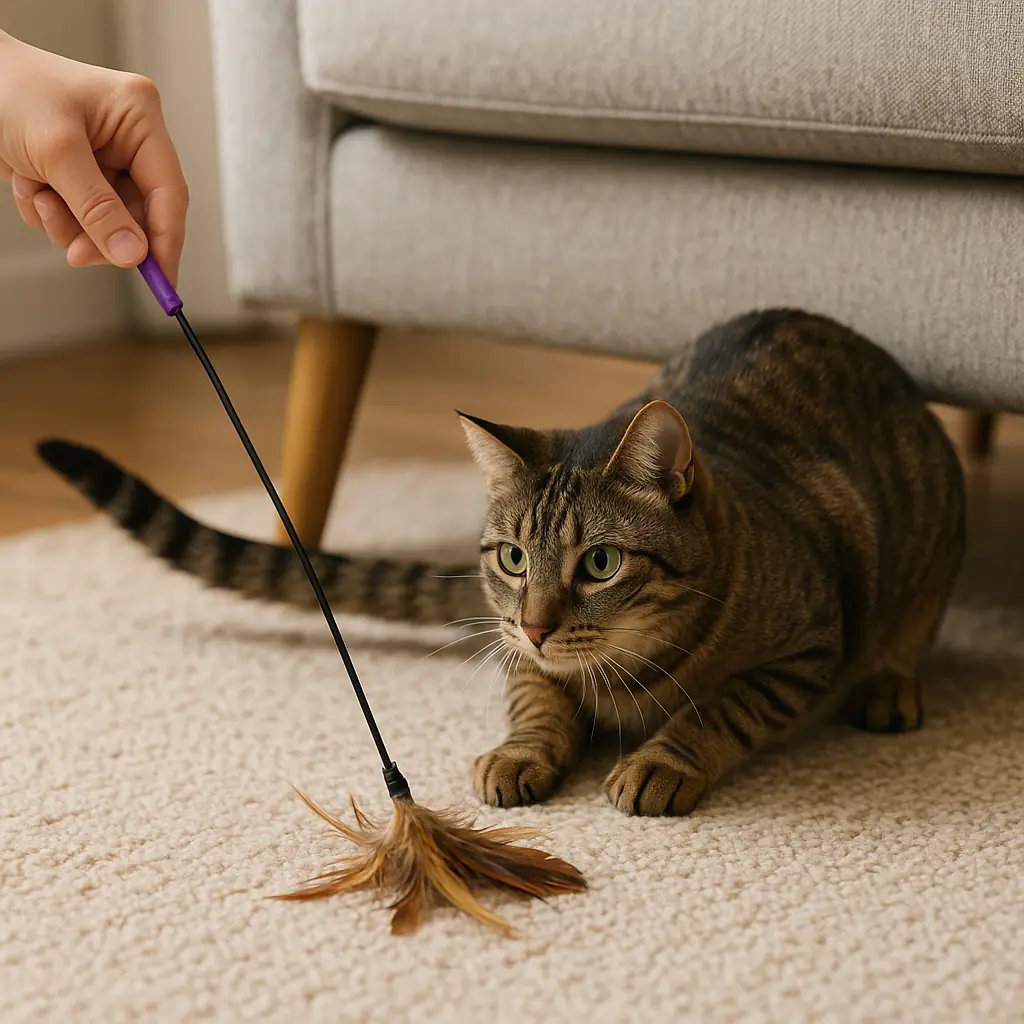
I learned this the hard way with a feather wand and a cat who will politely play for exactly two minutes, then suddenly decide my ankle looks huntable. The giveaway isn’t the ears or the pupils. It’s the last inch of the tail. When the tip starts doing quick, metronome flicks while the rest of the tail stays mostly relaxed, you’re in the sweet spot: locked in, calculating, ready to pounce, but still having fun. That’s when I keep the wand moving like prey that doesn’t know it’s being watched. Low to the rug, a little stop-start, and I let the feathers hide behind the couch leg for half a beat so there’s something to stalk. If I speed up into frantic helicopter-wand mode, the tail tip turns into sharper, whip-like snaps, and the body gets tighter. That’s my cue to slow down, not hype it up.
Try this once and it becomes obvious: the tail tip flick is the moment the brain goes from play to pursuit. I keep a simple rhythm. Ten to fifteen seconds of movement, then a pause long enough for one crouch and a small butt wiggle, then movement again. When the tip flicking smooths out, I know the pace is right. When it gets choppy or the tail suddenly thumps the floor, I make the toy easier to catch. One clean catch resets the whole mood. I let them grab it, kick it with the back feet for a couple seconds, then I trade for a treat so the session ends without someone dragging feathers under the fridge like contraband.
The couch-edge ambush flick (and why I move my feet)
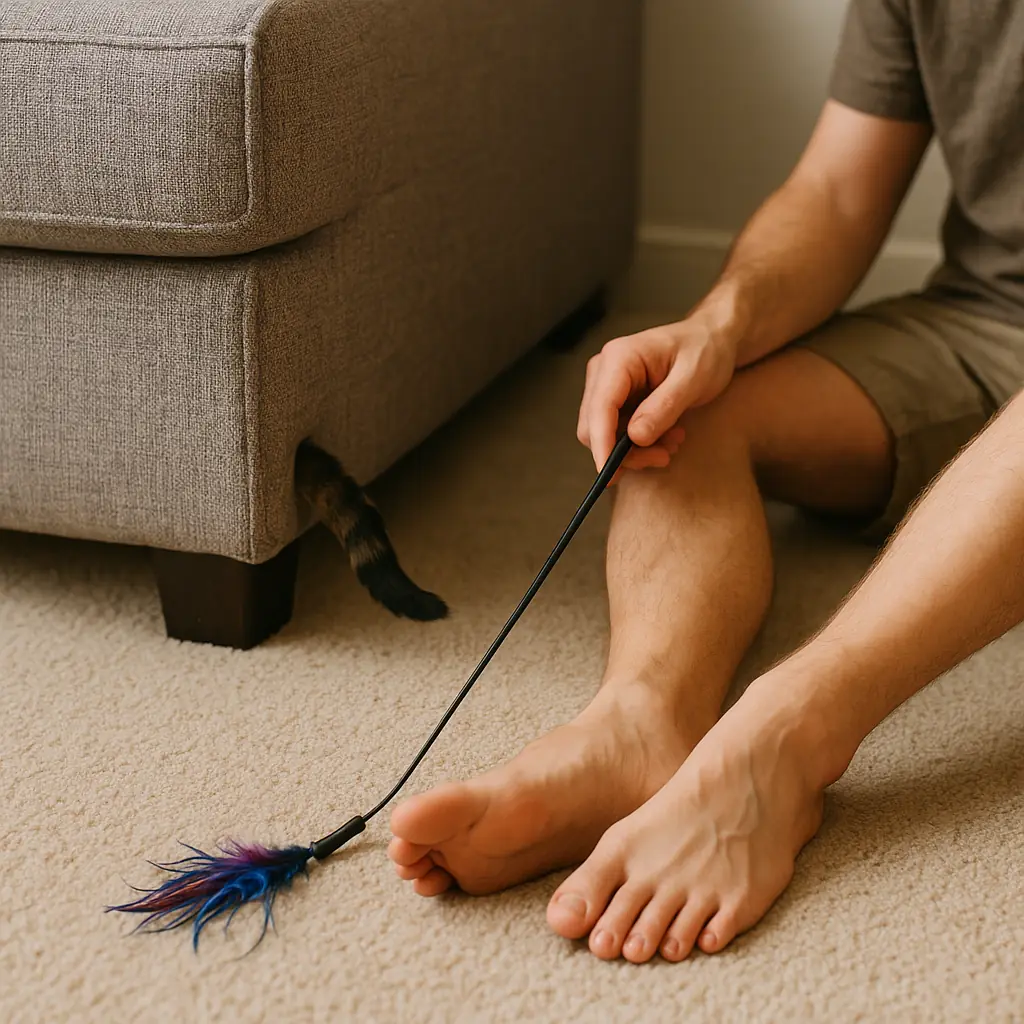
There’s a specific tail twitch that only shows up when the game turns into an ambush. Mine does it from behind the couch arm like she’s running a tiny stakeout. You’ll see the tail mostly tucked out of sight, then the tip appears and starts tapping the upholstery in short bursts, like someone drumming fingers on a desk. It’s playful, but it’s also the point where hands and bare toes become part of the set dressing. If I’m sitting on the floor and my foot is within reach, that little tapping tail is my reminder to stop being casual about where my body is.
I handle it the same way every time, and it keeps the vibe fun instead of spicy. First, I make sure the toy stays the target. I drag the wand lure away from my legs and toward a clear lane (hallway works, so does a strip of rug). Second, I stop doing the thing humans do where we hover the toy over the cat’s head to force a jump. That turns them upward and sideways, and suddenly your hand is the most interesting moving object in the scene. Instead, I run the lure along the ground and around a corner so the ambush has a place to land that isn’t me.
The third move is tiny: I plant my feet. No wiggling toes. If I have to reposition, I do it in one boring motion, like I’m a piece of furniture. The tail tip keeps tapping while they’re waiting for the perfect moment, and if you twitch your foot right then, you’re basically volunteering. When I see the tapping intensify, I give an easy win: I slow the lure and let them pin it. Then I give them a beat to hold it in their mouth and feel like a champion. After that, the tail usually loosens, and the next chase looks like play again, not a full-body intercept mission aimed at whatever moved last.
Laser pointer rules: watch for the jittery tail and end with a catch
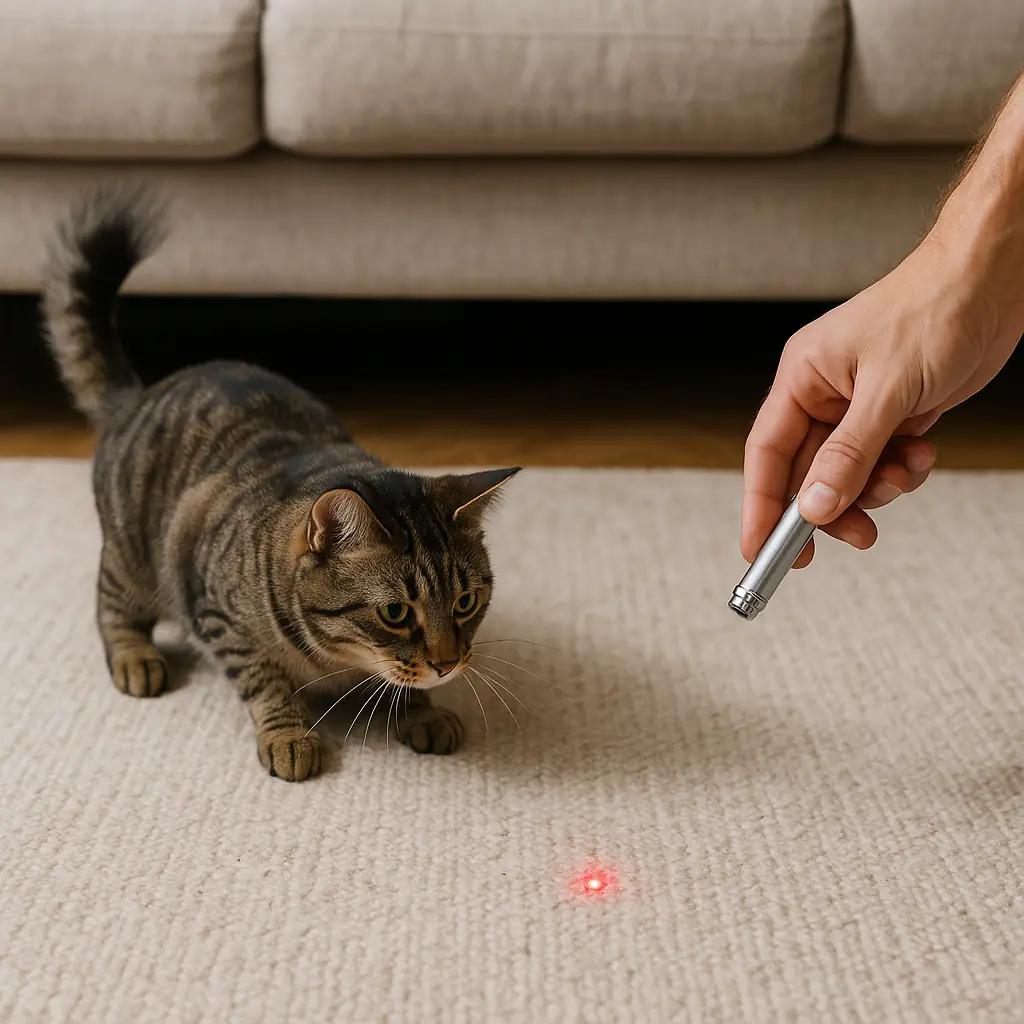
I use a laser pointer sparingly because it can wind some cats up in a weird way, and the tail tells you when it’s happening. During a good session, you’ll see that same playful tail-tip twitch: quick flicks while they’re tracking, then a brief stillness right before the pounce. But if the tail starts doing a jittery, agitated vibration low to the ground, like the whole tail is buzzing instead of just the tip, that’s not them being extra athletic. That’s frustration building because they can’t ever bite the thing they’re chasing.
So I keep laser sessions short and structured. I start on a textured surface where they can get traction (a rug, not slick hardwood), and I move the dot like a bug that keeps almost getting away. No teleporting it across the room. If you make it too impossible, the tail buzz starts fast. I do two or three clean chases, then I “land” the dot on a real toy that’s already on the floor, like a small plush mouse or a crinkle ball. The moment they pounce, I switch off the laser and let them grab the physical toy. That last part matters. They need teeth on something, even if it’s just for ten seconds.
I also watch the tail when I end it. A relaxed tail with a few slow flicks usually means they’re satisfied and ready to trot off to the water bowl like nothing happened. The jittery tail that won’t stop, plus a cat scanning the room like the dot is still out there, is my sign I pushed it too long. If that happens, I don’t restart the laser to “fix” it. I pivot to a wand toy or toss a kicker they can bunny-kick, then I finish with a treat. It’s not fancy. It’s just closing the loop so the tail settles instead of staying stuck on high alert.