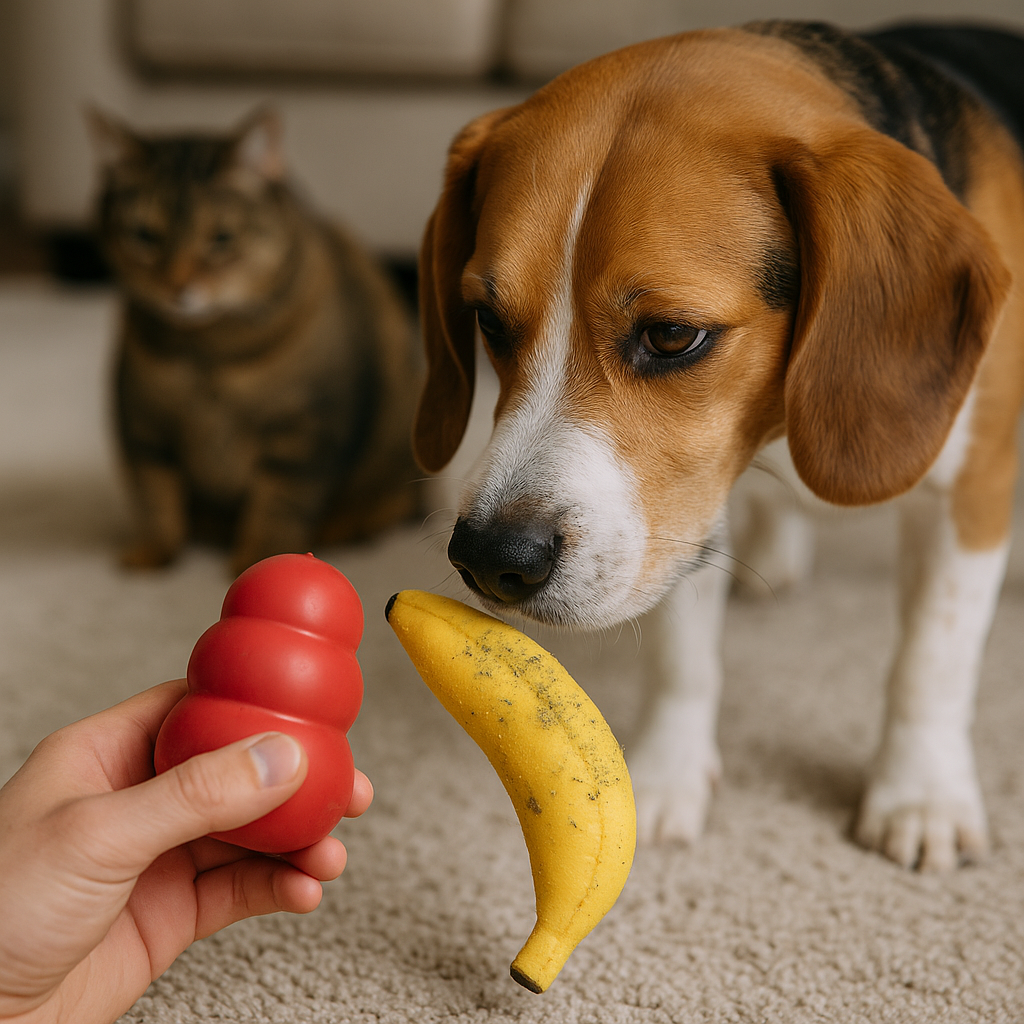
Three environment tweaks that explain (and often defuse) the weird guarding of empty spots and random objects.
The traffic map you don’t realize you created
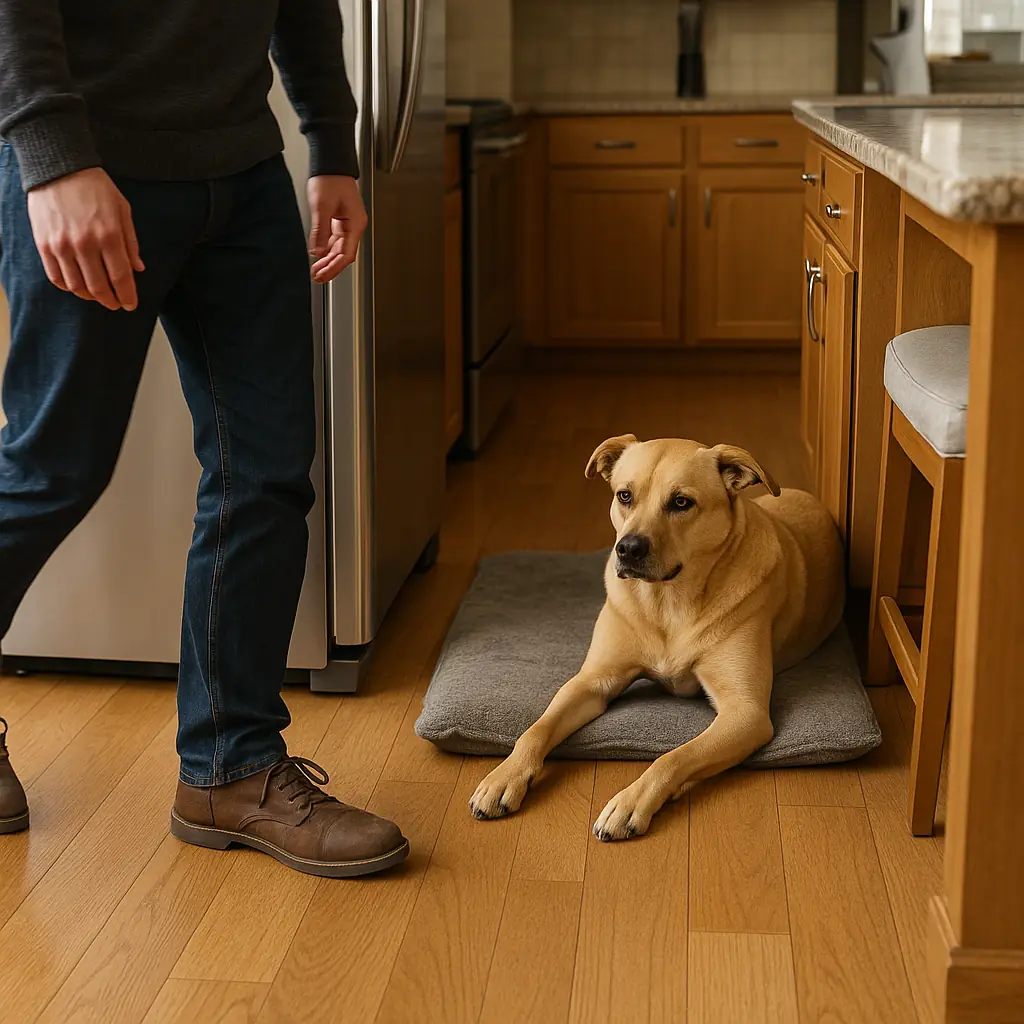
Watch your house for ten minutes like you’re a delivery driver looking for the fastest route. You’ll see it: everyone cuts the same corner, steps around the same chair leg, reaches over the same low table, and squeezes past the same spot between the counter and the island. That little pinch point becomes a control booth for a dog with even a mild territorial streak. It isn’t always about a toy or a bone. Sometimes they park their shoulders across a path, stare hard, and suddenly the empty patch of floor is a protected resource.
The environment piece is sneaky because nothing looks dramatic. A dog bed near the kitchen can turn into a toll gate if it sits where people constantly pass. Same with the corner by the fridge, the bottom stair, the narrow gap between the sofa and the wall, or the hallway that leads to the bedrooms. If your dog has started guarding a random object, check whether that object simply lives at a high-traffic intersection. A tug toy left by the pantry door isn’t just a toy there, it’s a reason to hold the line.
What I do first is boring but effective: I change the traffic map instead of arguing about the behavior. Slide the bed two to three feet out of the lane. Move the water bowl off the main route to the back wall. If a particular toy turns your dog into a bouncer, it stops living in the doorway area and starts living in a basket in a low-traffic corner. For a week, I also stop feeding scraps or handing out treats in that choke point, because food plus foot traffic is a recipe for a dog who thinks they own the intersection.
You can tell you’re onto the right cause when the guarding softens without you doing any big training heroics. The dog still likes that part of the house, but they don’t have a reason to manage every human ankle that passes through it.
When the window turns a toy into a job
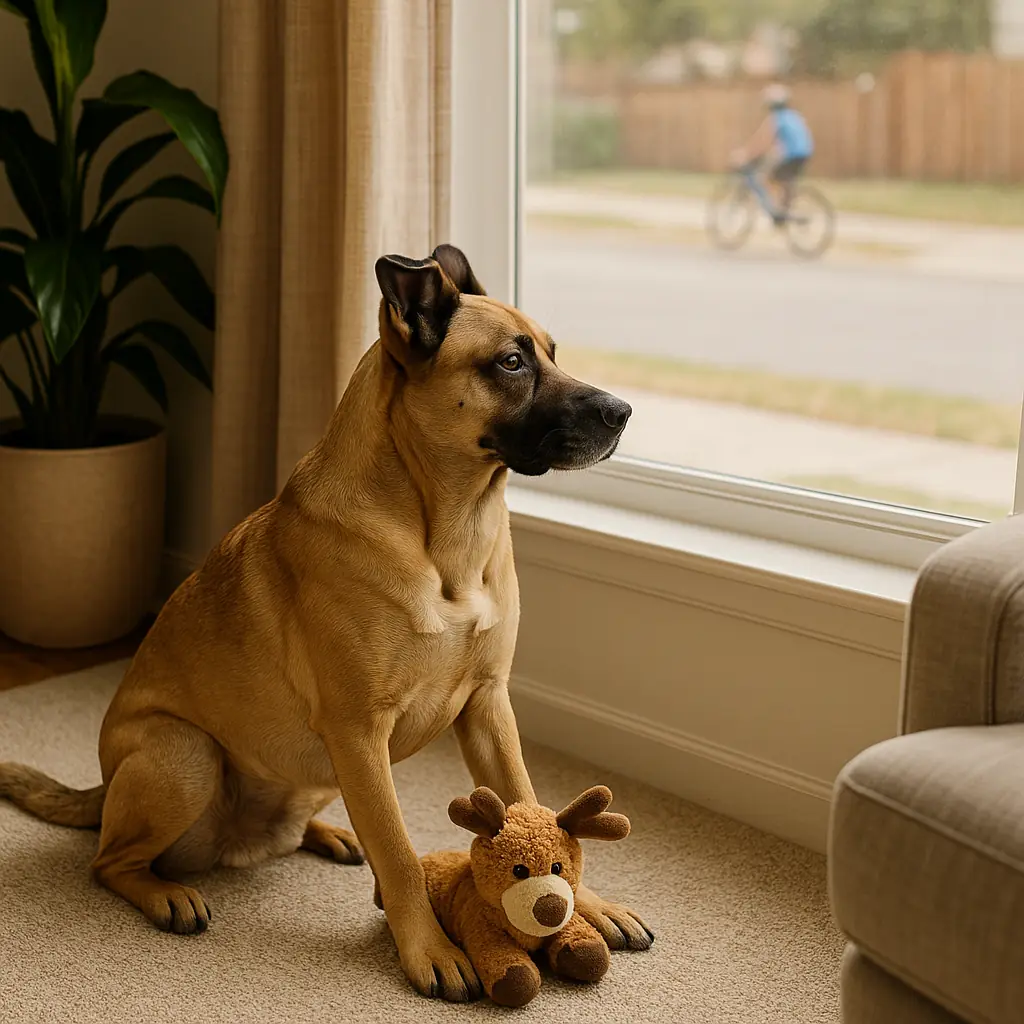
If your dog is guarding an empty patch of rug that happens to be under a front window, there’s a decent chance the window is the whole story. Not because they’re being dramatic, but because they’re doing what dogs do when the environment keeps poking them: they post up where the action is. Squirrels on the fence, the mail carrier, kids on scooters, a neighbor dog that strolls by at the same time every day. That outside movement winds them up, and then the nearest object (a plush toy, a tennis ball, the corner of a throw blanket) becomes something to brace around. I’ve seen dogs drag a toy over to the window like they were carrying their security badge to work.
The fix isn’t to prove the toy isn’t important. It’s to lower the pressure coming through that window. Start with the easiest experiment: block the view for a few days. I like a frosted window film on the lower half of the glass, or just closing the blinds at the times when the street is busiest. If you hate dark rooms, even a strategically placed tall plant or a piece of furniture that interrupts the sightline can take the edge off. You’re not trying to make your dog blind to the world. You’re trying to stop the constant micro-alerts that keep them in a guarding headspace.
Next, adjust the dog’s stationing options. Give them a better, calmer lookout that isn’t right on top of the thing they’re guarding. A raised cot-style bed a few feet back from the window works well because it feels like a defined place, and it’s easier to reward. I keep a small jar of kibble near the window and pay for quiet choices: looking out and then disengaging, coming back to the cot, lying down without that stiff, forward-leaning posture.
One detail people miss: reflective glass at night can turn your own living room into a trigger. If your dog is guarding a toy only after sunset, try turning on an outside porch light or closing curtains before the room becomes a mirror. You may not fix every guarding issue this way, but when the window is the amplifier, changing the view changes the whole mood.
Scent layering: why yesterday’s spill becomes today’s border
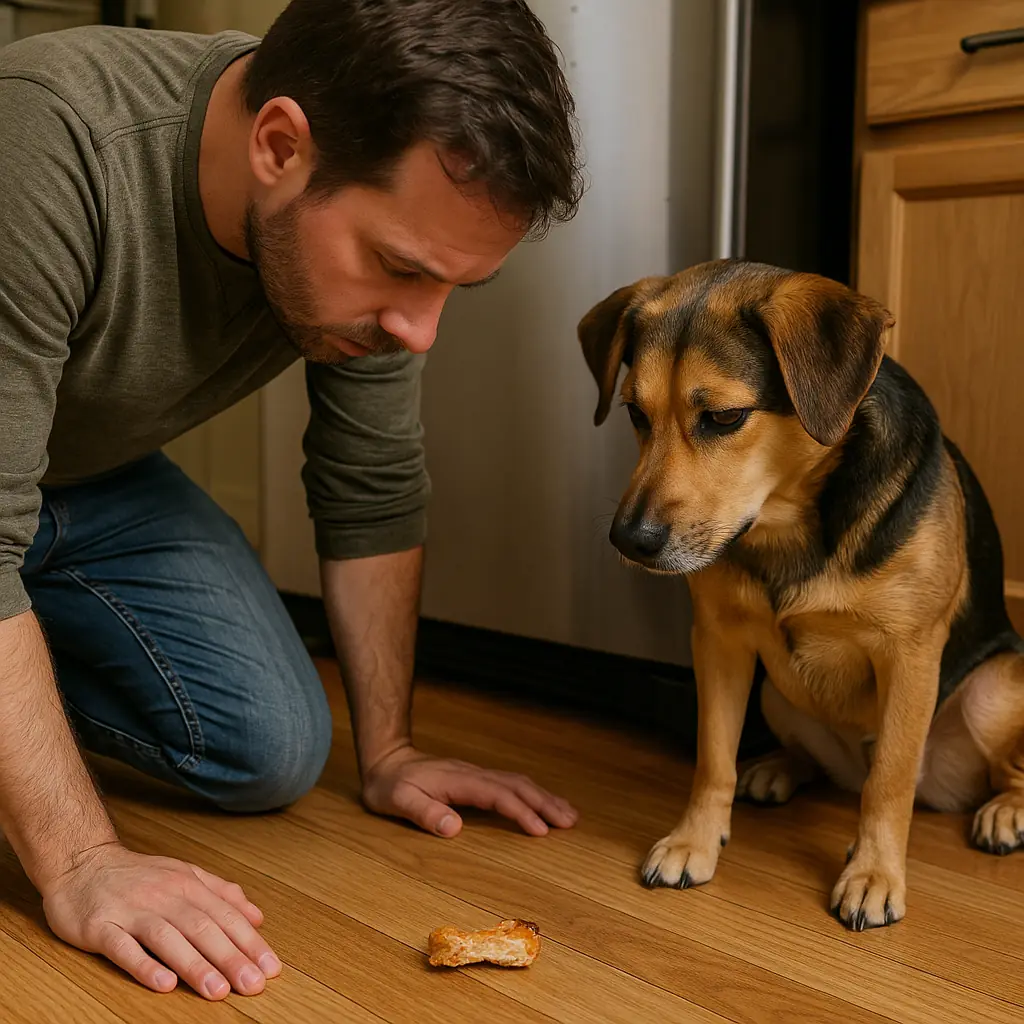
I’ve had a dog guard a spot that looked like nothing, and when I got down at their level I realized it was the ghost of a moment: a dropped piece of rotisserie chicken two nights ago, a smear of peanut butter from a Kong, the exact place a delivery box sat in the rain, or where another dog visited and shook off. We mop, we wipe, we move on. Dogs don’t. To them, the environment keeps its receipts, and a concentrated scent patch can turn into a tiny territory line.
This is where the household objects part gets weird. If a dog is guarding a random sock, chew, or cat toy, sometimes it’s because that item is saturated with a smell that matters in that location. Think of the entryway, where outdoor scents hitchhike in on shoes. Or the laundry area, where your scent is thick. Or the living room rug, where treats get paid out during training sessions. A toy becomes more than a toy when it’s sitting on top of a high-value scent layer. It isn’t just possession, it’s position.
My practical test is simple: I change the scent landscape on purpose and see if the guarding follows. I don’t blast the house with heavy fragrance (that can be irritating for dogs). Instead, I do a thorough clean of the specific patch with an enzymatic cleaner made for pet odors, because regular soap can leave behind what matters to a dog’s nose. If it’s carpet, I work it in, let it sit, and blot. If it’s hard flooring, I let the enzyme dwell the full label time before wiping up. Then I move the object your dog guards to a totally different room and put a new, neutral mat or runner over the old spot for a week.
Two things can happen. If the dog starts guarding the object in the new location, you learned it’s mostly about the item itself. If they keep returning to the original patch of floor even when it’s covered and cleaned, it’s about that place in their map. Either way, you now have a clearer problem than a vague, spooky idea that your dog is guarding nothing. Also, if other pets are in the home, watch where they pause and sniff. That little nose-to-floor check is often the first clue that the environment is the trigger, not a sudden personality change.