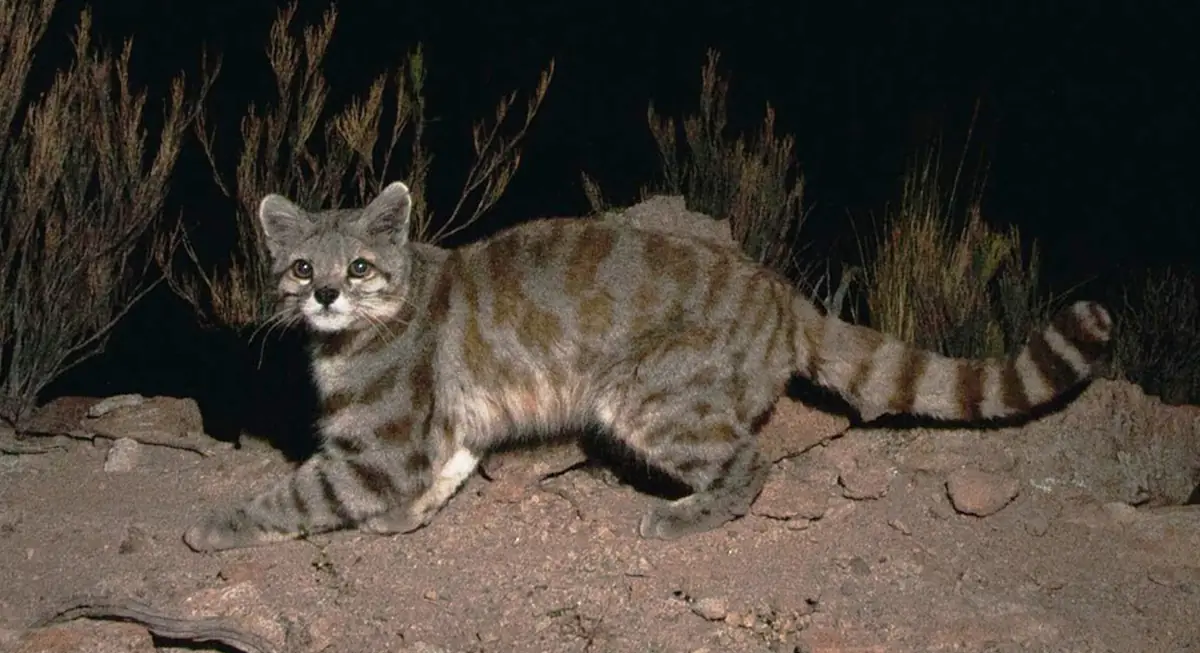
The Andean mountain cat is one of the rarest wild cats in the world. Most people have never heard its name, much less seen it. This small feline lives in the Andes Mountains of South America, mainly in Argentina, Bolivia, Chile, and Peru. Even among wildlife researchers, it remains an unusually mysterious species because sightings are extremely rare and much of its behavior is still unknown.
Scientists first described the Andean mountain cat in 1865, but reliable observations remained scarce for more than a century. The animal proved so difficult to document that the first photograph was not taken until 1997. Confirmed encounters are still extremely rare today, and some researchers who have studied the species for years never see one in the wild.
A Small Cat Built for Extreme Mountains
<span data-mce-type="bookmark" style="display: inline-block; overflow: hidden; line-height: 0" class="mce_SELRES_start"></span>
The Andean mountain cat is roughly the size of a domestic house cat, though its body is adapted for life in rugged alpine terrain. It inhabits the high Andes, usually above 3,000 meters (about 9,800 feet), where temperatures fluctuate sharply between day and night and oxygen levels are significantly lower than at sea level.
Its dense coat protects it from cold mountain conditions. The fur carries a complex mix of gray, brown, black, and gold tones, marked by stripes, spots, and rings that help it blend into rocky slopes. This coloration helps the cat remain concealed among cliffs and broken stone.
One feature that immediately stands out is its long, fluffy tail. It can reach about 75 percent of the animal’s body length and acts as a counterbalance while the cat moves across steep, unstable terrain.
A Hunter of the Rocky Andes
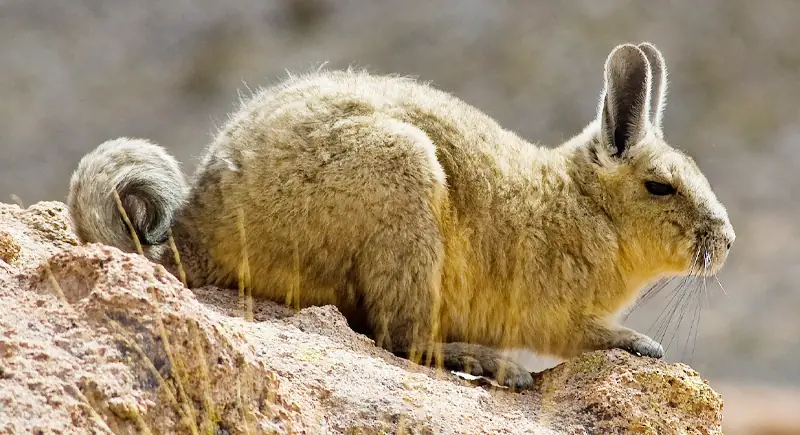
Life in these mountains revolves around prey that survives in the same environment. The Andean mountain cat primarily hunts mountain vizcachas, rabbit-like rodents that inhabit rocky outcrops and boulder fields.
Observations show the cats stalking vizcachas across uneven slopes with impressive agility. To locate enough prey in this sparse landscape, each animal occupies a surprisingly large territory. An individual may roam across areas as large as 23 square miles.
These wide hunting ranges help explain why sightings remain rare. Even in locations where the cats are known to exist, researchers sometimes leave camera traps running for months before capturing a single photograph.
One of the Rarest Cats on Earth
Scientists estimate that slightly more than 2,000 mature Andean mountain cats remain in the wild, though the real number could be smaller. The animals are scattered across an enormous mountain region, and many groups appear isolated from one another.
Their reproduction rate also slows population growth. Researchers believe the species usually produces only one kitten at a time, which limits how quickly numbers can increase.
Genetic studies add another concern because compared with other members of the Leopardus genus, the Andean mountain cat shows extremely low genetic diversity. Limited variation makes the species more vulnerable to disease and environmental change.
New Threats in the Andes

Several pressures now affect the cat’s survival. Climate change is altering high-altitude ecosystems, gradually pushing cold habitats higher up mountain slopes and shrinking the total area suitable for the species.
Mining activity is expanding across parts of the Andes as global demand grows for lithium, copper, and other metals used in modern technology and electric vehicle batteries. Roads, vehicles, and human activity associated with these operations introduce disturbances into previously isolated environments.
These developments can fragment habitat, reduce prey availability, and introduce additional dangers such as domestic dogs, disease transmission, and road accidents.
Protecting a Little-Known Predator
Conservation groups, including the Andean Cat Alliance, continue working to monitor and protect the species. Researchers rely on camera traps, DNA analysis from field samples, and long-term surveys to understand where the cats live and how populations are changing.
Many conservation programs also collaborate with local communities to reduce hunting conflicts, support sustainable livelihoods, and protect fragile mountain ecosystems that sustain wildlife.
Because the species exists in such low numbers and across scattered habitats, every individual animal matters. The loss of a single cat could weaken connections between isolated populations.
More than 150 years after scientists first identified the Andean mountain cat, much about its life remains uncertain. Continued research and conservation efforts will play an important role in ensuring this little-known feline continues to survive in the high Andes.