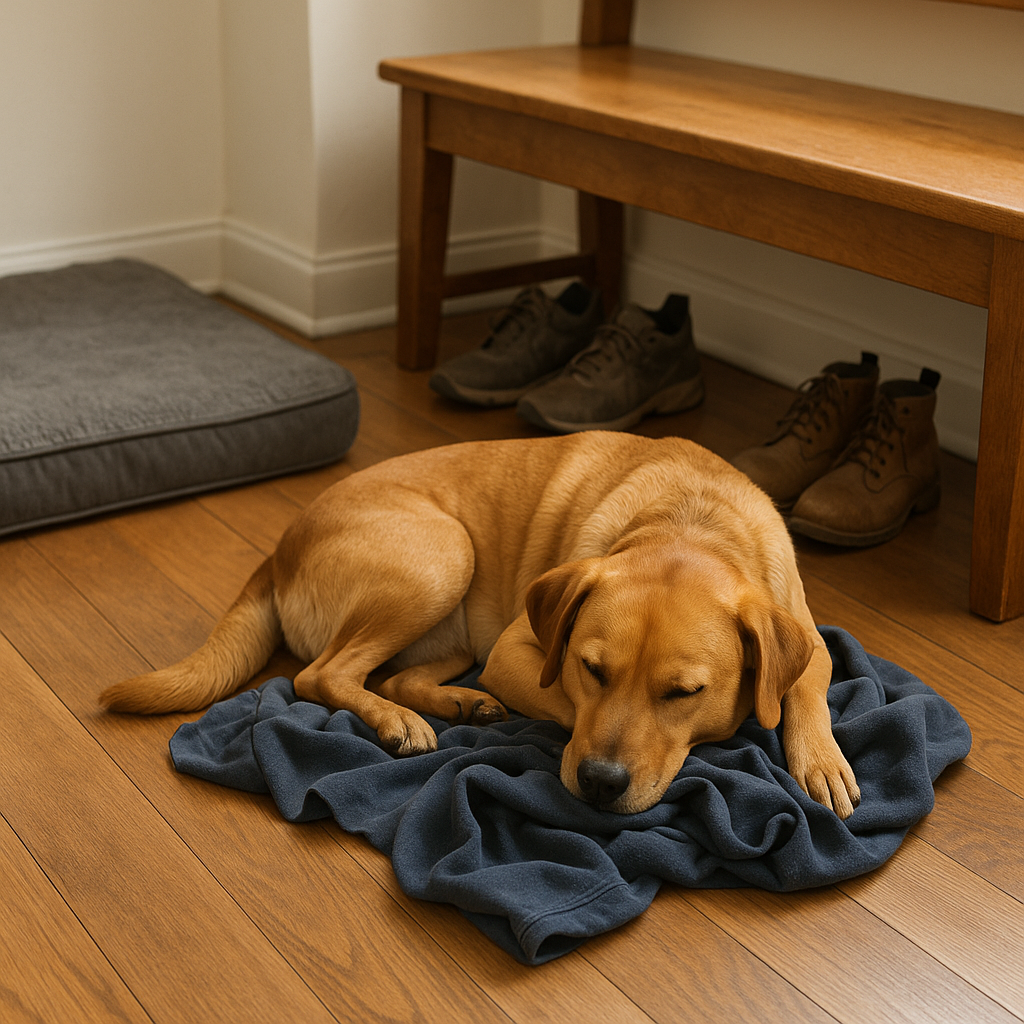
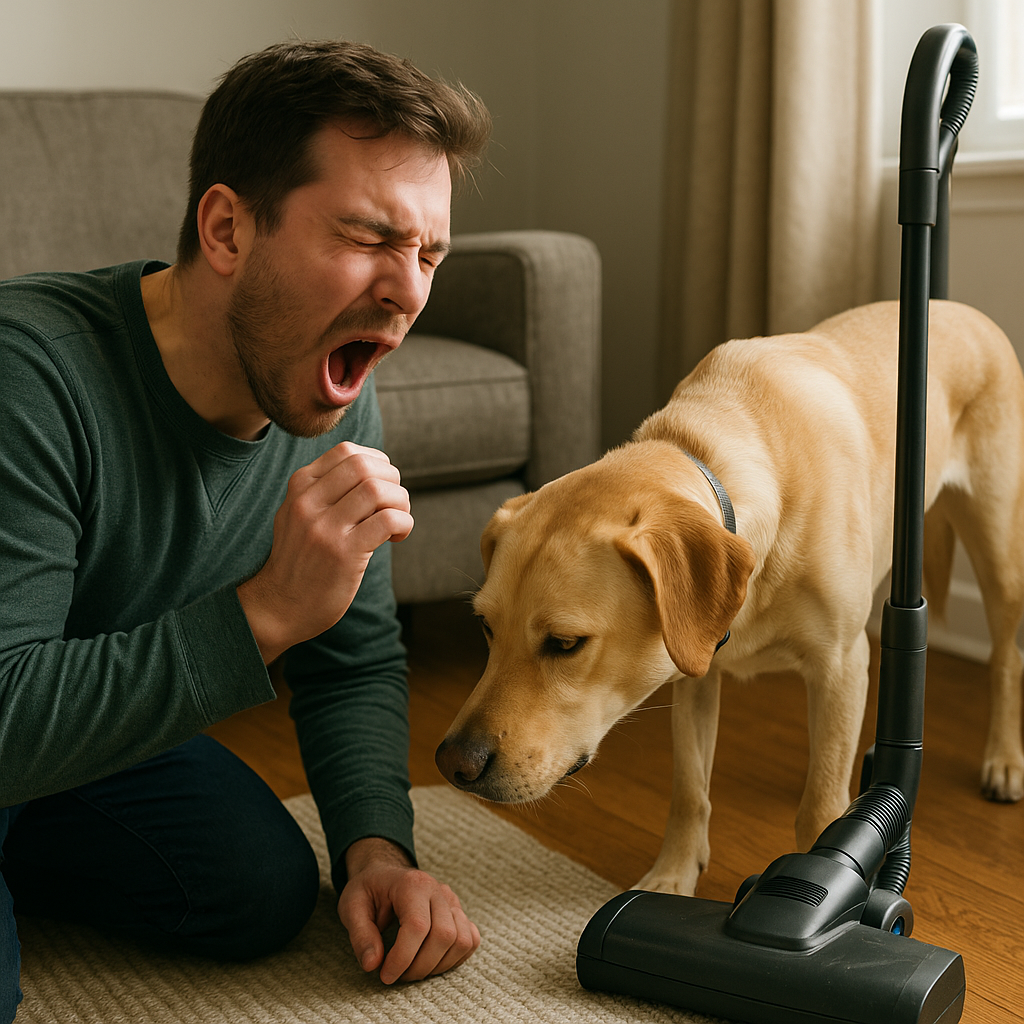
Watch how they treat one vent, one rug edge, and one doorway sun patch, and the whole house suddenly makes sense.
The HVAC Vent Test (hot, cold, and the fake indifference)
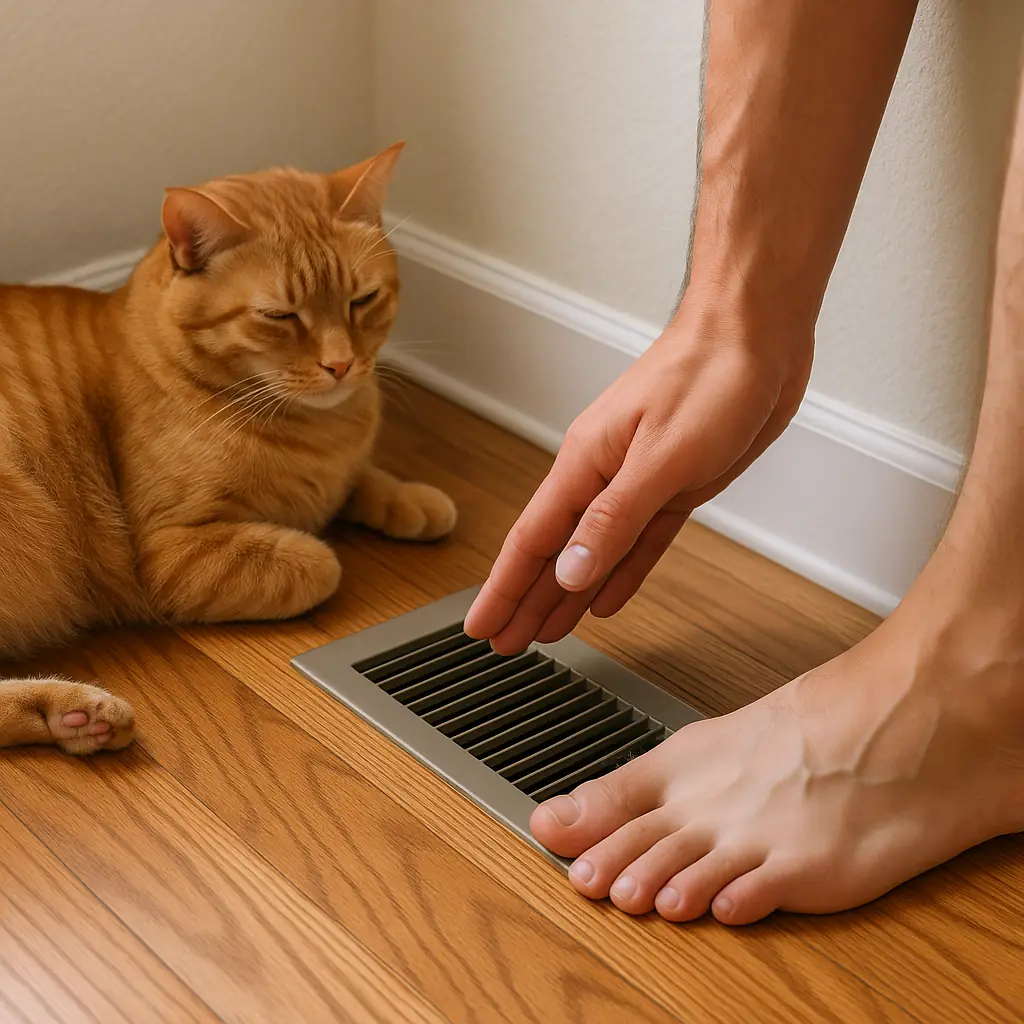
I noticed this by accident because I kept stepping over the same cat-shaped speed bump outside the bedroom, no matter how many other cushy options she had. Then I put my bare foot on the floor register nearby and immediately understood. Pets act like they choose naps based on vibes, but a lot of it is straight-up airflow management. Here is the test I do now: when the heat or AC kicks on, I walk the usual nap circuit and put my hand about an inch above each vent. Not on it. Above it, where the draft is real. Then I watch where my pet plants themselves within the next ten minutes.
If its winter and a dog keeps parking on a hard patch of tile, odds are the tile is just the warmest square in the house because a vent points right at it. In summer, my cat will sprawl in a way that looks like pure drama, belly up and paws splayed, but she’s basically turning herself into a living cooling rack in the path of the AC. The funniest part is the little feint. They’ll do one lap, glance at the vent like it has nothing to offer, and then somehow end up exactly where the air hits the floor after it bounces off the wall. That spot is the sweet zone: breeze without the full blast that dries their nose and makes them blink.
Two practical notes from doing this too many times. First, vent direction matters more than distance. If the louvers angle toward a baseboard, the best nap point might be two feet away, where the air pools. Second, watch for the mid-day flip. A pet that swaps locations around 2 p.m. might not be fickle. Your system changed cycles, the sun moved, and the hallway that felt perfect at noon turned into a hair dryer. Once you spot the pattern, you can predict the next nap like you’re reading a weather map, and you’ll stop taking it personally when they abandon the expensive bed for a suspiciously specific rectangle of floor.
Rug Edges: the draft blocker they don’t know they’re using
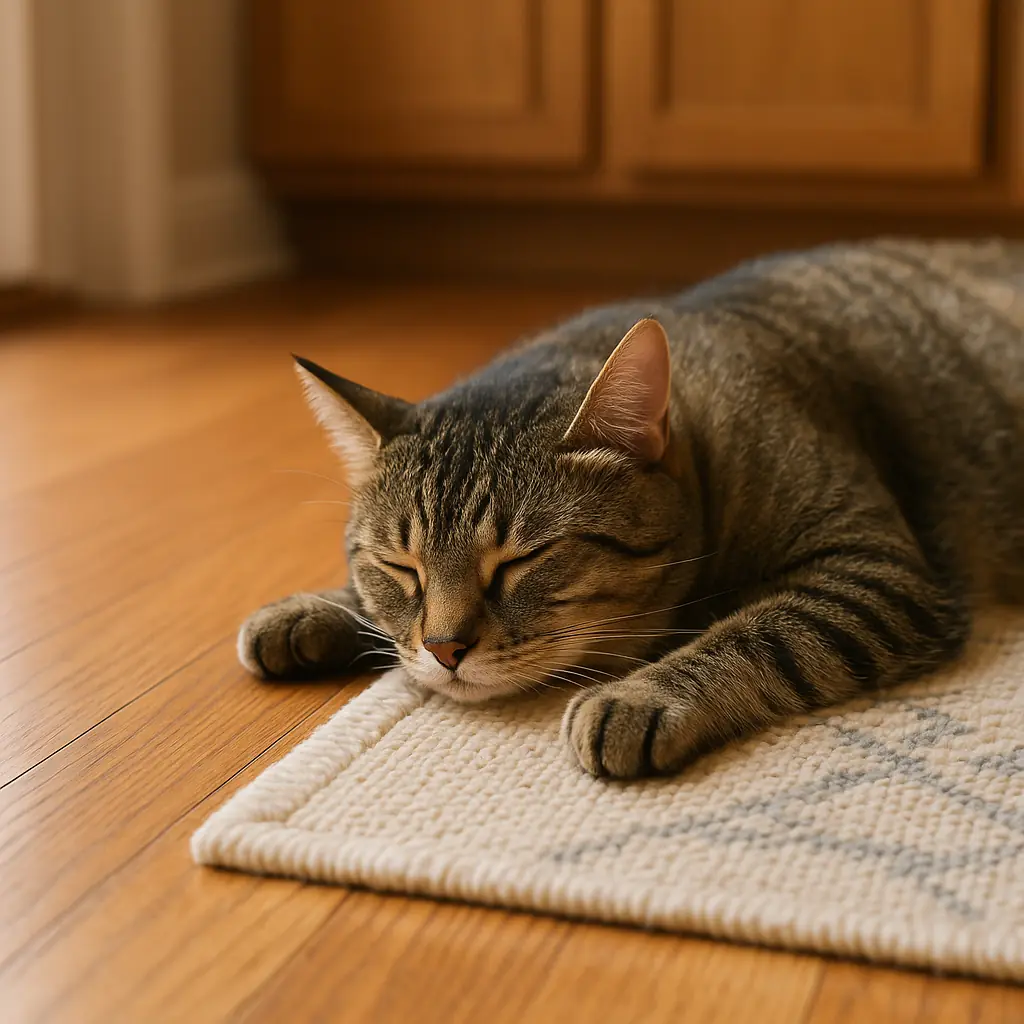
Mine loves the part of the rug that looks like it shouldn’t even count as the rug. Not the center. Not the plushest patch. The edge, where one paw is practically on the hardwood. For a while I assumed it was a visibility thing, like she wanted to keep an eye on the kitchen. Then I sat down on the floor at her level and felt it: the hardwood had a faint cool drift, and the rug edge was acting like a little gasket. She gets the cooler air on her belly side, plus the insulation of the rug under her ribs. It is the nap equivalent of sticking one leg out from under the comforter.
If you want to see this in action, do a slow lap with something simple like a tissue or a thin strip of toilet paper. Hold it close to the floor along baseboards, around door casings, and near the edges where rug meets hard floor. It will flutter in places you never notice standing up. Pets notice. They pick the line where the air changes. My cat will shift two inches, flatten her cheek, and settle again like she just adjusted the thermostat herself.
This is also why they get weirdly loyal to a rug that you hate. The old flat weave in my hallway is not soft, but it sits over a seam in the floor that leaks a tiny bit of cooler air. The rug edge is the buffer zone. When I swapped in a thicker, nicer rug, she stopped using that spot for a week. The new rug sealed the draft and changed the temperature gradient. She wasn’t mad about my decor. The physics changed.
If you’re trying to predict where they’ll land, look for three things: a rug edge near an exterior door, a runner that crosses an HVAC return path, or a mat near a laundry room where the dryer warms the air. Those spots create small, reliable temperature lanes. And if you’re wondering why they keep choosing the place you trip over, it’s usually because the rest of the room is one big same-feeling blob, while the rug edge has a clear boundary their body can use.
Doorways and sun patches: the house’s energy lines, pet edition
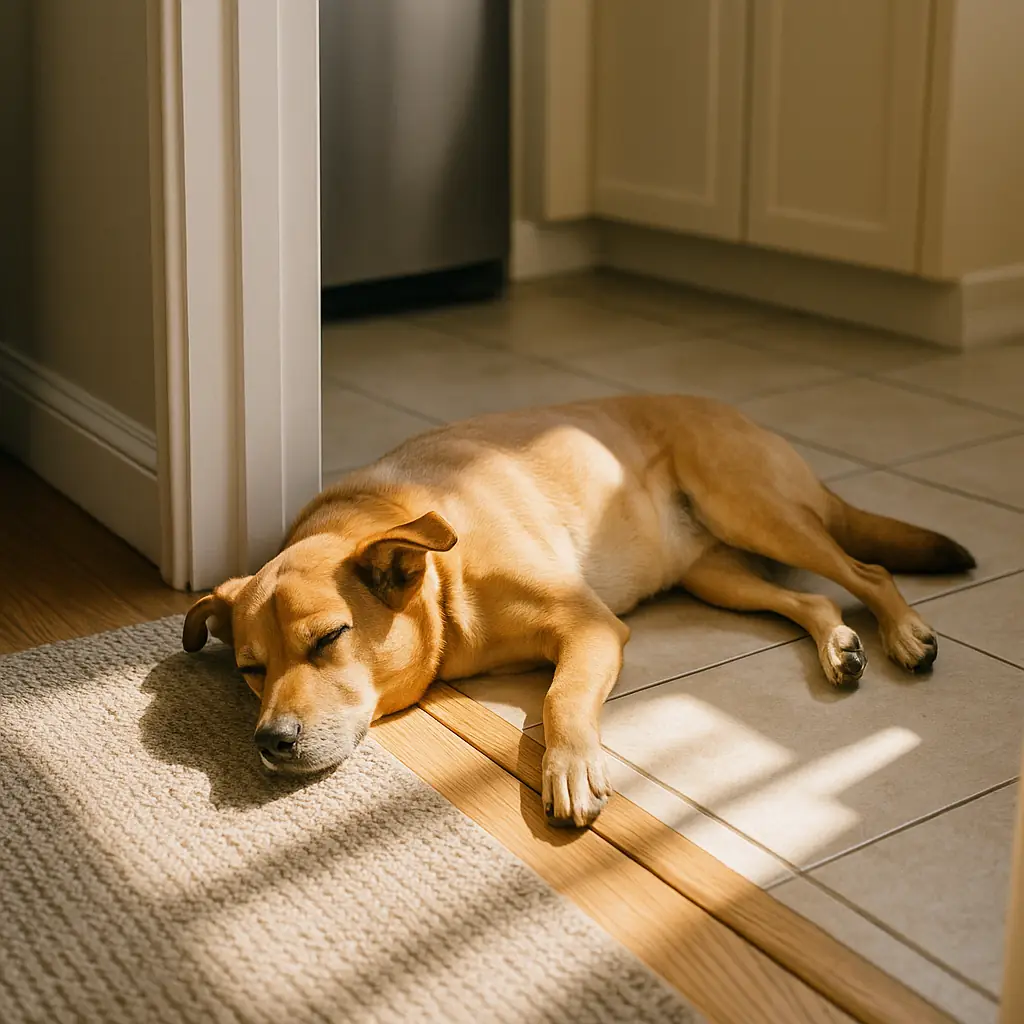
There is a certain kind of nap that only happens in a doorway. Not fully in one room, not fully in the next. It looks like a protest, but it is usually the most strategic spot in the house if you think in terms of flow. Doorways are where air moves, sounds overlap, and everyone passes through. In feng shui terms, its the line where the house’s energy funnels. In pet terms, its where they can be informed without participating.
My dog has a specific threshold he favors: the doorway where the living room rug ends and the kitchen tile begins. In the morning, a sun patch slides across that exact line for maybe twenty minutes, and he times it like he’s got a watch. He doesn’t chase the light across the room. He waits for it to arrive at his chosen checkpoint, takes the heat on his shoulder, and keeps one ear angled toward the fridge. He wants warmth, but he also wants alerts. A nap that comes with updates is the whole point.
If you want to decode your pet’s doorway obsession, try this: stand where they nap and take a slow 360-degree look for what they can monitor. Is there a window with squirrels? A hallway that leads to bedrooms? The spot where the delivery person appears? Now pay attention to the light. A lot of pets pick a sunbeam the way you might pick a favorite chair, except the chair moves. The beam hits the floor, then the couch, then disappears behind a curtain. They’ll often choose the stage where the beam is widest and least interrupted by shadows from plants or blinds. That is why you see them rotate like a rotisserie chicken, one quarter-turn at a time.
One more tell: if they nap just outside the brightest patch, it usually means they like the warmth but not the glare. Cats especially will tuck their face into the shade while leaving their back in the sun, like they’re managing comfort and visibility as separate settings. Once you spot that, the rest of the house reads differently. The doorway isn’t random. Its a control panel with good lighting.