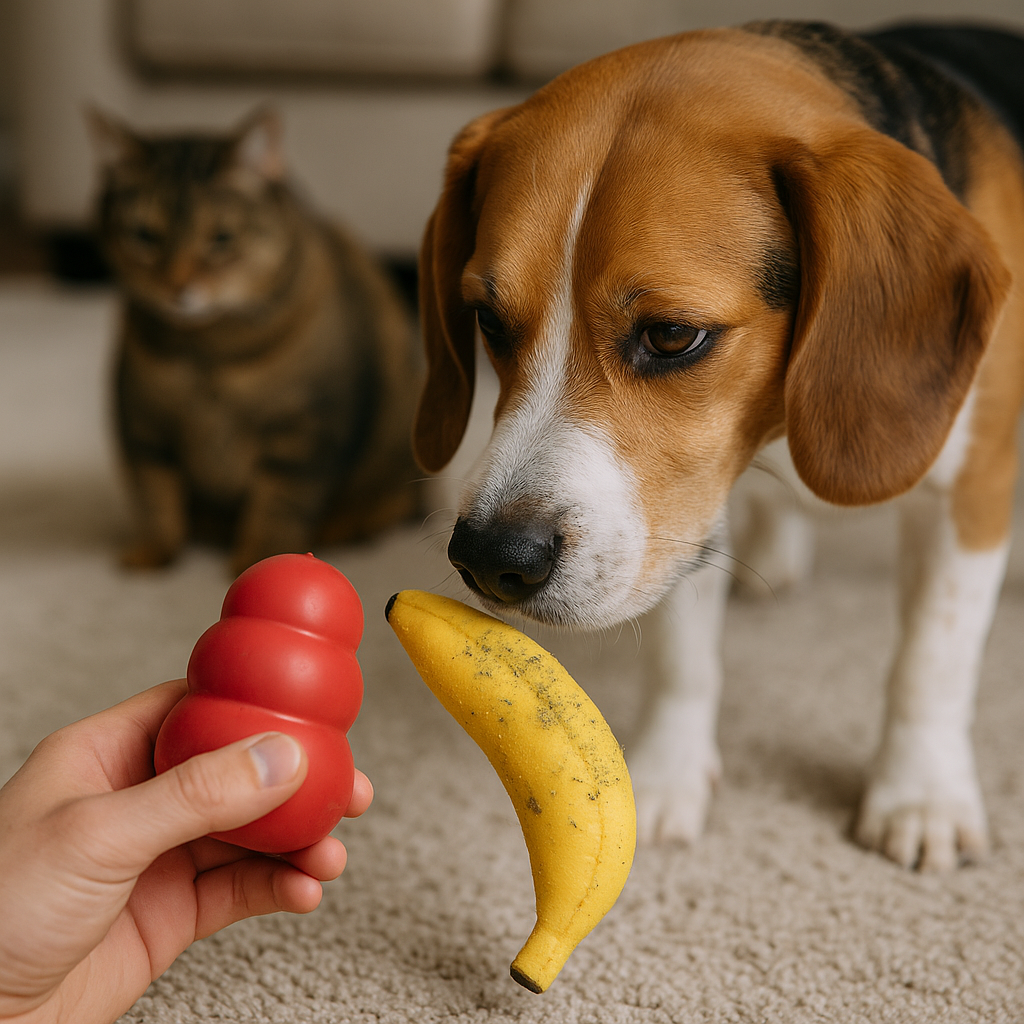
From whisper-woofs to toy-squeaks, these are the sneaky ways they keep “talking” without breaking the rule.
The Whisper-Woof That Somehow Feels Like Compliance
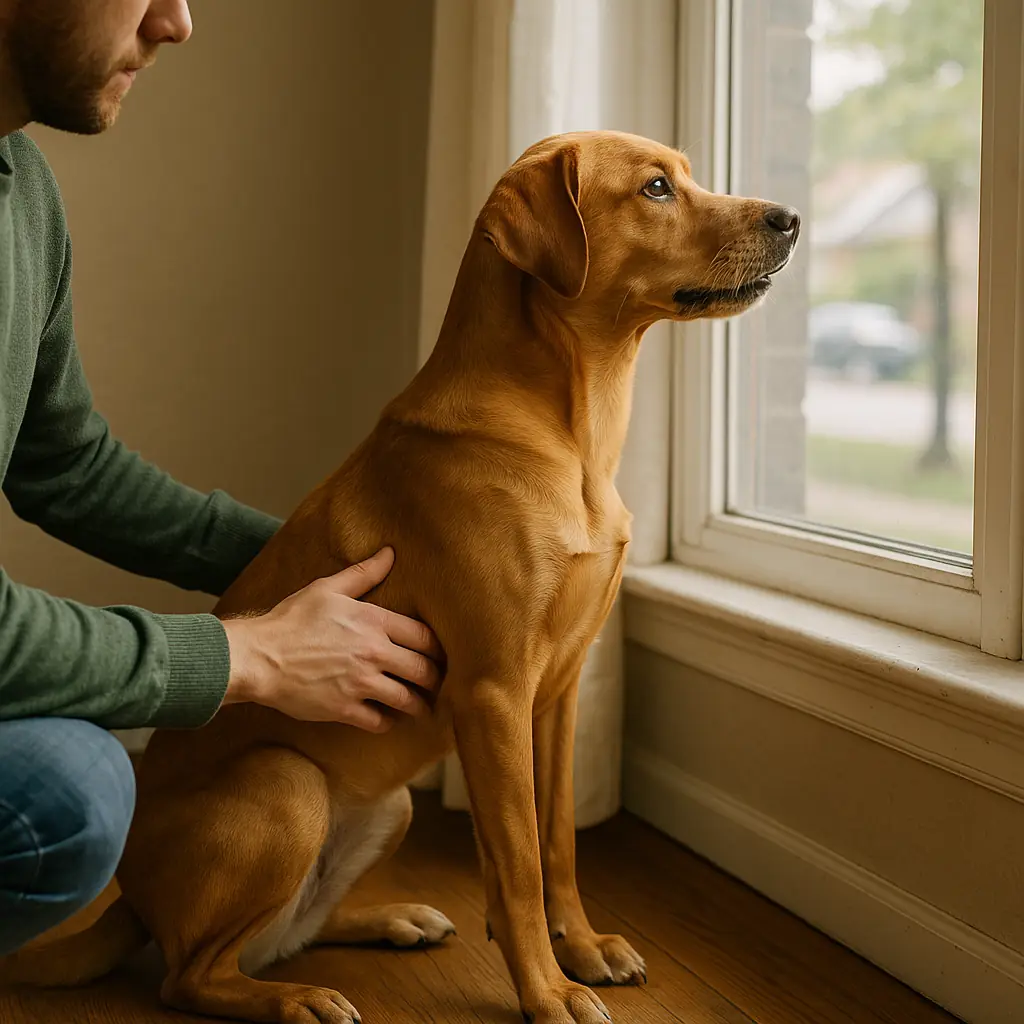
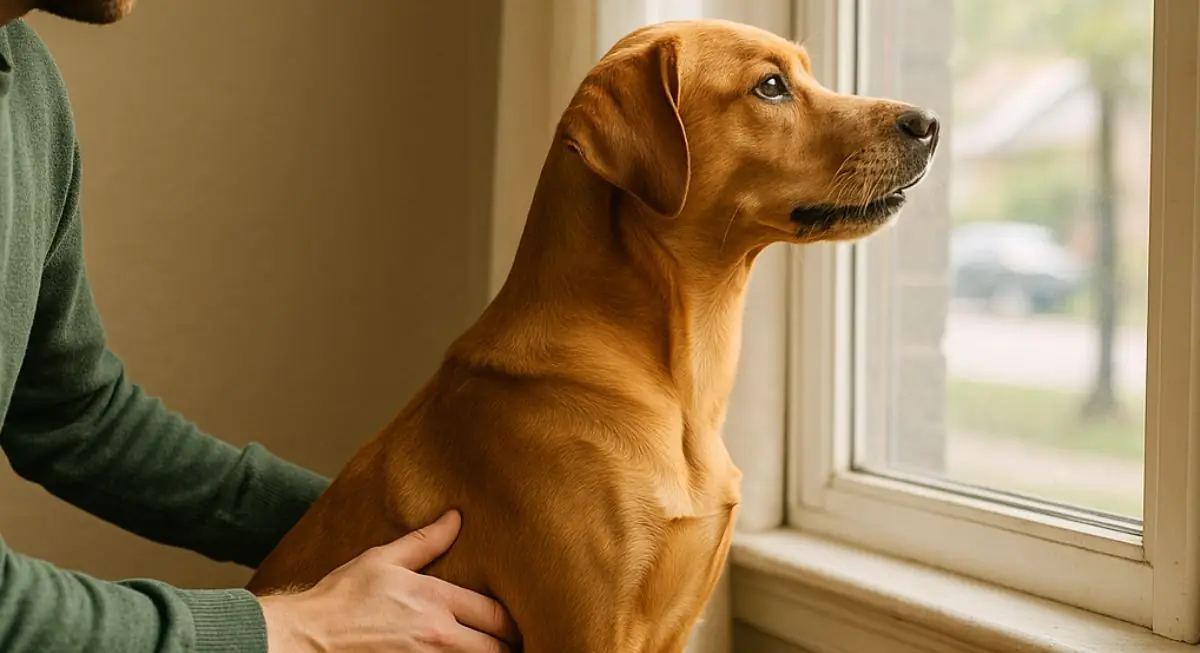
We have a household rule that sounds simple until you live with a dog who treats language like a contract: no barking when someone knocks, when the delivery truck sighs to a stop, or when the neighbor’s gate clicks. So my dog invented the whisper-woof. It’s not silent. It’s more like a breath pushed through a mostly closed mouth, with the tiniest little puff at the end, the canine version of clearing your throat in a meeting. If you’re in the room, you feel it before you hear it. If you’re not, you still know it’s happening because the dog is planted squarely at the window, neck long, eyes pinned, and that tail is doing tight little helicopter circles like it’s powering the whole operation.
This one always starts with a warm-up: a single closed-mouth huff (totally innocent), then the softest “boof” you’ve ever heard, then a series of them that speed up like a drummer checking the tempo. The dog will pause and look back at me after two or three, waiting for the verdict. And here’s the part that makes me laugh every time: the expression says, sincerely, that this is different. This is not barking. This is communication. This is a civic duty.
If you’re trying to live with this loophole, the only thing that helped me was treating the whisper-woof like it’s the same behavior, just quieter. I keep the response boring and consistent: I step between the dog and the window, ask for a sit, and feed a couple of pieces of kibble right at my knee so the whole scene shifts from “announce the threat” to “check in.” If I shout from across the room, the whisper-woof turns into full-volume in about three seconds, like the dog assumes we’re all joining the conversation now. The funniest part is how quickly the dog will return to the same spot afterward, as if the window is a microphone and the dog is just waiting for it to go live again.
The Cat Who Outsources Barking to Objects
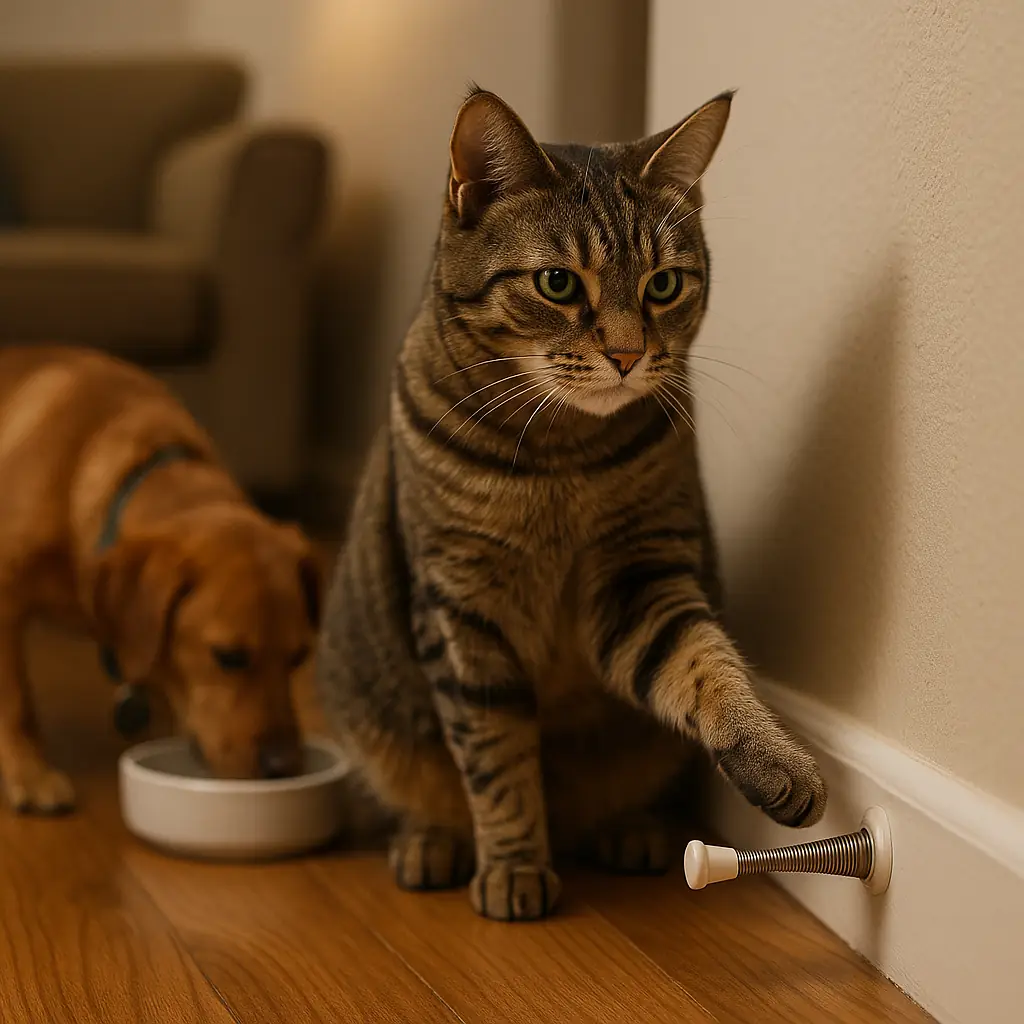
My cat doesn’t bark, obviously, but the no-barking rule still inspires her in the most annoying way. The dog learns to lower the volume. The cat learns to make the house bark for her. It’s like she heard the rule and thought, fine, we’ll do percussive protest instead. The first time I noticed it, I was on the couch and the room had that calm, post-dinner quiet. Then the metal tag on the dog’s collar started tapping the ceramic water bowl. Tap. Tap-tap. Tap. The timing felt almost too deliberate to be random. The cat was sitting three feet away, perfectly still, staring at me as if she had just discovered a new button.
Now it’s a whole repertoire. She’ll hook one claw under a springy doorstop and twang it so it makes that loud, rude boing that ricochets down the hallway. She’ll drag a toy with a bell across the hardwood so the sound carries. She’ll body-check the blinds just enough to make the slats clack, then freeze, ears forward, waiting to see if anyone reacts. If I say her name, she looks away like she wasn’t even there. Innocent. Uninvolved. A civilian.
What kills me is how perfectly timed it always seems. If the dog starts doing a whisper-woof at the window, the cat will add a tiny, strategic noise behind me, so my head turns away from the window for one second. It’s not teamwork, exactly. It just feels suspiciously well coordinated. And if the dog gets corrected for making noise, the cat will immediately produce a softer, more refined sound, like she’s offering an alternative. The cat isn’t breaking the no-barking rule. She’s just hosting a sound exhibition.
I can’t pretend I’ve solved it, but I have learned to stop rewarding the object-noise with eye contact. If I jump up to fix the blinds or react to the doorstop twanging, she gets the attention she was looking for. When I really need calm, I block the easy instruments. The water bowl gets slid a few inches away from the collar tag zone. Doorstops get a little foam cover. And I put out something that makes quiet, satisfying engagement instead, like a lick mat with a thin smear of dog-safe, xylitol-free peanut butter for the dog and a food puzzle for the cat. The cat still looks offended, but at least the house stops auditioning for a one-animal sound orchestra.
The Squeaky-Toy Legal Defense
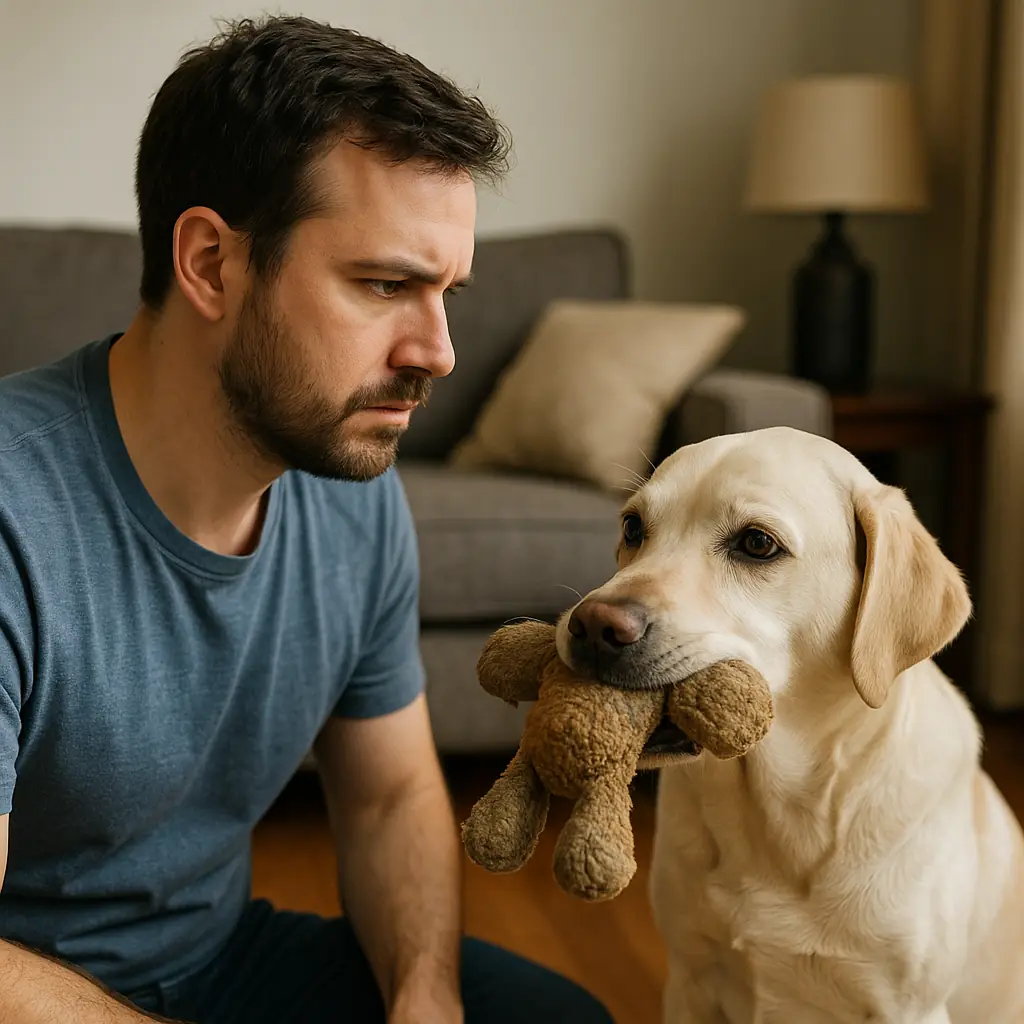
If you ever want to see a dog litigate a rule, ban barking, and then hand them a squeaky toy. My dog will pick up a beat-up plush, plant themselves right in front of me, and squeak it once. Not a play squeak. A statement squeak. Then they hold my gaze and squeak again, slower, like they’re dictating a message. If I ignore it, the dog adds the extras: a low chesty grunt, a huge theatrical sigh, then a squeak that lands at exactly the volume of a medium bark. But, technically, no bark occurred. It’s the same energy as someone saying they didn’t yell, they raised their voice.
There’s a specific squeaker tone that triggers the whole situation. The high-pitched new-toy squeak is just play. The flat, half-broken squeak is the one they use for negotiations, because it sounds irritated and urgent. I know this because the dog will dig through the toy basket to find the exact squeaker that has that tired wheeze, like it’s their preferred microphone. And yes, they will do it right after a knock at the door, as if they’re providing commentary in a different format.
When I’m trying to keep the peace without turning into the Fun Police, I treat squeak-demands like barking, not with a big correction, just by removing the audience. I stand up, calmly take the toy, and put it on a shelf for a few minutes: no scolding speech, no eye contact, no back-and-forth. If squeaking reliably gets my attention, it can become another attention-seeking habit, especially in the evening when they’re keyed up, and the whole house is supposed to be winding down.
Then I offer a quiet enrichment option, such as a stuffed Kong or food puzzle, to give the dog something else to focus on. For the cat, I toss a bell-free kicker toy because she’ll absolutely join the squeak party like she’s the hype person. The rule isn’t really no noise anyway. It’s no barking as a lifestyle. The squeaky-toy legal argument is funny, but it also shows how quickly a quiet dog can find another way to get involved when the house settles down; they’re still talking. They’re just picking a different instrument.