The stairs, the couch-to-kitchen loop, even a dropped backpack: three places genetics shows up as household
Stairs turn into an automatic headcount
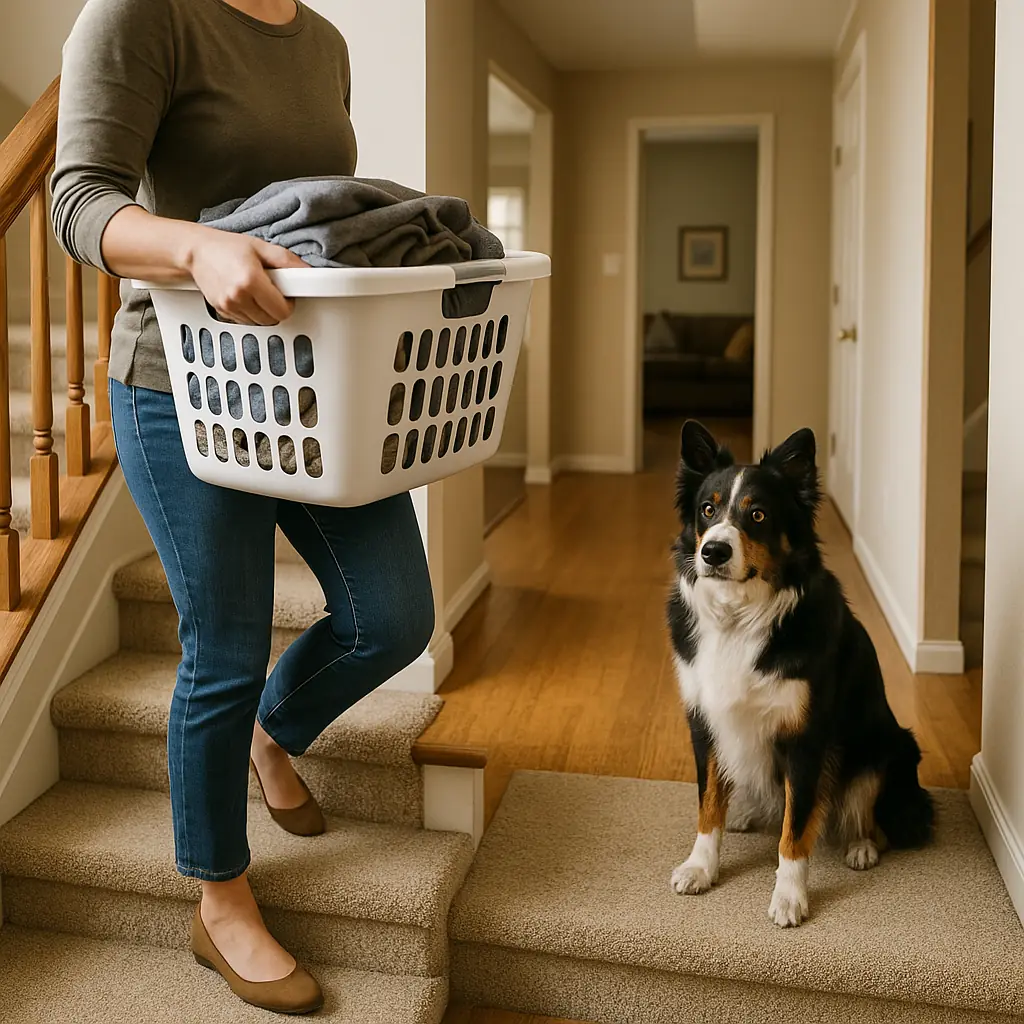
I didn’t clock it as a pattern until I started carrying laundry baskets upstairs and realized I was getting intercepted at the exact same spot every time: the little flat stretch where you can see both the living room and the hallway. My dog would plant there like a nightclub bouncer, not growling, not panicking, just… placed. If I tried to pass, I’d get the gentle body block and the classic stare that says, “We are not done accounting for everyone.” Nobody taught him this. We never did boundary games on the stairs. He just decided the landing was the control panel for the house.
The genetics piece shows up in how strategic the location is. Stairs compress movement into a single lane and they amplify sound. A herding brain loves both. You can hear footfalls, you can watch who goes up and who comes down, and you can cut off a route with one well-timed sidestep. If you have a breed that was built to notice drift in a flock, the family splitting between floors reads like drift. It isn’t misbehavior so much as a deeply practiced habit applied to the wrong species.
What I do now is boring but it keeps the stair “checkpoint” from turning into a daily argument. Before I head up, I ask for a sit on the bottom step, then I toss a couple pieces of kibble behind him, away from the staircase, so his body has a different job. I also stopped trying to squeeze past him on the landing because that turns it into a contact sport. If he pops up to shadow, I just pause on my step and wait him out. The moment I rush, the instinct gets louder. When I move like it’s no big deal, the landing loses some of its power.
The couch-to-kitchen loop that triggers a “re-group”
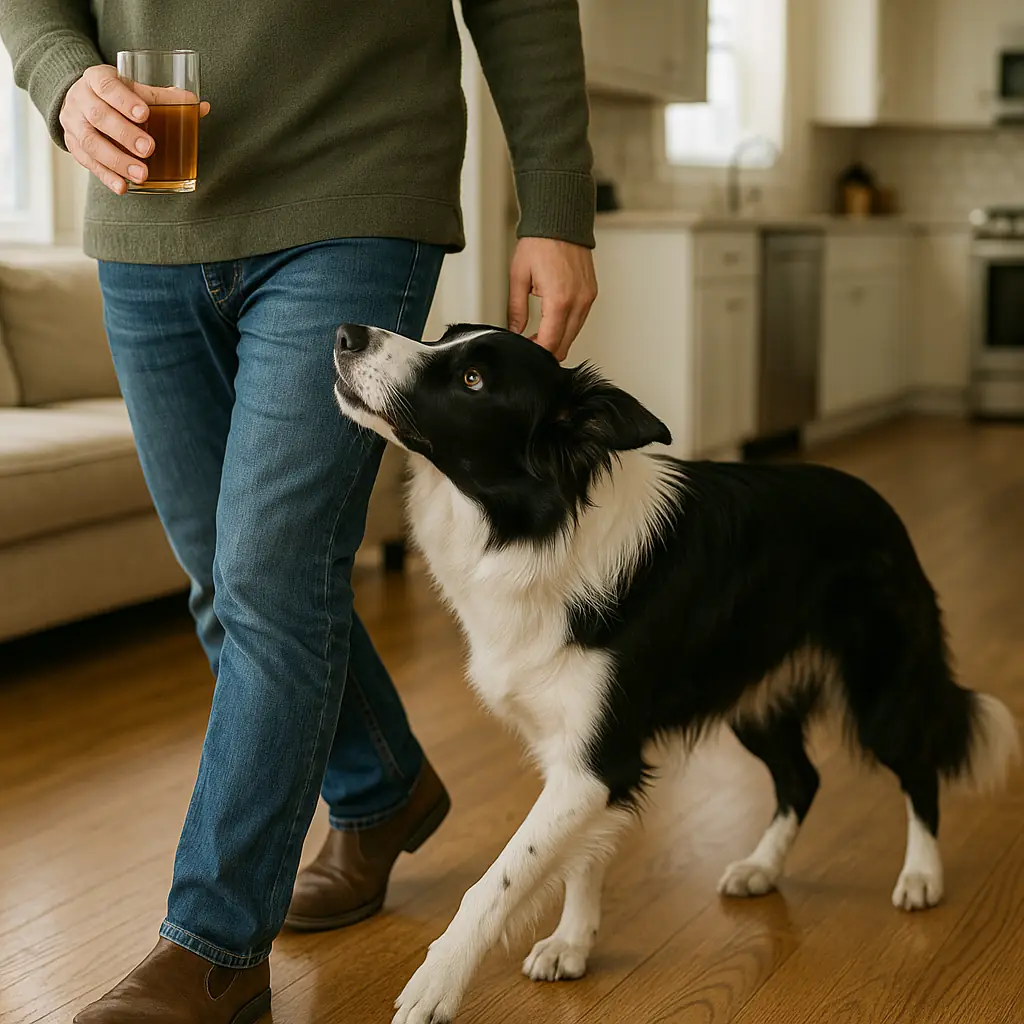
Here’s the routine that makes my dog look like he’s formally trained to manage household traffic: someone gets up from the couch, cuts through the living room, swings into the kitchen, then comes back with a drink. That’s it. No running, no screaming, no guests. But the moment that little loop starts, he stands, angles his body, and tries to funnel the person back toward the group on the couch. It can be a soft shoulder lean, a nose to the calf, or the quiet hover that feels like being escorted.
Once I started paying attention, the trigger wasn’t the kitchen. It was the split. The couch is the resting cluster. The kitchen loop is a single individual peeling off and returning. Herding dogs were selected to notice the one animal that breaks formation, and to apply pressure that changes direction. In a house, the pressure isn’t a wide arc in a field, it’s a dog wedging himself between you and the hallway. It’s the same software, just installed in a condo.
The way I defuse it is by making the peel off less dramatic in his head. If I’m the one getting up, I call him with me, but I give him a defined station in the kitchen. I like a bath mat or a cheap runner because it’s visually obvious and it doesn’t slide when he drops into a down. I toss one treat onto the mat, then one more between his paws, and I keep moving. If someone else is doing the loop, I don’t correct the dog mid-intercept because that tends to rev him up. I handle it earlier: we practice short, calm repetitions where the person stands up, takes two steps, and sits back down while the dog stays on his mat. It feels almost too simple until you notice the dog stop tracking ankles and start tracking the mat cue. Genetics doesn’t go away, but you can give it a job that fits indoors.
Why bags and coats make them start directing traffic
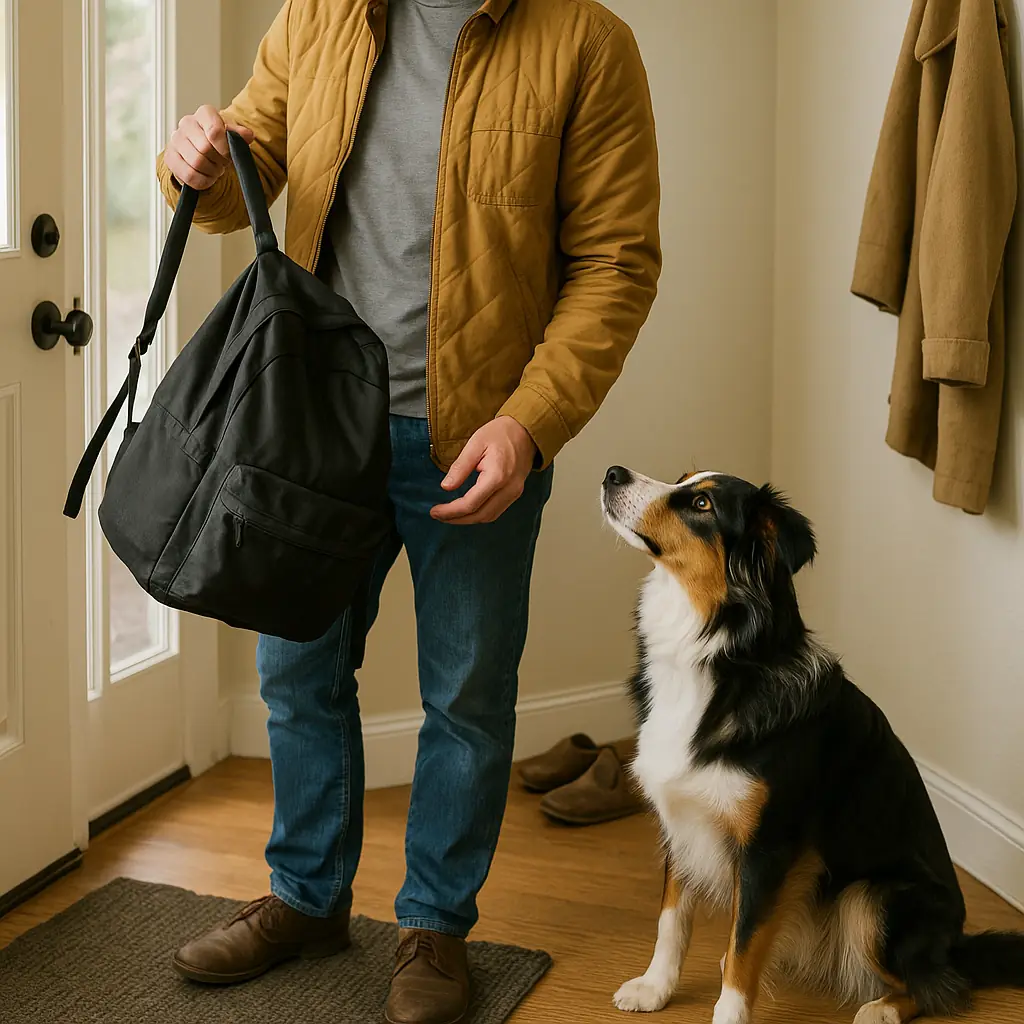
The weirdest version of “why are you herding me” in my house isn’t the running kids or the dinner rush. It’s the backpack drop. Somebody comes in, shrugs off a pack, a strap flops, and suddenly my dog is intensely invested in where that person goes next. He doesn’t do it when you’re just walking around. He does it when the environment changes quickly: coat comes off, bag hits the floor, shoes get kicked toward the wall. It’s like the props tell him, “Movement is about to happen. Prepare to manage it.”
I used to think he was guarding items. He isn’t. If I pick up the backpack and carry it to another room, he couldn’t care less. What he cares about is the transition moment: arrival, departure, switching zones. Herding breeds were built to react to motion and to anticipate it. On a farm, a gate clank or a rider shifting in the saddle predicts a change in where the animals are going. In a house, Velcro ripping, keys jangling, or a tote bag getting set down fills the same role. It’s a cue that the flock might scatter.
My fix is to turn those noisy transition cues into a little ritual that doesn’t involve policing people. I keep a small container of kibble by the entry, and when I come in I do the same sequence every time: bag goes on a hook, I ask for a sit, then I scatter a few pieces of kibble on a washable doormat. Sniffing on the mat buys me enough seconds to put shoes away and close the door without being shadowed. If I’m leaving, same deal: leash goes on last. If I clip the leash while I’m still grabbing keys and sliding on a jacket, he starts trying to steer my path through the house like he’s moving stock. When the leash is the final signal, he relaxes until it’s go-time. It’s not magic. It’s just giving that anticipatory brain a predictable order so it doesn’t invent its own.