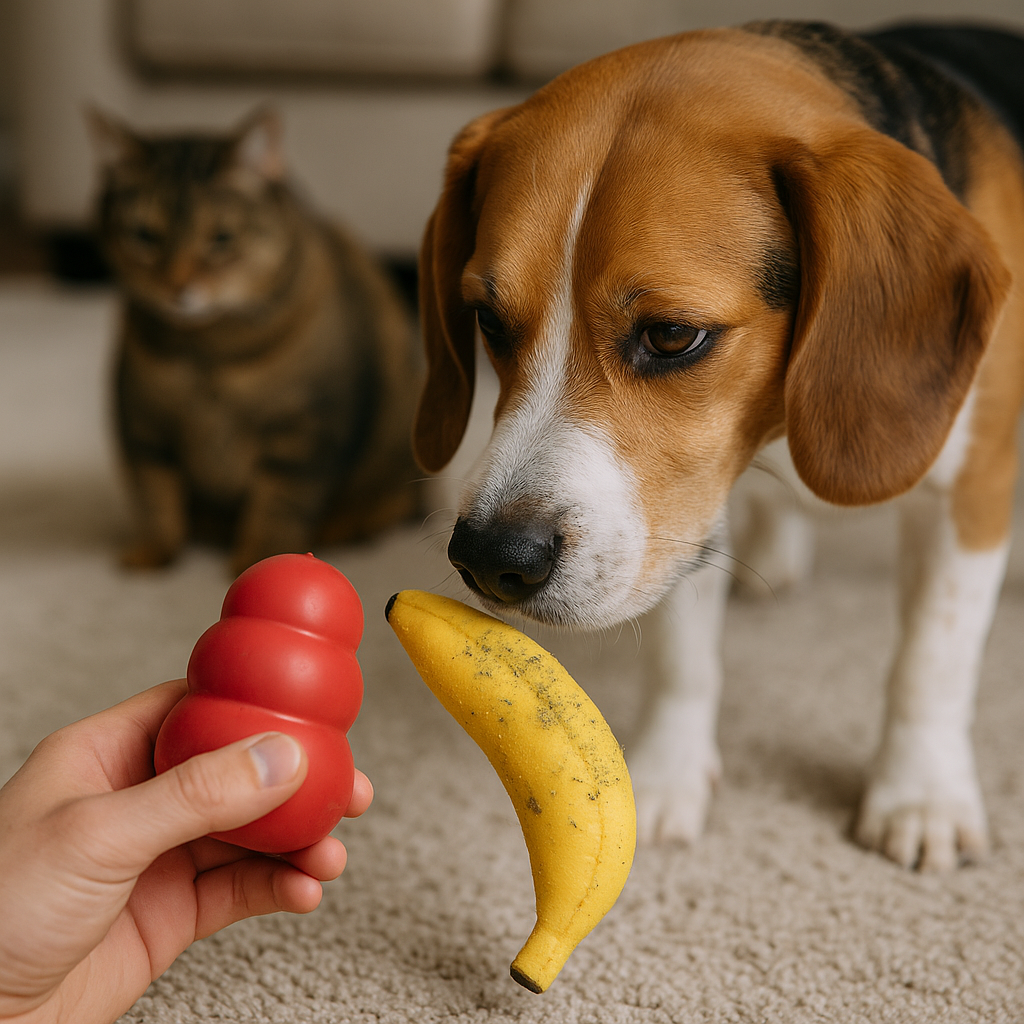
A tipped basket, a toy no one touched, and one tiny routine change showed me why my dog guards nothing at all.
The invisible boundary is usually anchored to one object
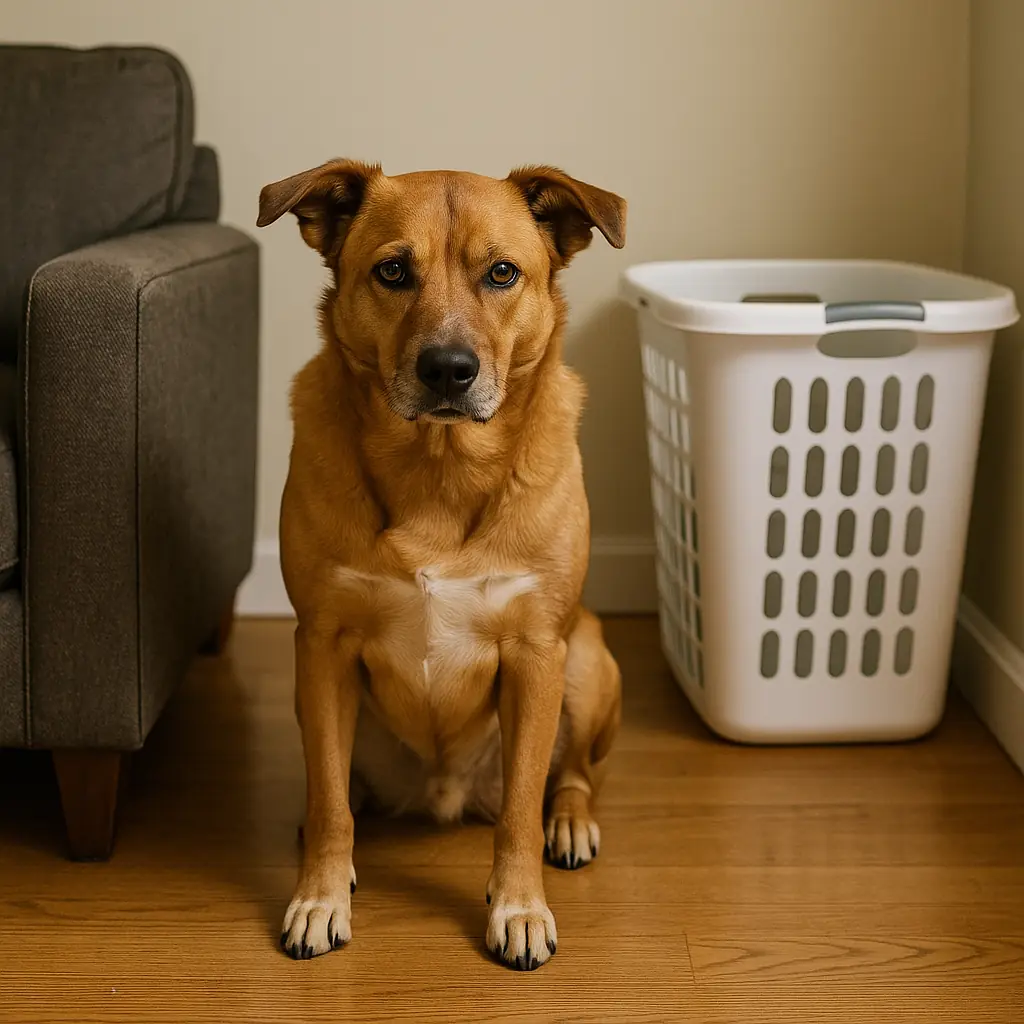
My dog’s weirdest guarding stint wasn’t a bone or a stuffed squirrel. It was the patch of hardwood beside the sofa, where nothing lived except a faint groove from a chair leg. The clue I missed for a week was sitting three feet away: a tall plastic laundry basket that had gotten nudged out of its usual corner. Not the basket itself, not clothes, not a smell I could put my finger on. Just the fact that this one familiar landmark had shifted, and the room suddenly had a different geometry.
Dogs build little mental maps off repeatable anchors. A crate in the same spot. The ottoman that always blocks the straight shot to the kitchen. The baby gate that’s usually open but sometimes isn’t. When one anchor moves, the dog that already runs a bit vigilant can start treating the nearest open area like it needs supervision. You see it as guarding empty space. They experience it more like, “This zone is now undefined, so I’m going to define it.”
What it looks like in real life: a hard stare when you step toward the spot, a shoulder check as they slide in front of you, and then that stiff pause with their weight forward. If you’re getting little low grumbles, it’s not because the floor is valuable. It’s because the dog is trying to control access while they figure out what changed.
The practical test I use now is boring but telling. Before I label it “resource guarding,” I reset the room’s anchors: basket back in its usual corner, shoes off the walkway, toy bin where it belongs, crate door in its normal position. Then I watch the dog’s body, not their mouth. If the guarding melts when the familiar objects go back to their usual spots, you’re dealing with a trigger around predictability and boundary control, not a secret stash you haven’t found.
If you try this, don’t do it by looming into the guarded spot and “proving a point.” I treat it like moving through a narrow hallway with a grumpy bouncer. Sideways approach, calm voice, toss a treat away from the zone, and give them a job that isn’t guarding, like going to a mat. The whole goal is to lower arousal so their brain can update the map.
The squeaky toy is the decoy; the real trigger is anticipation
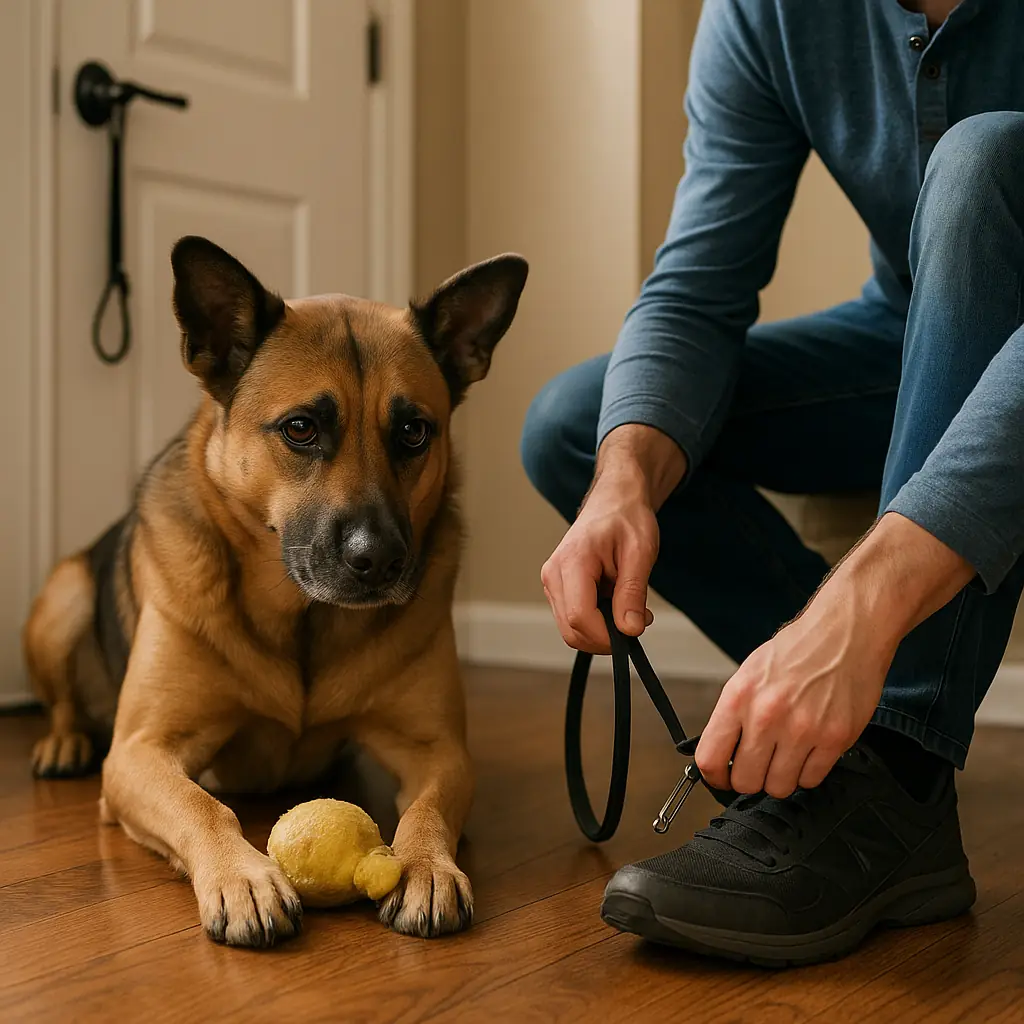
I used to assume my dog guarded a toy because it was high value. Then I watched him guard the saddest toy we own: a half-deflated squeaker that makes a wheeze noise like a dying smoke detector. Nobody competes for that thing. The pattern was the giveaway. He’d only get intense about it right before our evening walk, right when I grabbed the leash from the hook and started my shoes-on routine.
In his head, the toy wasn’t the treasure. The toy was the lightning rod for anticipation. Big feelings have to land somewhere, and for some dogs that means controlling a tiny, nearby “thing” because controlling the big thing (the walk, the front door, the excitement) is impossible. The guarding is a pressure valve. It’s why you’ll see them plant over an object the moment the household energy spikes: keys jingle, kids run, DoorDash knocks, someone says “car,” the Roomba wakes up and starts its slow patrol.
You can catch this trigger if you time-stamp the behavior instead of inventorying the objects. Does the guarding show up at the same moments each day, even if the toy changes? Does it flare when you put on a hoodie, open a specific cabinet, or start loading a Kong? If yes, you’re looking at anticipation and arousal, not a dog who’s decided a rubber chicken is worth a fight.
What helped in my house wasn’t taking the toy away (that just confirmed there was something to worry about). I changed the sequence. Leash stays on the hook until he’s on his mat. Shoes go on after a scatter of kibble in the hallway, away from the toy pile. If he grabs a toy and freezes, I don’t reach for it. I interrupt the mood with a cue he can win: “touch” to my hand, then “find it” with treats tossed behind him so he has to turn his body away from the guarded item.
The shift you’re aiming for is simple: reduce the number of “build up” seconds where the dog can spin themselves into a state. For some dogs that means shorter, cleaner transitions. For others it means giving them a predictable pre-walk routine that burns off the edge, like 30 seconds of tug with clear rules (start cue, drop cue, then done). The toy stops being a problem when the anticipation stops needing a place to stick.
When they guard a doorway, they’re often guarding a feeling
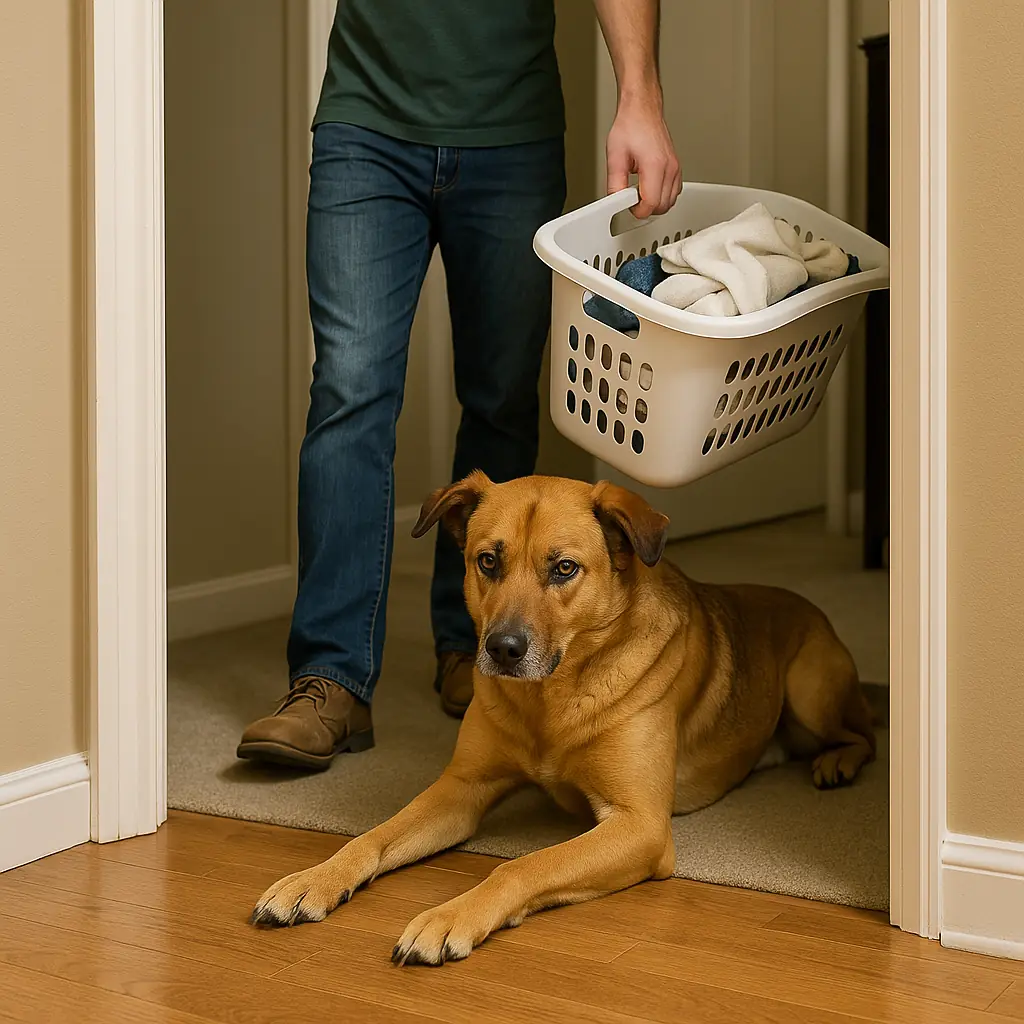
One of the sneakiest versions of “guarding nothing” happens at thresholds: the doorway to a bedroom, the pinch between couch and coffee table, the top of the stairs. It looks like they’re guarding space, and in a way they are. But the trigger isn’t the doorway itself. It’s the way a doorway concentrates pressure. People move faster, bodies loom, eye contact happens by accident, and there’s no easy escape route. If your dog is already a little on edge, a tight passage can feel like the moment you should take control of the traffic pattern.
This is where I see the psychological part most clearly: conflict plus uncertainty. The dog wants to be close to you, but they also want distance from whatever is coming through the threshold. So they pick the simplest behavior that creates clarity, which is blocking. They stand sideways, head low, shoulder into the opening. If you keep walking, they escalate because it worked for them once. If you back up, they learn the block has power. Nobody is being evil. Everybody is being a mammal in a hallway.
I got better results treating it like crowd management, not like disobedience. First, I stop testing the boundary with my body. I widen the path if I can: slide the ottoman six inches, move the shoe rack, keep the laundry pile off the landing. Then I rehearse a pattern when nothing is happening. Dog goes to a mat a few feet from the doorway, I drop one treat between their paws, and I walk through without fanfare. Return, treat again. Repeat until the doorway is boring. Boring is the whole point.
If you’re dealing with actual growling or snapping, don’t try to “walk through it.” That’s how bites happen. I’ll use a baby gate or an x-pen temporarily so the dog can’t practice blocking while I rebuild the routine, and I’ll loop in a credentialed trainer if the intensity is high. But even in milder cases, the mental switch is useful: the dog isn’t guarding air. They’re trying to control an uncomfortable moment. Make the moment predictable, give them a place to be that isn’t in the pinch point, and a lot of the empty-space drama fades without a showdown.