
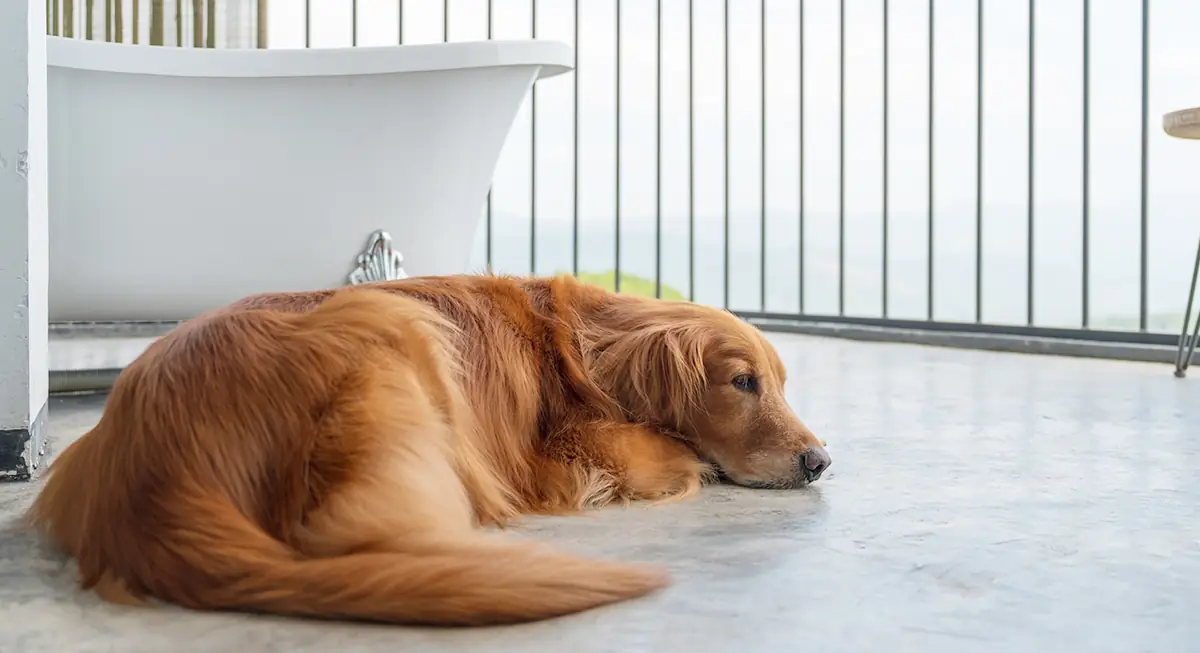
A dog that spent years claiming the couch, bed, or softest blanket in the house can suddenly start sleeping on cold bathroom tile instead. Many owners notice it out of the blue. One week, the dog is curled up in its usual spot, and the next, it keeps heading for the bathroom floor, especially at night. At first, it seems random. Maybe the room feels quieter, or maybe the tile stayed cool during a warm day, and the dog liked it.
But when it keeps happening, there is usually a reason behind it, especially in senior dogs. Older dogs often experience changes in their bodies that make cool, firm surfaces feel better than soft cushions. Heat sensitivity, joint pain, stiffness, or discomfort can all push them toward tile floors because those surfaces sometimes provide relief they are not getting elsewhere.
Tile Starts Solving The Problems an Old Bed Can’t
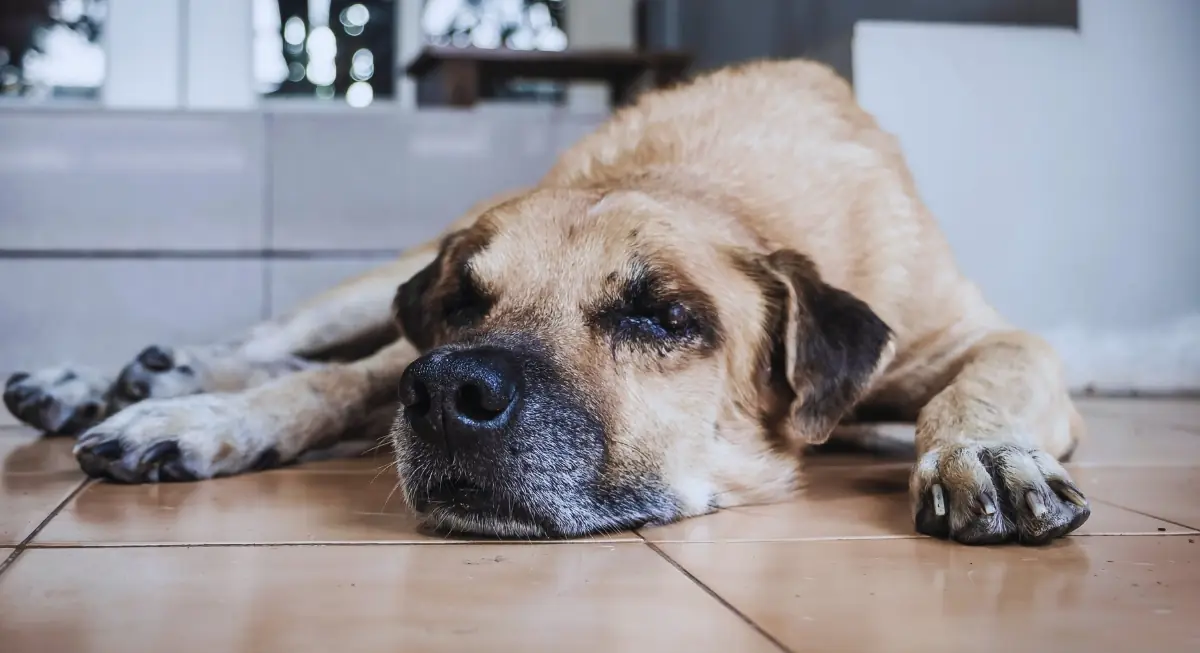
Senior dogs deal with body temperature differently than younger dogs. Their sleep patterns change with age, and many start waking up more during the night. Some also spend up to 16 to 20 hours a day sleeping or resting. That extra sleep time makes comfort more important than ever.
Bathroom tile is cooler than carpet, memory foam, and thick dog beds. A senior dog with arthritis, inflammation, or reduced mobility may find relief on a hard, cool surface, as it absorbs heat rather than trapping it. Dense bedding can hold warmth around sore joints, especially overnight.
That explains why many older dogs leave beds they once loved. The bed itself starts feeling uncomfortable. Owners often assume the dog suddenly “hates” its bed. In reality, the floor may simply feel better on aging hips, elbows, and shoulders.
Heat Hits Senior Dogs Harder at Night

Older dogs do not regulate their body temperature as efficiently as they once did. Thick fur, reduced circulation, and slower recovery during sleep can leave them restless after bedtime.
Tile helps with that. Cool flooring pulls heat away from the body, especially through the belly and paws, where dogs release warmth more easily. Many dogs first move to the bathroom during warmer months, then keep returning there long after temperatures drop.
The body remembers what brought relief. This is also why some senior dogs rotate between multiple sleeping spots overnight. They settle in a bed for cushioning, then move to tile once they start overheating.
Joint Pain Changes Sleeping Habits
Aging dogs rarely announce joint pain in obvious ways at first. The clues usually appear in small, routine changes, and sleeping on tile is one of them.
Dogs with arthritis or hip discomfort often struggle with deeply cushioned beds because sinking into soft padding makes getting up harder. Firm flooring provides them with greater stability and leverage when standing.
Veterinarians often recommend orthopedic beds for senior dogs, but placement and material still matter. If the bed traps heat or collapses under weight, many dogs will continue choosing the floor anyway.
The Bathroom Also Feels Quiet and Predictable
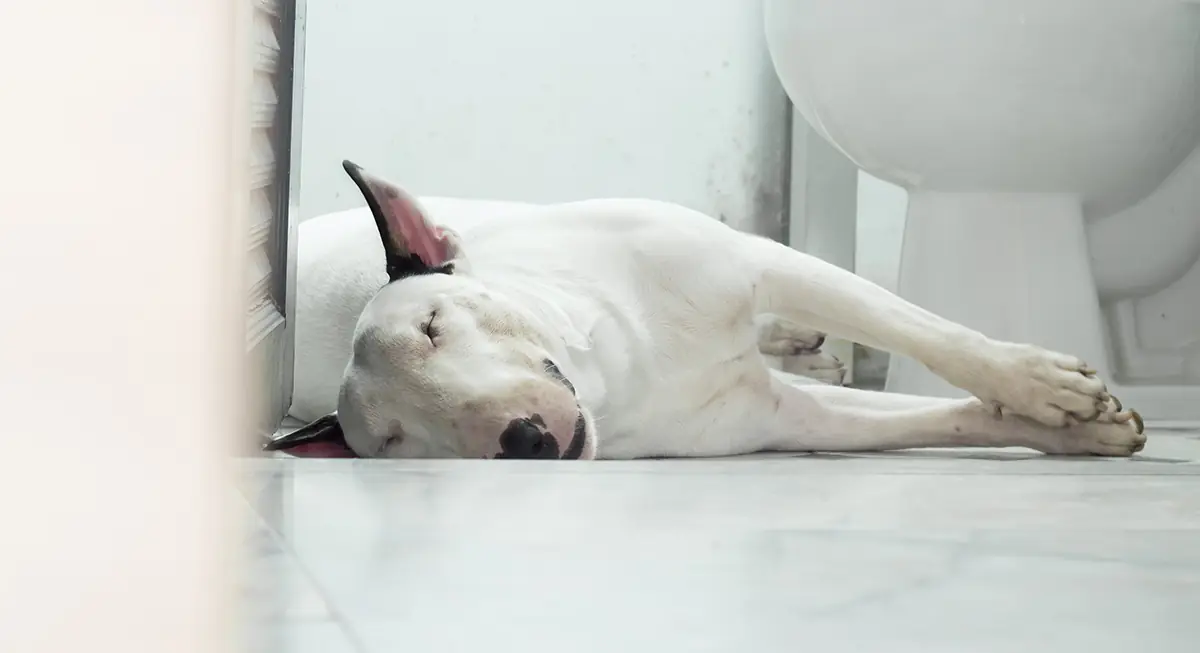
Senior dogs become more sensitive to household activity as they age. Noise, foot traffic, bright lights, and constant movement can interrupt sleep. Bathrooms tend to stay calm for long stretches, especially overnight.
Some older dogs also develop mild cognitive changes that make them seek enclosed, familiar spaces. A bathroom offers consistent temperature, limited stimulation, and walls close by. That combination can help anxious dogs settle more easily.
The behavior becomes more noticeable at night because senior dogs wake more frequently and have a harder time falling back asleep.
When the Change Deserves Attention
A dog choosing bathroom tile is usually harmless. A sudden full-time switch deserves a closer look, especially if it comes with stiffness, pacing, panting, whining, or trouble standing up. Sleep changes often precede owners noticing obvious pain.
That is why veterinarians pay attention when an older dog abandons its regular sleeping area after years of routine. Arthritis, cognitive decline, overheating, and mobility problems can all change where a dog feels most comfortable resting.





