

Scientists studying canine brains found that dogs pay attention to both what we say and how we say it. One part of the brain helps process familiar words, while another reacts to tone and emotion. So when a dog hears “good dog” in a cheerful, excited voice, it lands very differently than the exact same words spoken flatly or with irritation. They are listening for meaning, but they are also reading the mood behind every sentence.
That is part of why dogs react so strongly to certain tones, even when they do not fully understand the words themselves. A playful voice can make them light up instantly, while a sharp or suspicious tone can make them freeze, tilt their head, or look genuinely guilty. Say “who stole the sandwich?” in the same voice you use during trouble, and many dogs suddenly act like they are being cross-examined in court.
Dogs Listen for Emotion First
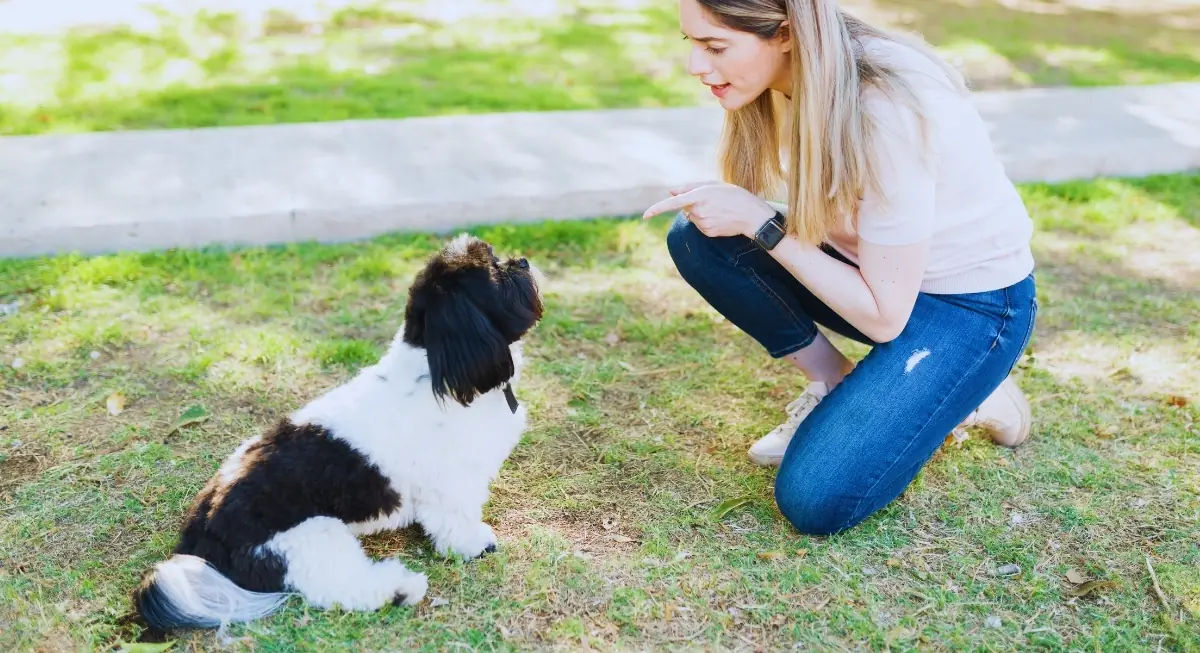
Researchers in Hungary trained dogs to lie still inside fMRI machines while hearing different combinations of words and tones. Border collies, golden retrievers, a German shepherd, and other breeds listened to praise words and neutral words spoken in both upbeat and flat voices.
The scans revealed that dogs process speech in a surprisingly human-like way. The left side of the brain helps sort word meaning, while the right side reacts to tone and emotional delivery.
The bigger surprise was that dogs responded most strongly when positive words matched a positive tone. A cheerful “well done” triggered the brain’s pleasure centers. A monotone “well done” barely moved the needle. An excited voice saying meaningless words also failed to create the same reaction. Dogs, apparently, care about consistency.
Human Body Language Fills In the Blanks

Speech is only part of the conversation anyway. Dogs study posture, facial expression, movement, and physical routine. Trainers have long known that visual cues often work faster than verbal commands. Some studies suggest dogs form reward patterns more quickly through gestures than through spoken instruction alone.
That may be why dogs sometimes “ignore” commands they absolutely know. A person saying “come here” while standing stiffly or facing away sends mixed signals, and dogs can quickly pick up the conflict.
People also underestimate how much daily repetition shapes canine understanding. Dogs become experts at predicting patterns. Grab a leash after saying “walk” enough times, and the brain starts connecting those events into one package. Soon, the word alone creates excitement.
The same thing happens with smaller habits that humans barely notice. Dogs learn the sound of keys, work shoes, snack wrappers, and even specific phone notifications.
Dogs Probably Aren’t Translating English
Dogs are smart, but researchers still caution against assuming dogs understand language the way humans do. A dog hearing “good boy” likely does not break down the sentence word by word. Instead, the dog recognizes a familiar sound pattern linked to praise, affection, rewards, or attention. That distinction is vital because it changes how people think about communication with pets.
Dogs are not sitting around interpreting grammar. They are reading emotional intent, repetition, sound patterns, and physical behavior simultaneously. Human speech becomes part of a much bigger signal system. Older dogs may rely even more heavily on tone instead of vocabulary. Some research found that younger dogs distinguished words more clearly than older ones.





