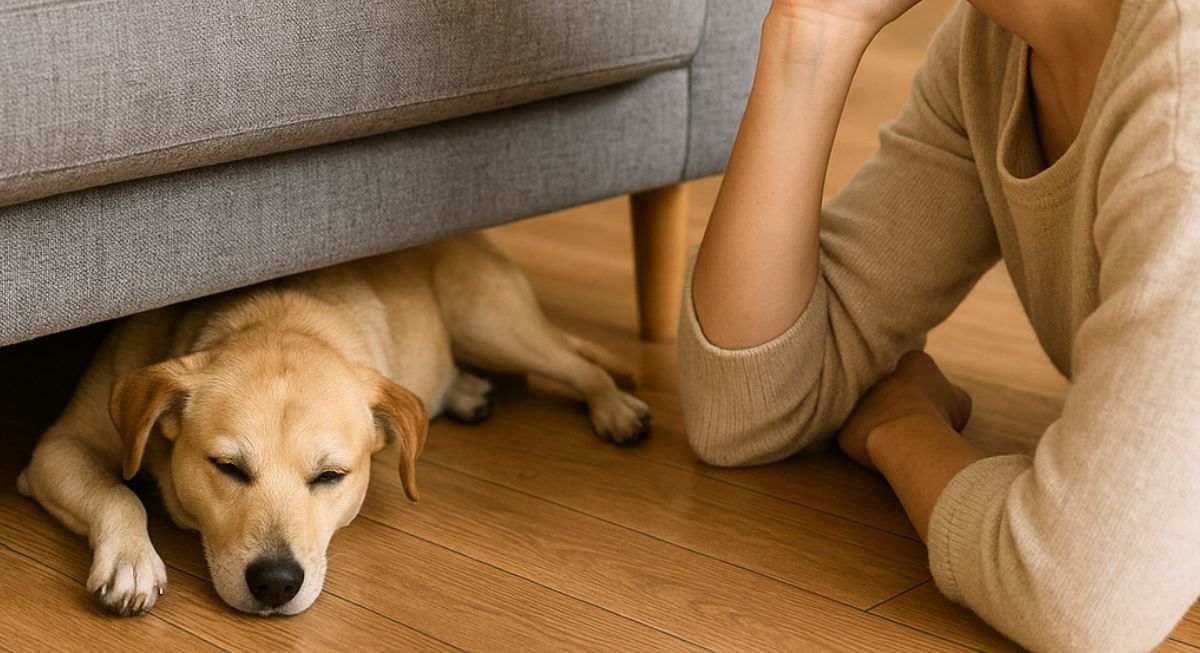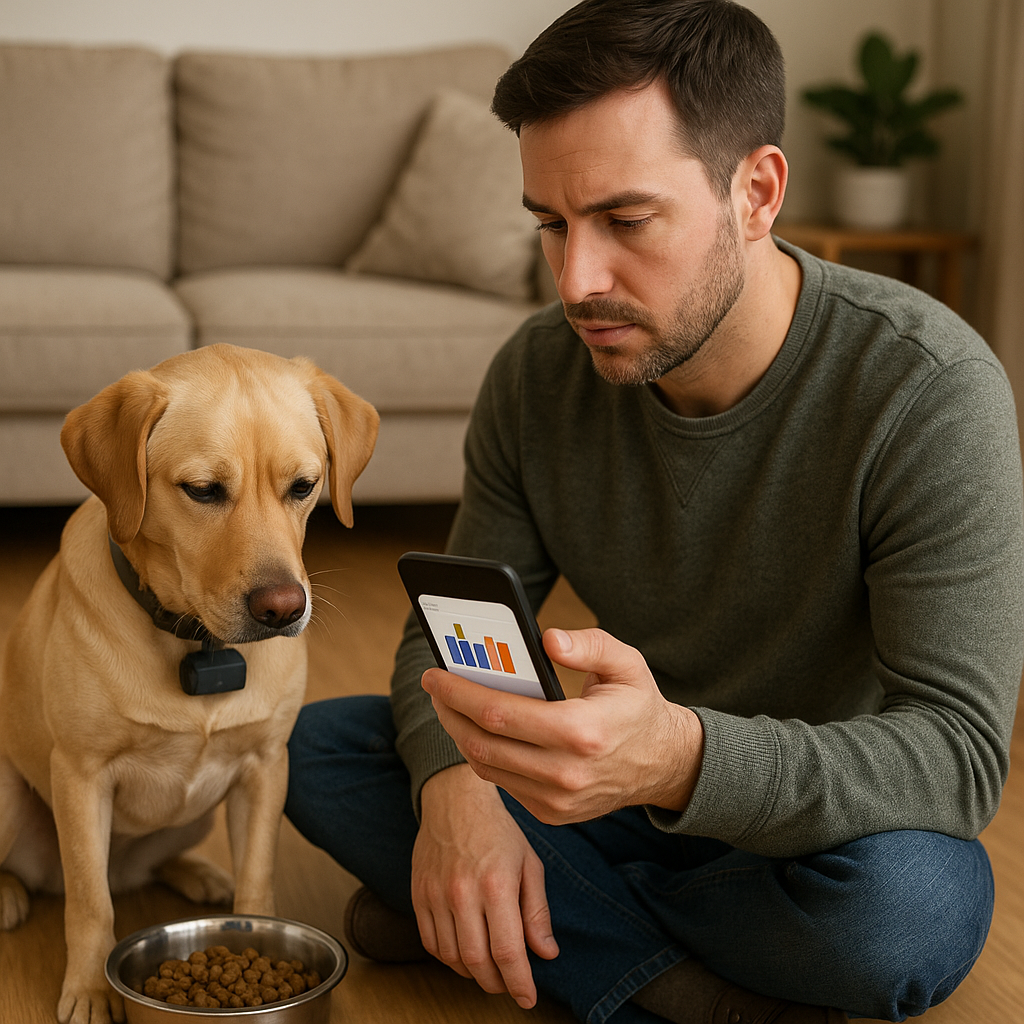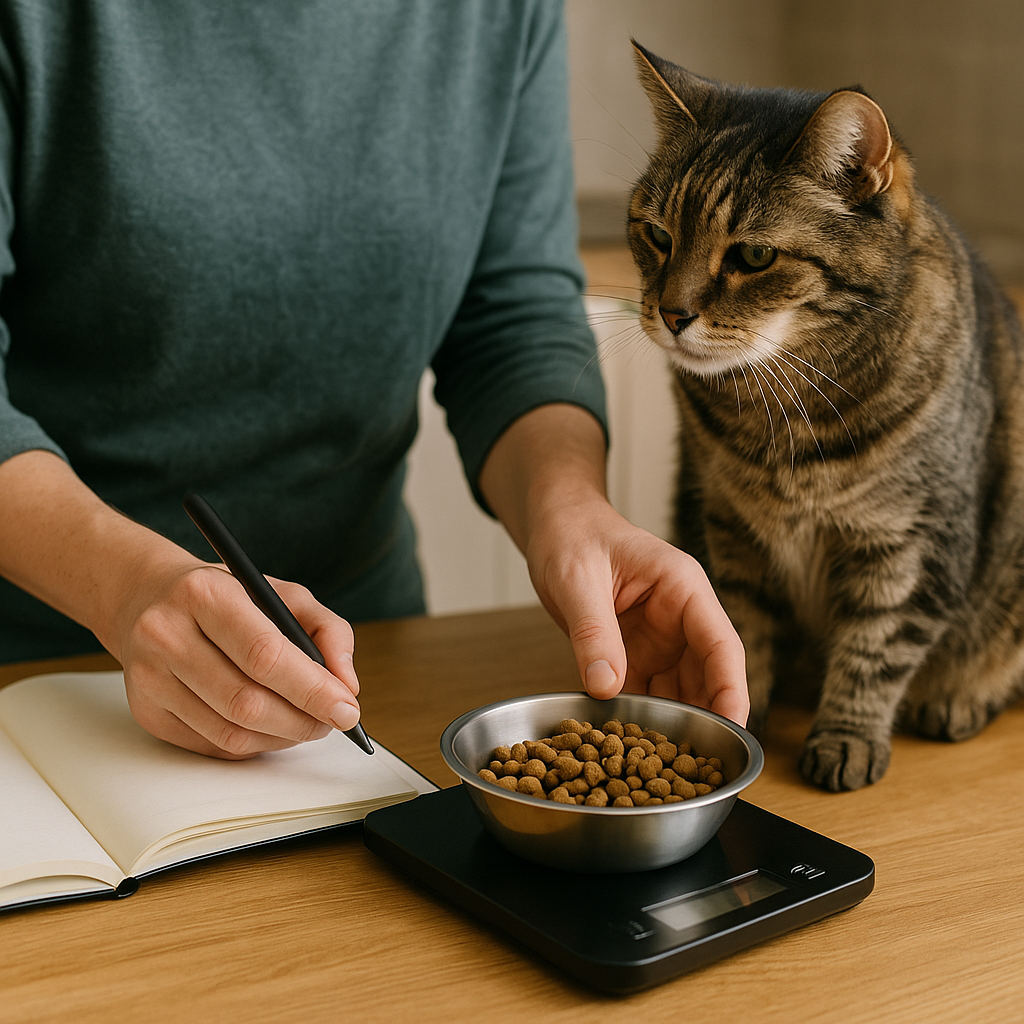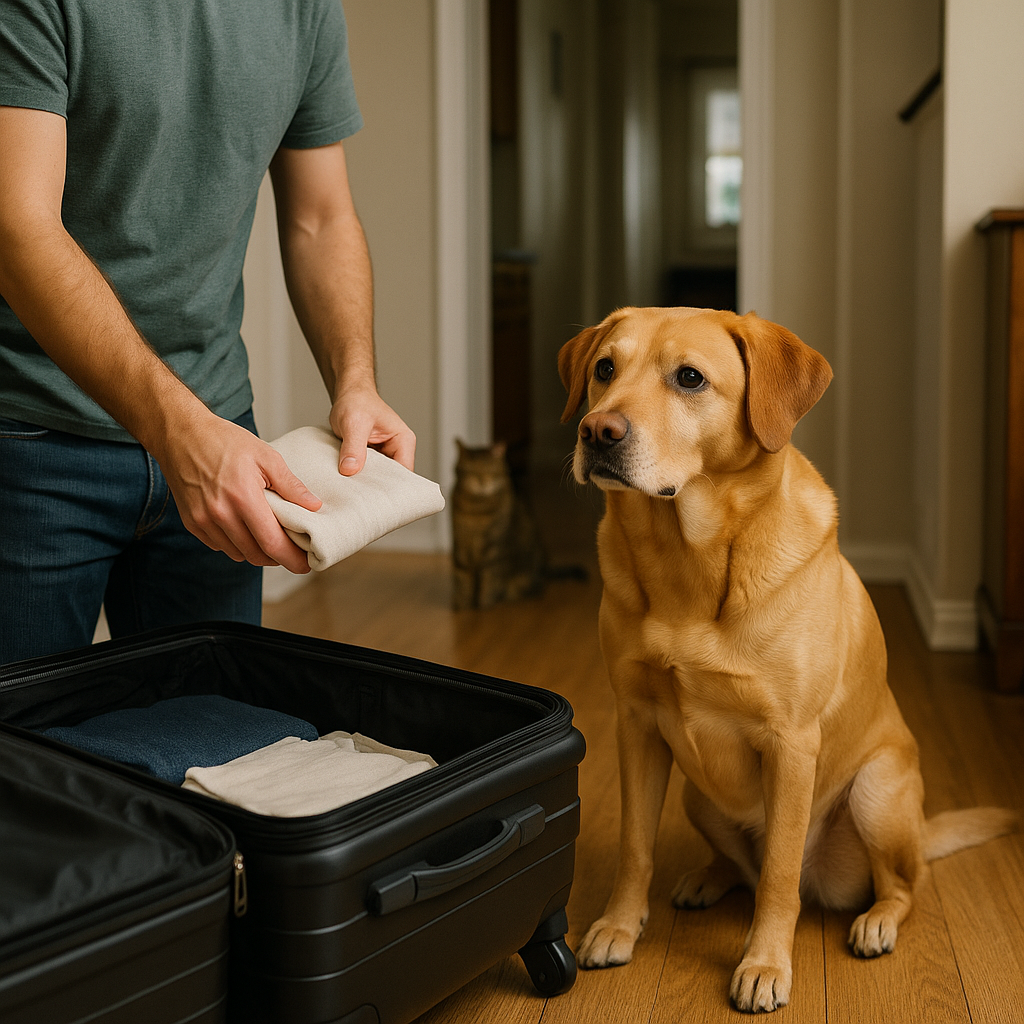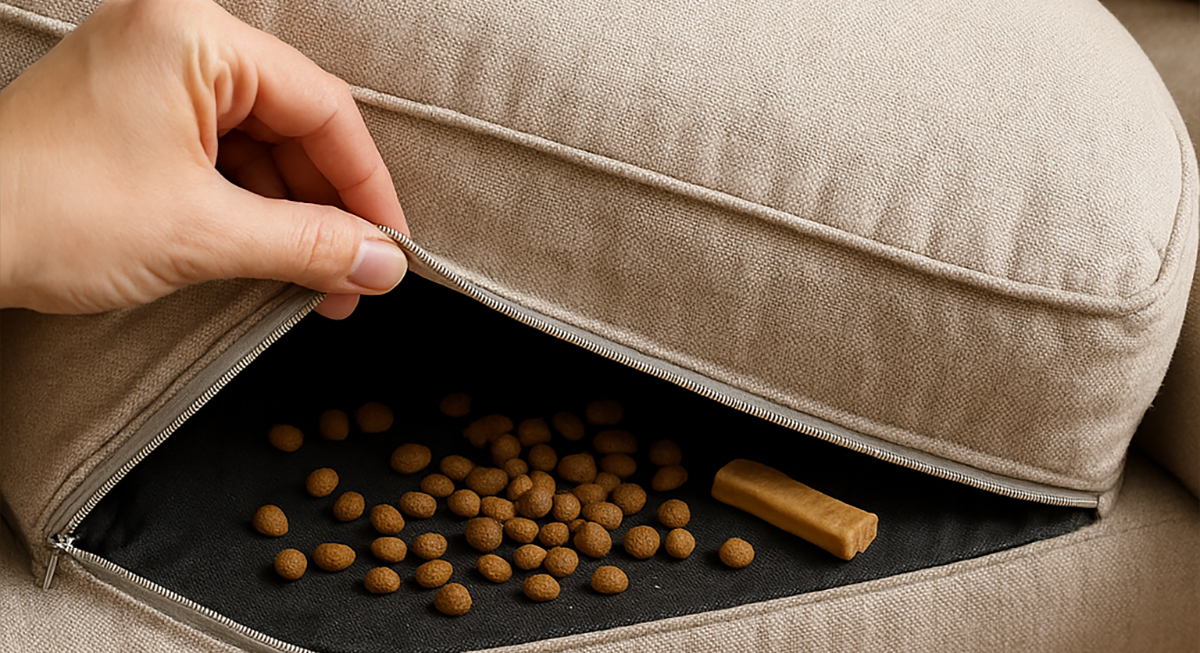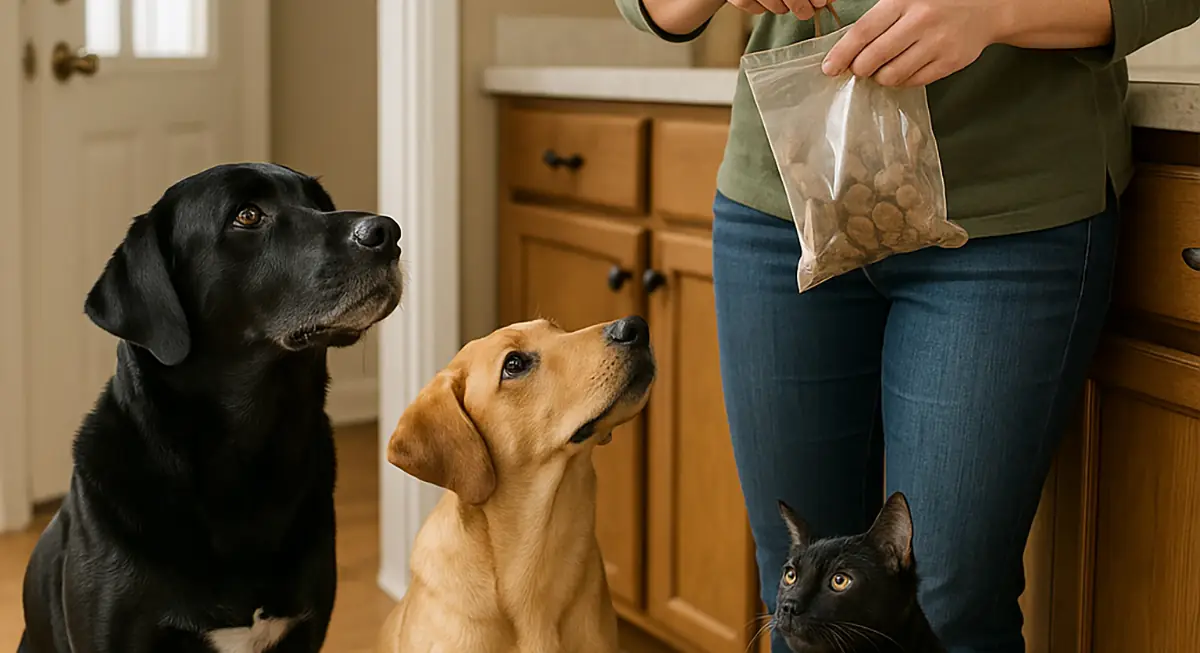
In a multi-pet home, one animal’s behavior can sometimes influence what the others do, especially when food, attention, or another desirable resource is involved. Here are three examples I’ve seen.
When One Pet Starts a Doorbell Routine
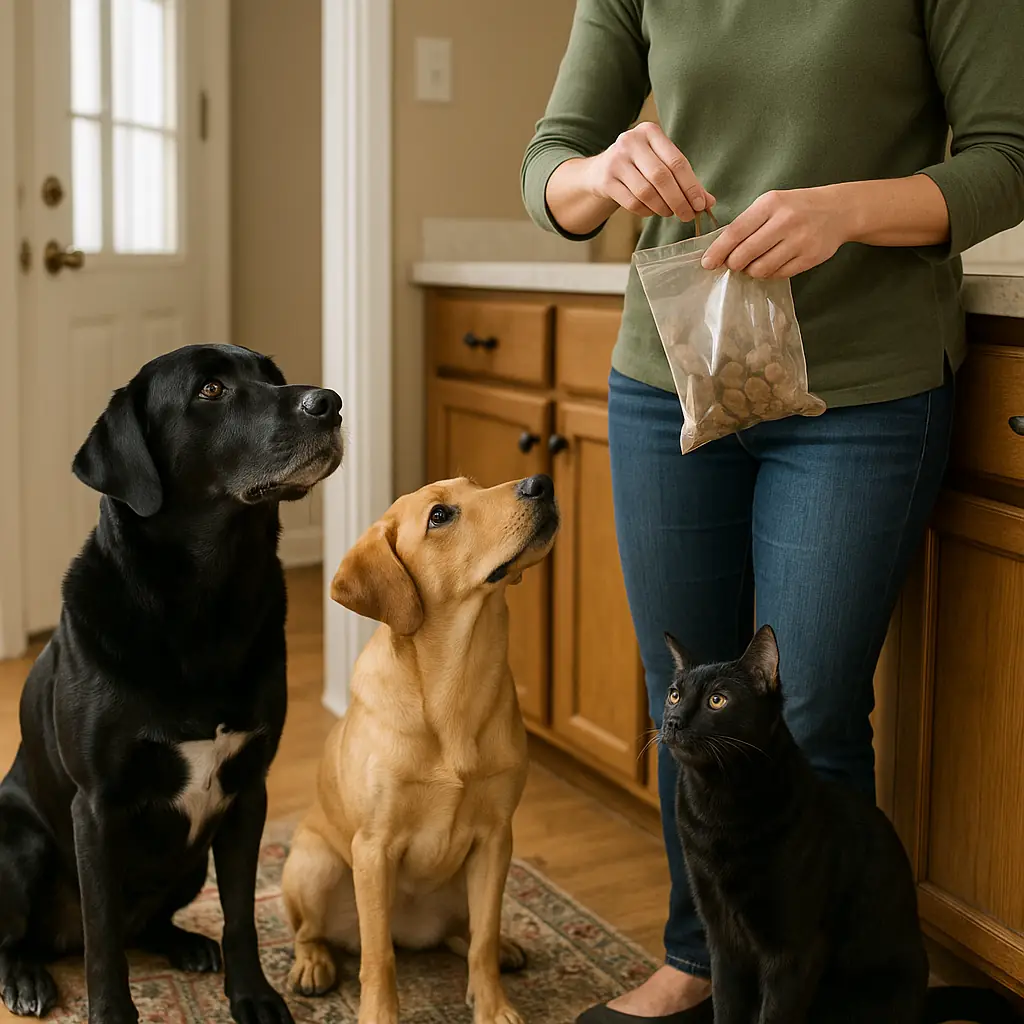
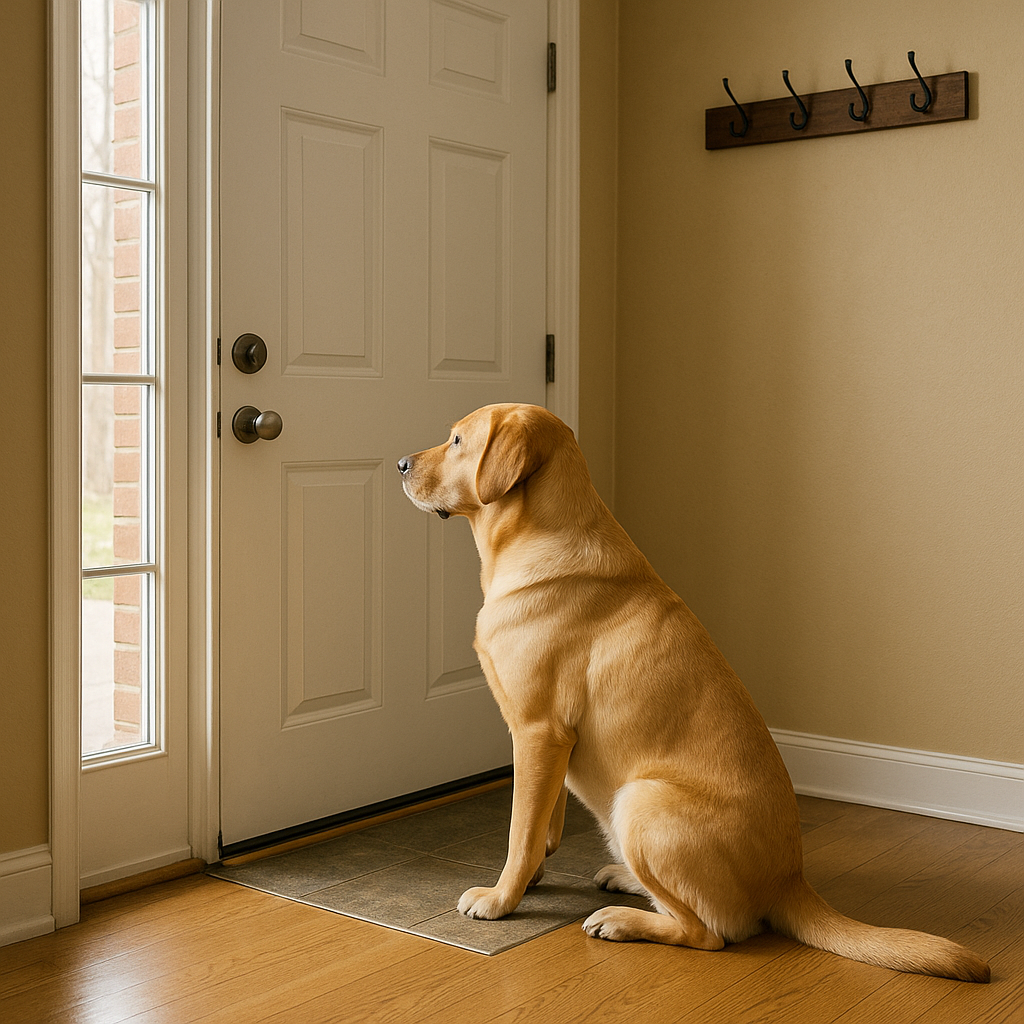
In a multi-pet house, the doorbell isn’t a sound; it’s an assignment. One animal decides what it means, and everybody else copies the part that looks most rewarding. I’ve watched a younger dog learn the whole routine in about three deliveries: big dog hears the chime, runs to the entry rug, sits like a saint, gets praise and a treat. Meanwhile, the cat doesn’t care about the bell at all, but does care about the treat bag crinkle, so she appears from nowhere and plants herself between me and the cupboard. By the end of the week, the dog is sitting before the bell even rings because he heard the delivery van door slide, and the other dog is copying the sit with none of the self-control. He’ll slam his butt down, pop right back up, then add a single sharp bark because he’s figured out barking is the fastest way to get eyes on him.
If you’re trying to understand why the weirdness spreads, pay attention to what gets reinforced by accident. It’s rarely the behavior you think you’re training. You might be rewarding speed (who gets to the rug first), proximity (who wedges closest to your knees), or noise (who makes the most convincing emergency). And a similar behavior does not necessarily mean the animals are bonded. The second pet may simply have learned that the same situation predicts food, attention, or another reward.
My tell that it’s turned into a household norm is when the quiet pet starts doing the setup behavior. If the cat starts moving to the same spot when she hears the delivery activity, or the dog begins pacing when the truck arrives, they’ve learned that those cues predict what happens next. The approach that works best for me is consistent reinforcement: cue the desired behavior, reward calm responses, and avoid accidentally rewarding barking or rushing. They’ll still copy each other. They just copy the version you can live with.
When One Pet Turns the Sink Into a Routine
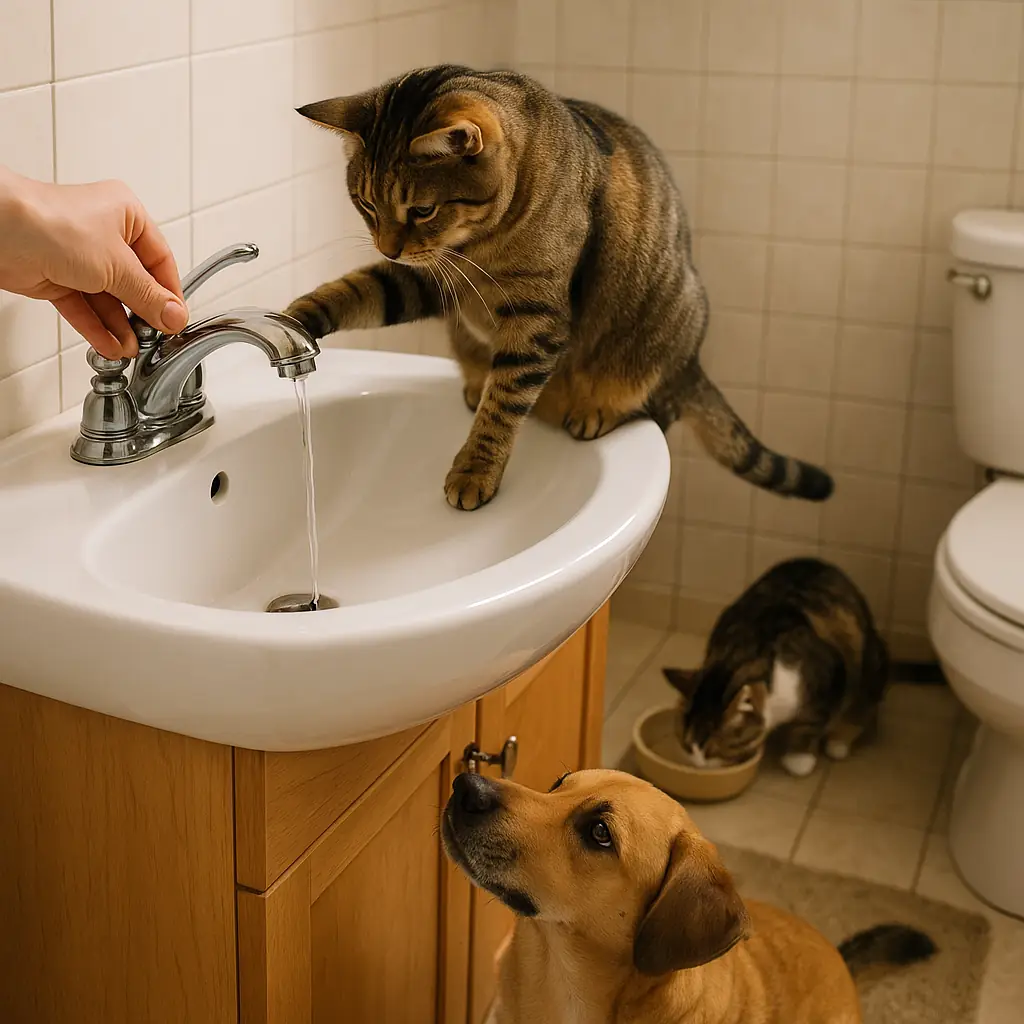
There’s always one animal that makes water their whole personality. In my place, it was a cat who treated the bathroom sink like a private bar. She’d hop up, stare at the faucet, and do this tiny, patient paw tap on the metal spout like she was ordering room service. I turned it on once, just a trickle, and that was it. She started doing it morning and night. The dog noticed the routine and, within days, started following us into the bathroom and sitting on the bath mat.
Then the copycat phase got weird. The second cat didn’t like running water, but she started joining the bathroom routine because it reliably brought attention. So she’d arrive, shoulder the sink cat, and loudly drink from the actual bowl on the floor like she was making a point. The dog, seeing a crowd, tried to join by licking the porcelain like it was a salt lick. Now you’ve got three pets in a room built for one, and they all think they’re participating in the same ritual even though they’re chasing different payoffs.
What I’ve learned to watch for is how behavior carries over across species. If a dog starts pawing at the cabinet door after watching the cat do it, the behavior may be influenced by what the dog has observed (though it can also have a different motivation). If the cat starts sitting when the dog sits, she may have learned that sitting is associated with attention or another reward.
If sink patrol becomes a constant demand for attention, give the pets separate, predictable places to get water and avoid turning every demand into a faucet-on ritual. I put a sturdy ceramic fountain (mine is a simple PetSafe-style one with a replaceable charcoal filter) in a corner where nobody can trap anybody else, and I only run the faucet when I’m already brushing my teeth. In the first few days, the sink cat still tries. But once the pets have another consistent source of water, the sink routine may become less frequent.
When One Pet Makes a Toy More Appealing
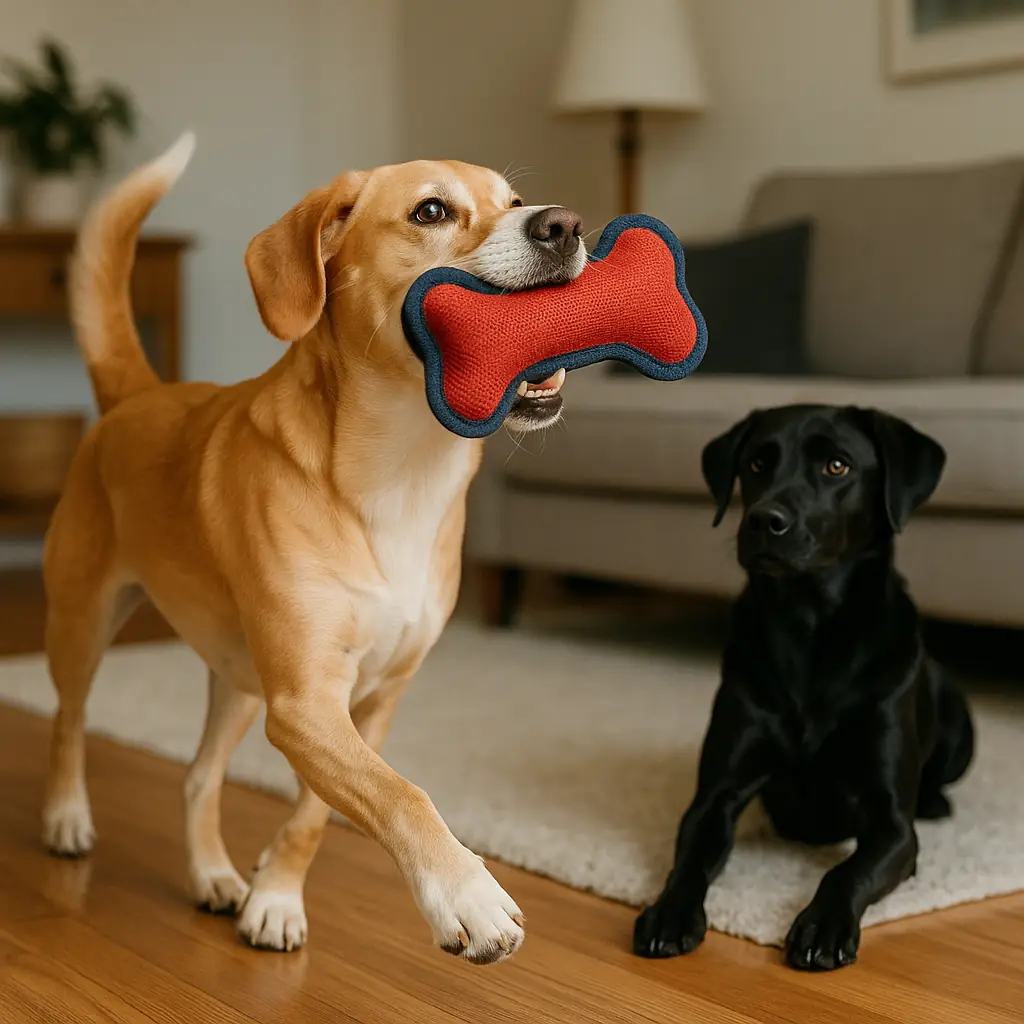
In a multi-pet home, a new toy can become more interesting when another animal starts using it. The strangest copying I see happens when one animal’s interest makes a toy suddenly valuable to the others. Give one dog a new squeaky (I like the kind with a heavy-duty fabric shell and stitched seams), and the other dog might ignore it until the first dog starts prancing through the living room with it held high. That can make the toy suddenly more interesting to the other dog. Now the second dog doesn’t want a squeaky toy; he wants that squeaky toy because the other dog has made it seem more interesting.
The easiest way to spot the social dynamic is to watch what happens when you add a second identical item. People assume that two identical toys solve the problem. Sometimes they do. Other times, both animals still compete for the same toy because the other animal’s involvement has made it more valuable. I’ve had a dog spit out his brand-new duplicate and go steal the other dog’s drool-covered original because it had history on it.
When I want peace without turning my living room into a toy aisle, I rotate in mismatched items on purpose: one dog gets a tug rope while the other gets a lick mat smeared with plain yogurt or canned food, and the cats get different textures (a kicker for one, a springy plastic coil for the other). The animals may still show interest in what the others have, but they have separate activities to focus on.