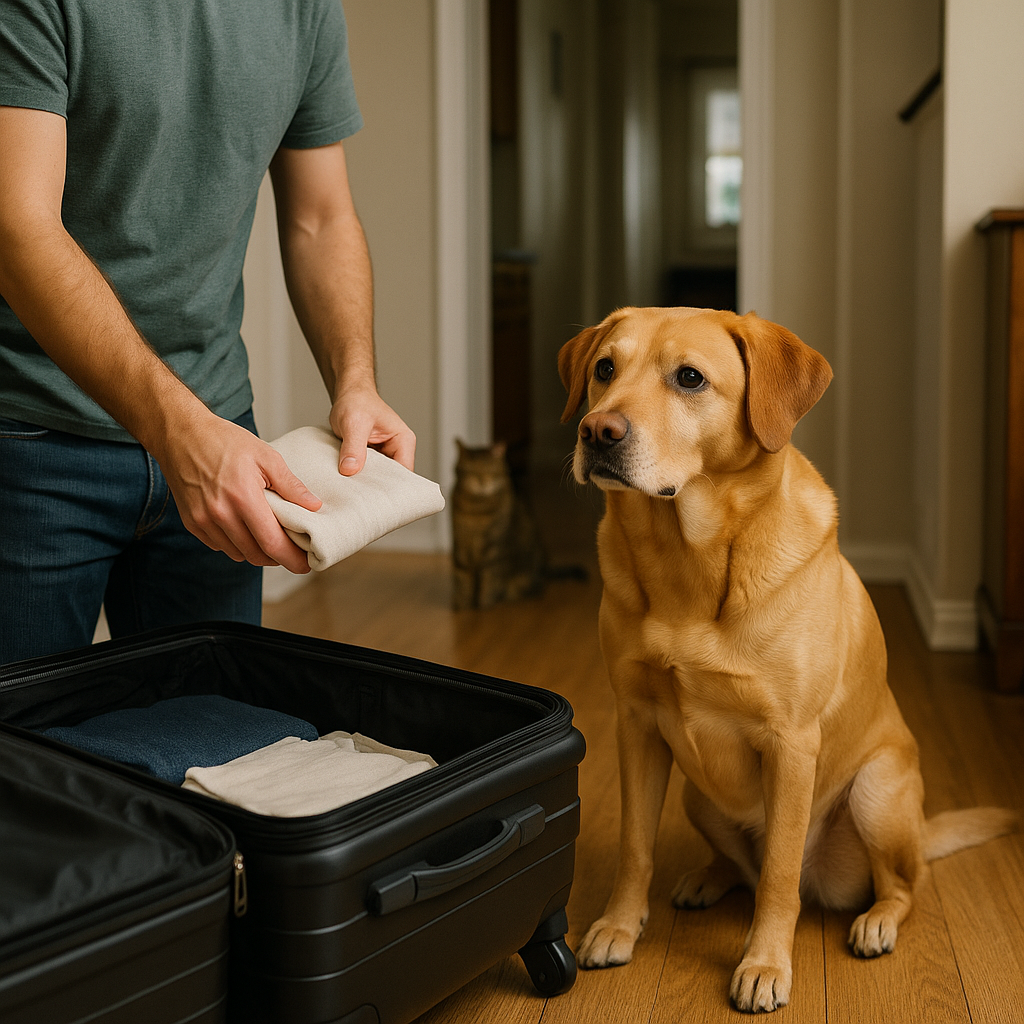
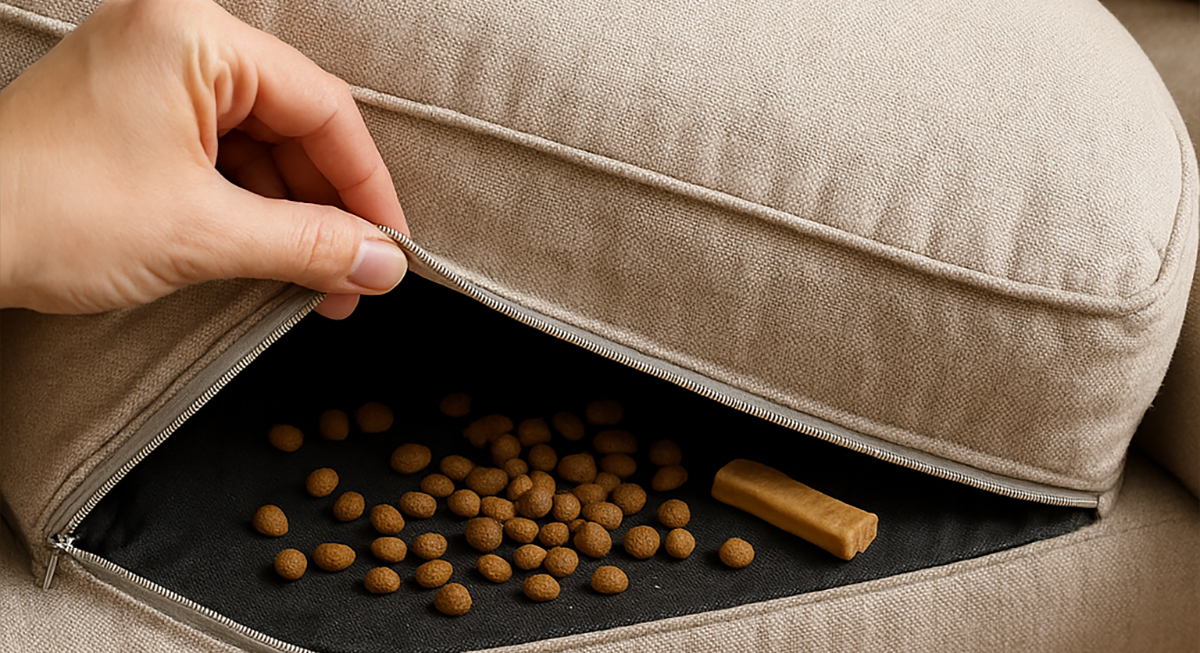
Some dogs don’t just steal your couch spot—they arrive with a toy and settle in as if they’ve paid rent. Here are three ways to get the seat back.
The Decoy Toy: A Quick Distraction Deal
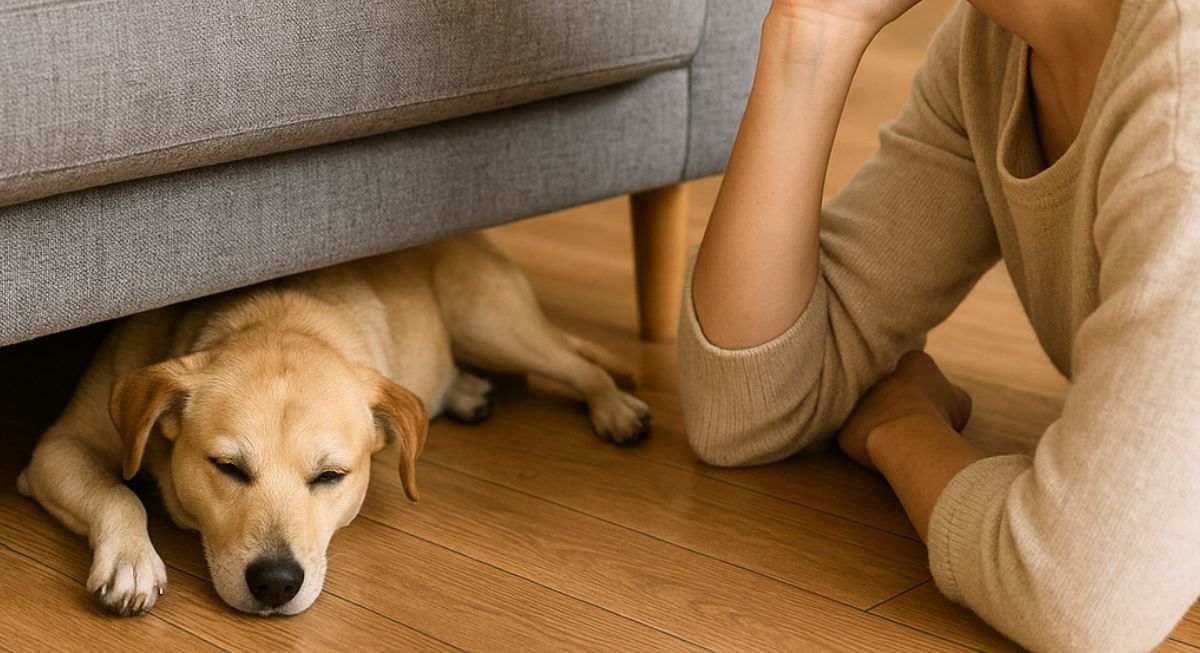
My dog doesn’t steal my spot with attitude. He does it with paperwork: a tennis ball dropped on the cushion like he’s paying a deposit. The first time I tried to “trade,” I held out the same ball and said, “Give.” He looked at me like I was trying to buy my own car back.
The move that consistently works in my house is a decoy toy that never gets used for anything else. Not the slobbery ball from the yard, not the frayed rope that smells like lake water. I keep one clean, boring spare (usually a rubber Chuckit! ball or a Kong SqueakAir that hasn’t been outside yet) on a shelf near the couch, out of reach. When he launches the takeover, I don’t touch him, and I definitely don’t reach for the cushion like I’m competing. I quietly pick up the decoy and roll it across the floor, away from the couch. Rolling matters. Tossing turns it into a vertical jump contest, and he’s athletic enough to turn that into a whole second negotiation.
Most of the time, he hops down to chase the movement. That’s when I take the seat. I sit immediately, before he returns with the original “rent payment” ball, because dogs are fast and they remember where warmth lives. If he whips around and tries to pinball back to the cushion, I block with my legs like a casual gate, still not wrestling. The goal is simply to get him off the couch without turning it into a wrestling match.
Once you’re seated again, let him keep the decoy for a minute instead of taking it away as a victory lap. Then you ask for a simple “drop” and pay him with a tiny treat or a piece of kibble. If you snatch the decoy the second he leaves the couch, he’ll learn it’s a trap, and next time he’ll clamp down like he’s guarding a briefcase.
Two Toys, Two Hands, and No Tug-Of-War
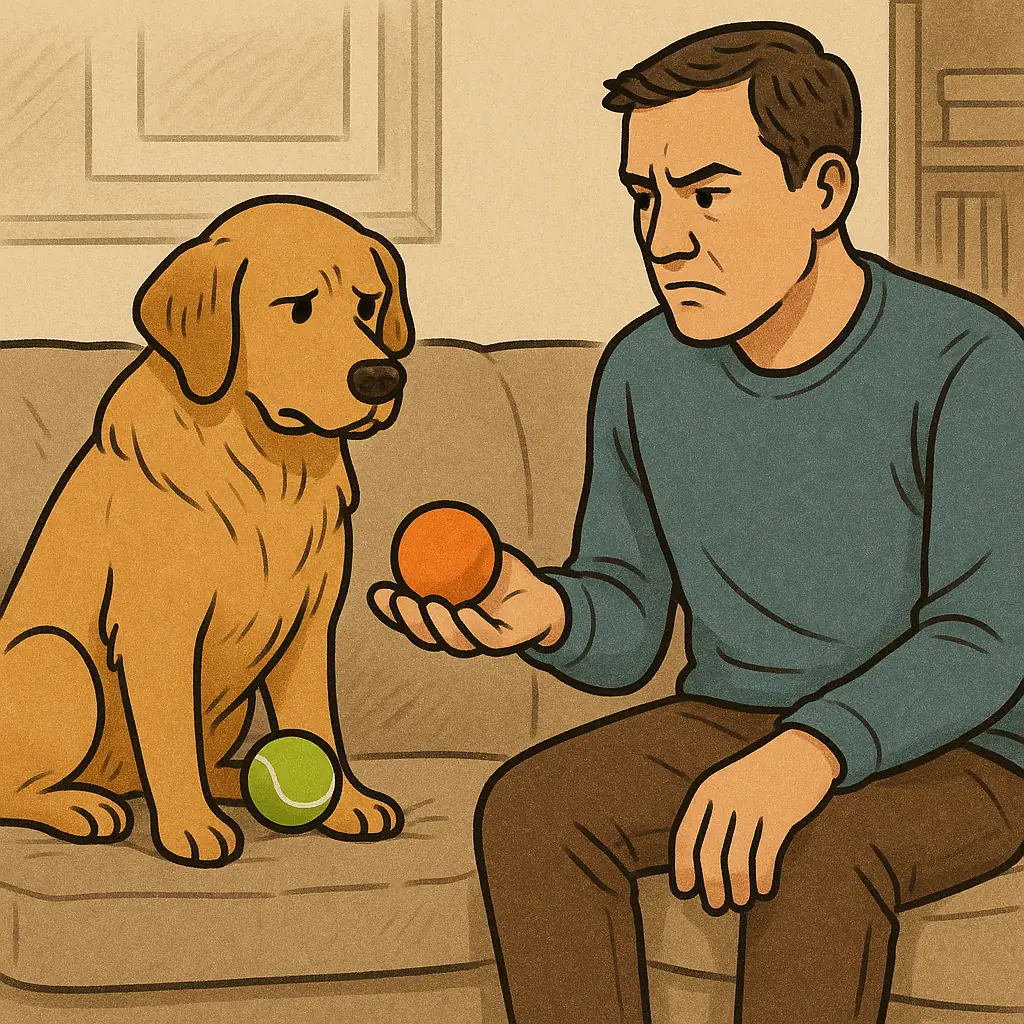
If your dog is the type to park in your seat with a toy already in his mouth, the “roll a decoy” trick can turn into a comedy sketch. He’ll just sit there with the original toy clamped in his jaws and watch the new one go by like he’s seen the con before. That’s when I switch to what I call the two-hands exchange: one hand offers, the other hand stays boring.
I start by standing at an angle to the couch instead of facing him head-on. Front-facing reads like confrontation, and I don’t need a standoff that ends with a sigh and a paw on my thigh. In my left hand, I present the better toy, usually something he can’t resist chewing: a West Paw Zogoflex, a fresh rope, or a squeaky that still squeaks. I hold it low, near his chest level, not in his face. In my right hand, I have nothing. No grabbing, no reaching for his collar, no touching the toy he already has. The right hand is basically a promise: I’m not starting tug.
Then I go still. Not a statue for ten minutes, just a beat. Dogs notice the absence of pressure. The moment he loosens his grip to investigate the offered toy, I mark it with a calm “yes” and drop a treat right between his front paws. That treat placement is everything. If you hand-feed, some dogs keep their toy clamped and just vacuum the treat, which means you paid them for holding onto it. Between the paws forces a tiny head dip, and most dogs spit the toy for half a second. That’s your swap point.
As soon as the original toy hits the cushion, I don’t grab it like I’m defusing a bomb. I slide it away with the flat of my hand, and I lure him off the couch with the new toy, moving toward the floor. Once all four paws are down, I invite him back up only after I sit. That sounds picky, but it’s the difference between “we trade for floor time” and “we trade so you can keep my seat warm for me.”
This looks smooth when it works. It looks painfully obvious when it doesn’t, because you can feel yourself reaching. If you catch yourself grabbing at the toy, reset and make your empty hand even emptier.
The Treat Jar Negotiation: The Price Keeps Going Up
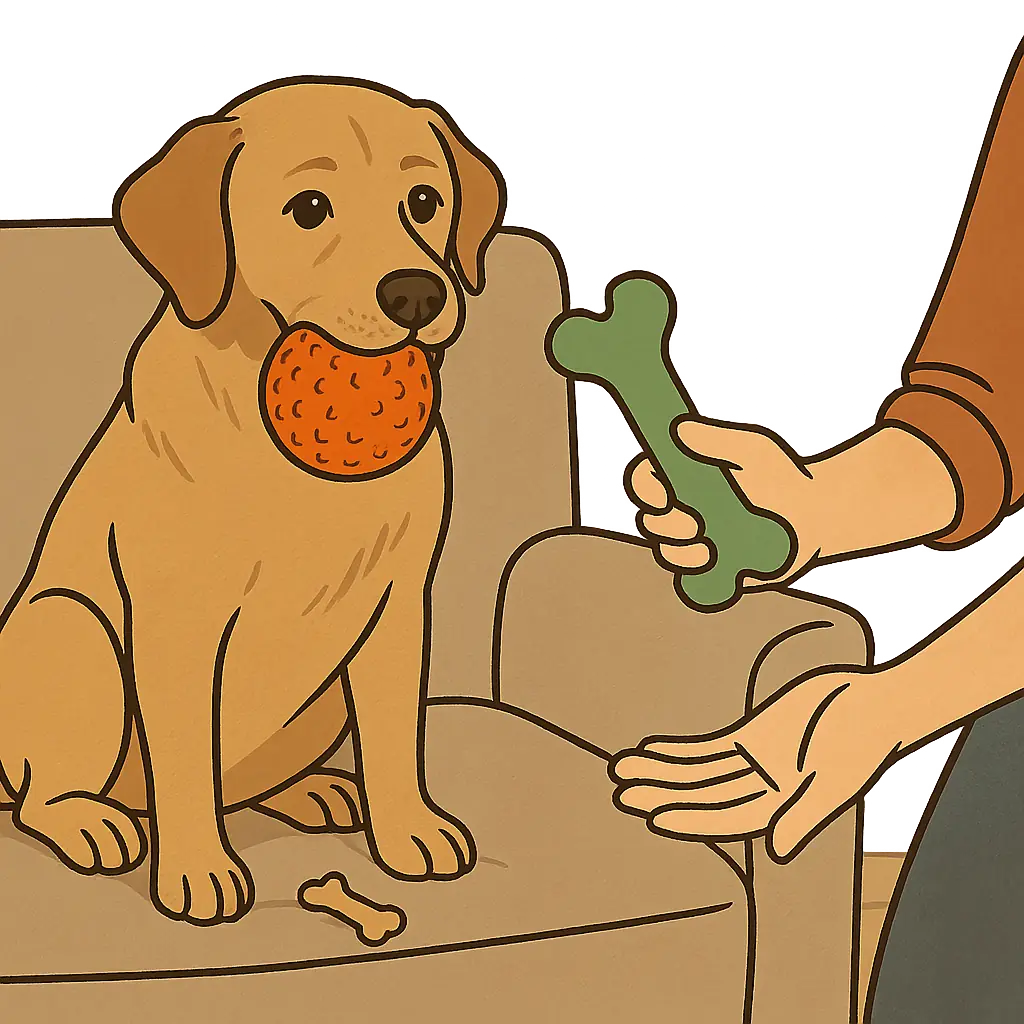
I learned this one on a weeknight when I was tired, and my dog was feeling entrepreneurial. He’d hop into my spot, gently mouth his toy, and stare at the shelf where the treats live. Not barking, not whining. Just a calm little hostage situation. If I pulled out a treat and waved it, he’d take it, hop off, and then immediately jump back up as if we’d just invented a new subscription plan.
So I changed the terms: the treats don’t appear until after the seat is returned and the original toy is surrendered. I keep a screw-top treat jar on a high shelf (mine is an old glass pasta sauce jar with the label peeled off). The sound of the lid twisting is basically a theme song in my house, so I had to stop using it as the first step. If you reach for the jar first, you’re telling your dog, “Yes, this is a transaction, and you set the price.”
This is what I do. I walk to the couch, I stand still, and I ask for “off” once. If he hops down, great, I sit, and only then do I go get the jar. If he doesn’t move, I don’t repeat myself like a broken smoke alarm. I just turn my body away from the couch and look at something else, like I’m suddenly fascinated by the kitchen sink. Dogs read attention like currency. Taking it away is not mean, it’s just clear. When he finally steps off, I sit immediately, then I ask for “drop” on the toy he was using as leverage. If he drops it, the jar comes out, and he gets one small treat. One. Not a handful. The whole point is to make the payment boring.
What changed for us was the order of operations. He can still try the takeover, but the reward only shows up after he’s off the furniture and the toy is out of his mouth. Over a few days, the “rent payment” ball started showing up less, and the seat-stealing started looking less like a scheme and more like a normal dog trying his luck.