
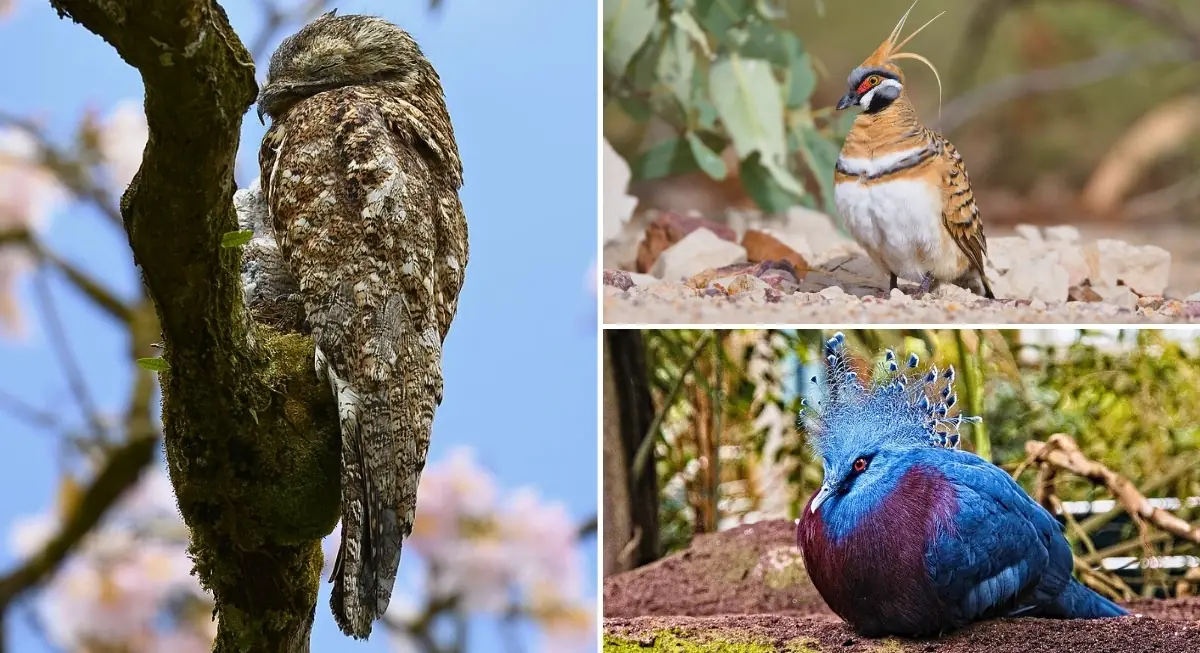
Some birds do not match the standard idea of what a bird should look like. Their colors, proportions, or features can feel unfamiliar, even artificial, when seen for the first time. These are not oddities or mistakes. They exist as they are, well-documented and widely observed worldwide. Here are 10 birds whose appearances challenge common expectations of birds.
Great Potoo
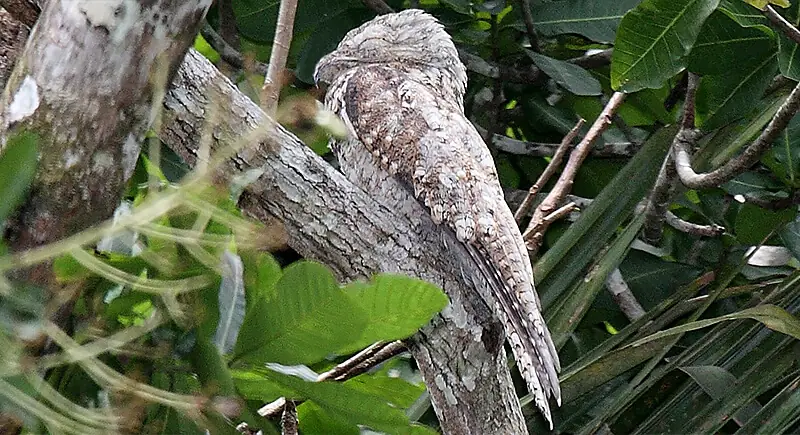
The great potoo is a nocturnal bird native to Central and South America. It has large, lidless eyes and mottled gray-brown plumage that lets it blend seamlessly into tree branches. Though it resembles an owl, it’s a separate species. During the day, it remains completely still to avoid detection. At night, it hunts large flying insects and occasionally bats.
Shoebill Stork
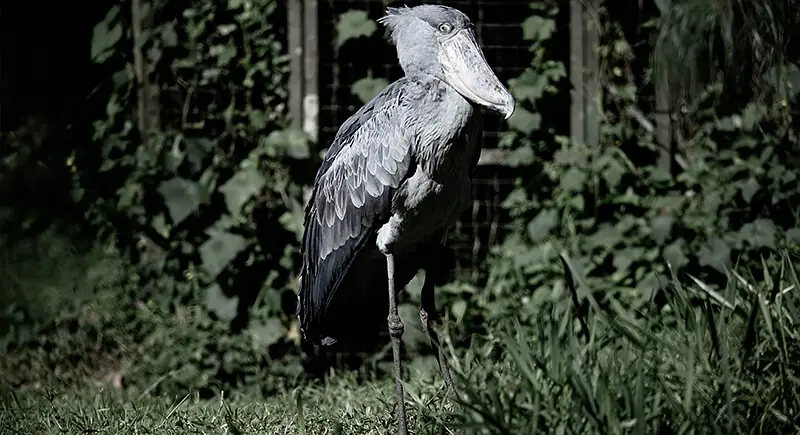
The shoebill has a beak that looks like it belongs on a cartoon dinosaur. That shoe-like bill has razor-sharp edges, used to take down slippery fish and the occasional baby crocodile. It barely moves when hunting and stares down prey with an unsettling stillness.
Vulturine Parrot
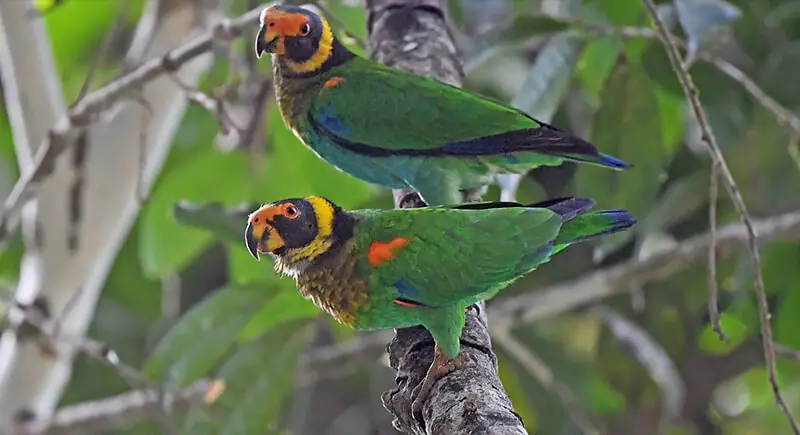
Most parrots are known for bright plumage and vocal mimicry. The vulturine parrot stands apart with a bare black head and a heavy, vulture-like profile. Found in New Guinea, it feeds largely on figs and does not imitate human sounds. Its call is rough and low, closer to a croak than a song, which further sets it apart from typical parrots.
Amazonian Royal Flycatcher
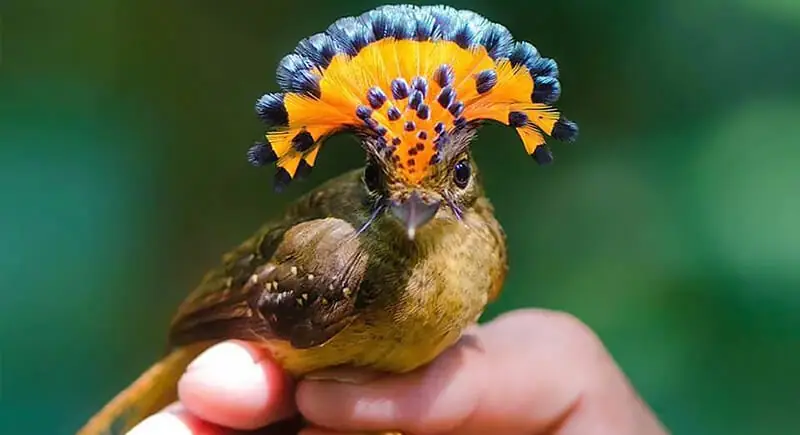
The name sounds like an exaggeration until you see what happens when it flares its crest. Normally hidden, that bright orange and blue fan bursts out in social displays. Its daily life is less flashy. It darts through humid forests and catches insects mid-air.
Golden Fruit Dove
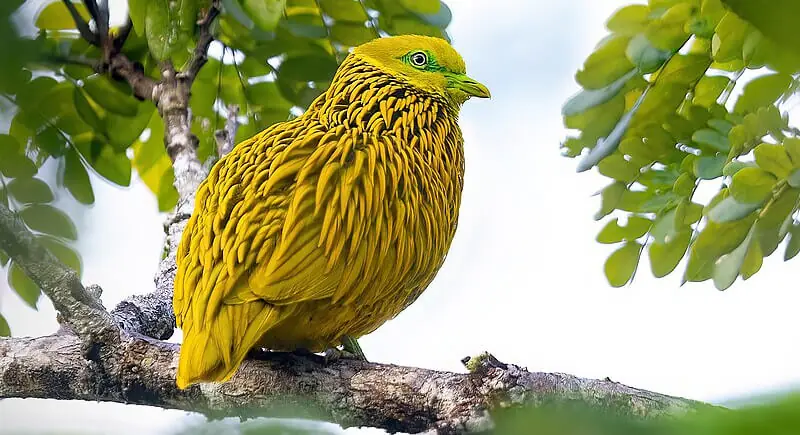
More highlighter than bird, the golden fruit dove is vivid yellow from beak to tail. Green markings near its eyes and feet only add to the surreal appearance. Native to Fiji’s forests, it’s easier to hear than spot, thanks to a surprisingly loud bark-like call echoing from the treetops.
Capuchinbird
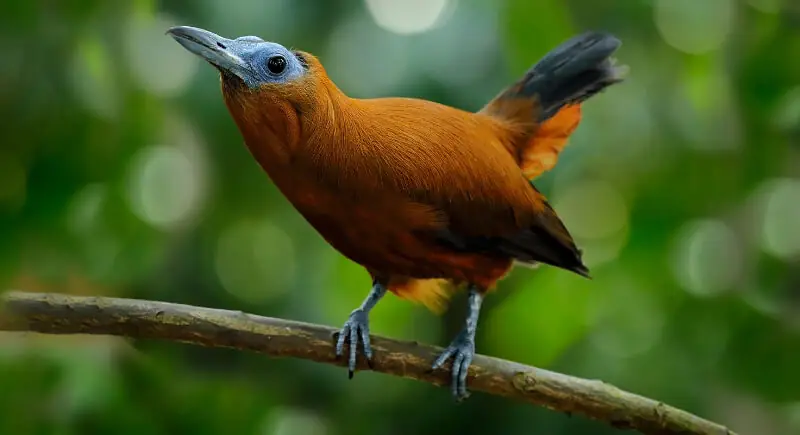
Found in South America’s forests, the capuchinbird’s call sounds more like a low moo than a chirp, which adds to its strange, nearly prehistoric presence. This bird looks like it skipped a few feathers. Its bare gray head seems out of place on a buff-orange body, as if the parts were mismatched.
Victoria Crowned Pigeon
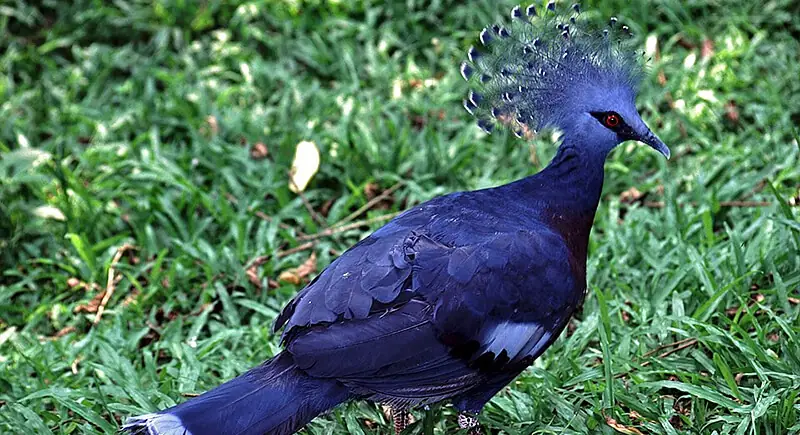
Looking more dressed for a royal ceremony than a forest floor, this pigeon is all powdery blue feathers, maroon eyes, and a fan-like crest so elaborate it seems hand-cut. It’s one of the largest pigeons alive and usually walks rather than flies, rummaging for fruit with surprising calm.
Spinifex Pigeon
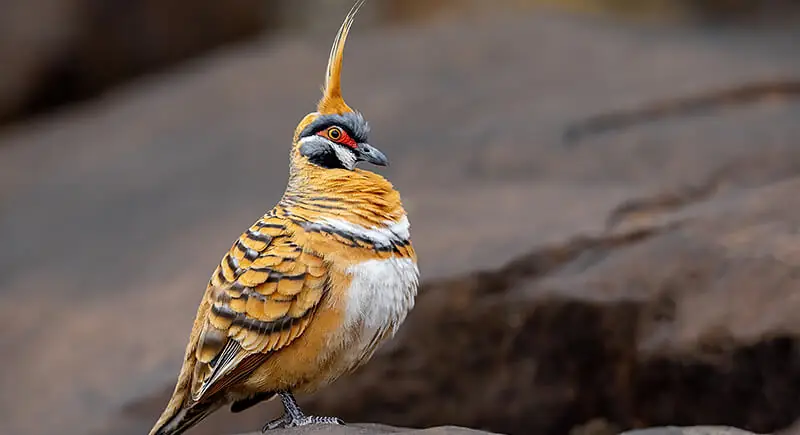
This ground-dwelling bird is found in arid regions of central and northern Australia. It has a distinctive spiky crest and reddish-brown plumage patterned with black and gray stripes. It survives in dry environments by staying near permanent water sources and primarily feeds on grass seeds.
Cream-Colored Woodpecker
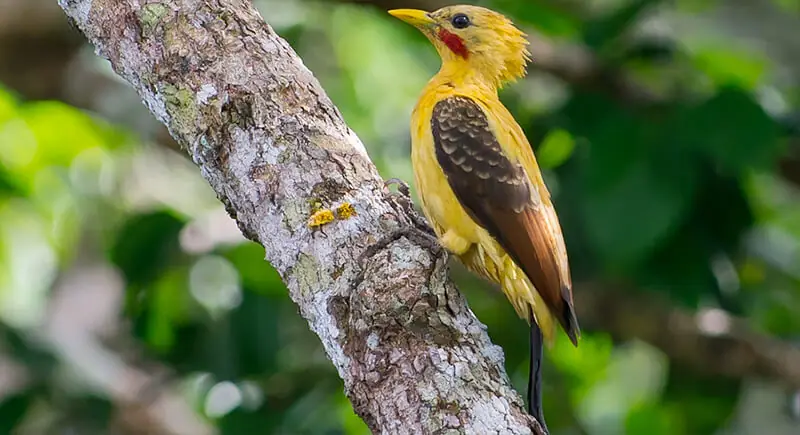
The cream-colored woodpecker has pale yellow plumage and a bold black mask that makes it easy to spot. Males add a bright red stripe along the cheeks, creating a sharp contrast against the face. Native to the Amazon, it drills into trees to reach ants and termites rather than to signal territory or attract attention through sound.
White Bellbird
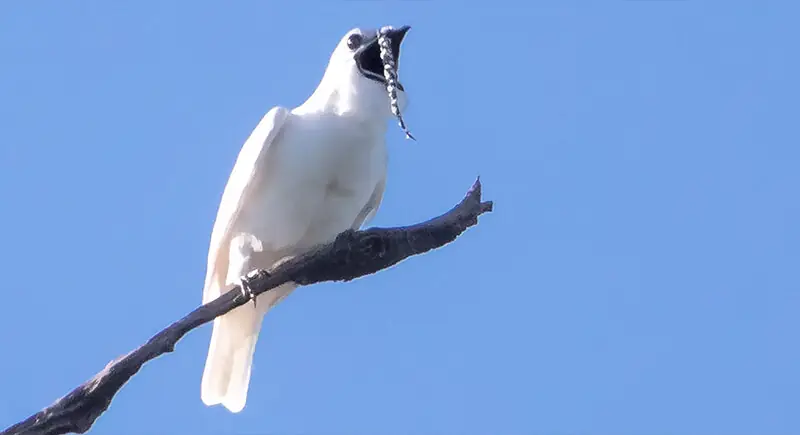
Hard to believe, but the loudest bird on Earth is this otherwise plain-looking creature. The male white bellbird belts out mating calls at over 120 decibels, which is louder than a chainsaw. It even aims the sound directly at potential mates. Females perch close by, enduring the racket without much visible enthusiasm.





