
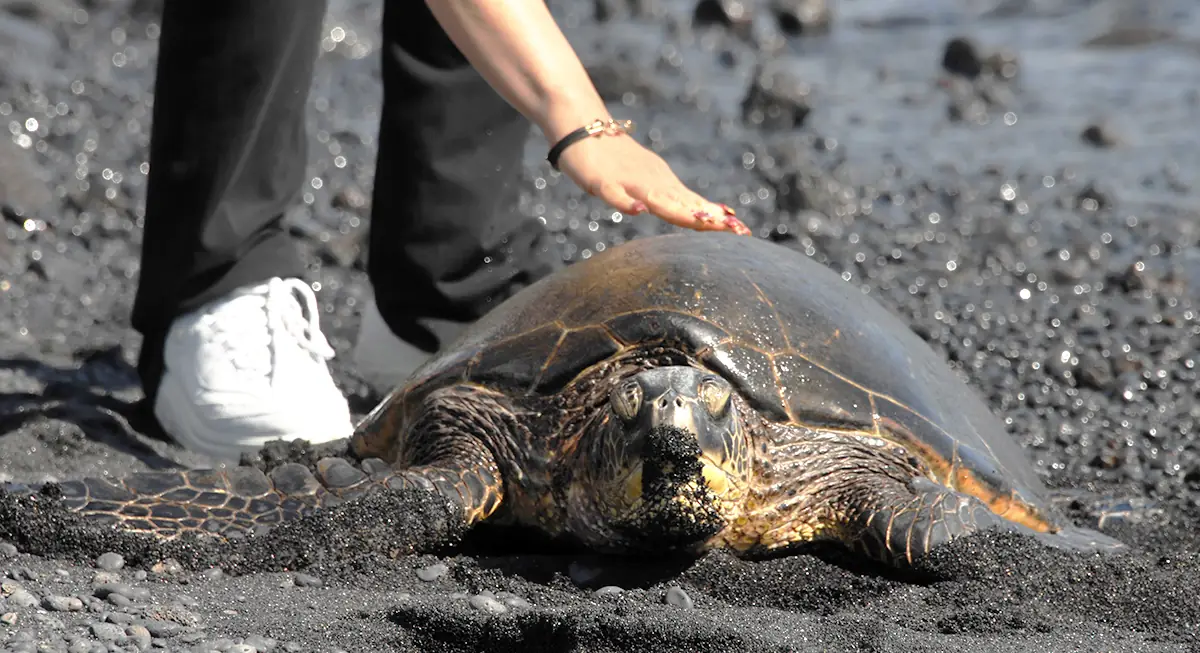
A sea turtle’s shell is living bone fused directly to its spine and ribs. It is not a detachable shield or an external case, as certain quirky cartoons have shown. The shell grows with the turtle, repairs itself slowly, and supports muscles and nerves that connect to the rest of the body.
Flattened bones form the structure. Protective plates called scutes cover most species and form a hard surface that remains part of the skeleton. This design matters because anything connected to the nervous system can transmit sensation. The shell may look separate, but biologically it is not.
What Sensation Means For A Sea Turtle
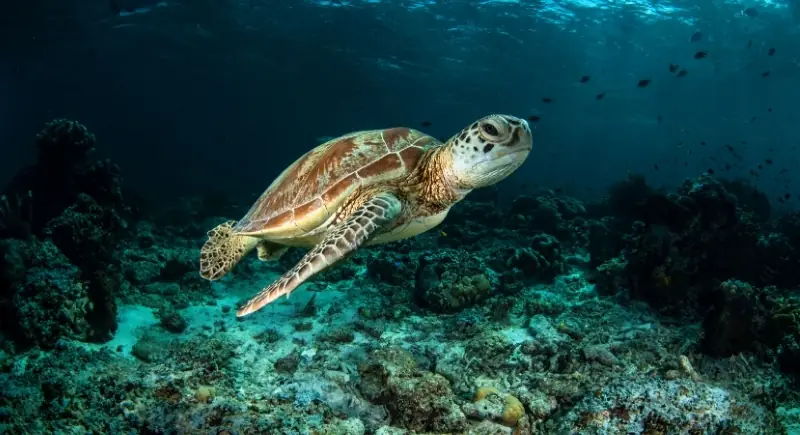
Sea turtle shells do contain nerve endings, but they sit beneath layers of bone and scutes. Those layers reduce fine touch, so light contact does not register the way it does on human skin. Pressure and vibration travel more easily than a soft brush. A better comparison is a fingernail tapping rather than a fingertip grazing.
Stronger contact changes what the turtle feels. Vibrations move across the shell and reach deeper nerves, so the animal becomes aware that something has happened. Injury makes the shell far more sensitive. Cracks expose nerves and cause intense pain, turning what should protect the turtle into a serious medical problem.
Why Sea Turtles Feel Differently Than Land Turtles
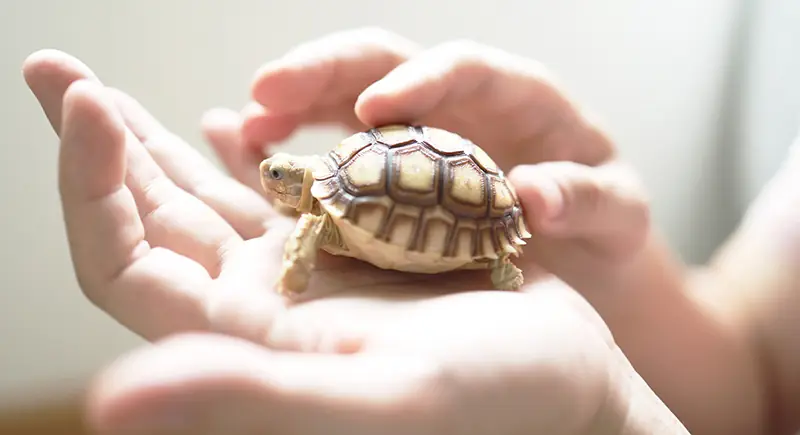
Sea turtles evolved for speed, buoyancy, and endurance, and their shells stay lighter and more streamlined than those of land turtles and tortoises. Unlike many land species, sea turtles cannot pull their heads into their shells. Large fore flipper muscles fill that internal space, trading full-body withdrawal for powerful swimming.
This design shift affects sensation. Many sea turtle shells sit under a thin layer of skin, especially in species like leatherbacks, whose shells consist of many small bones embedded in leathery tissue rather than rigid scutes. That flexibility supports long-distance swimming but also allows external pressure to travel inward more easily.
Leatherbacks Change The Conversation
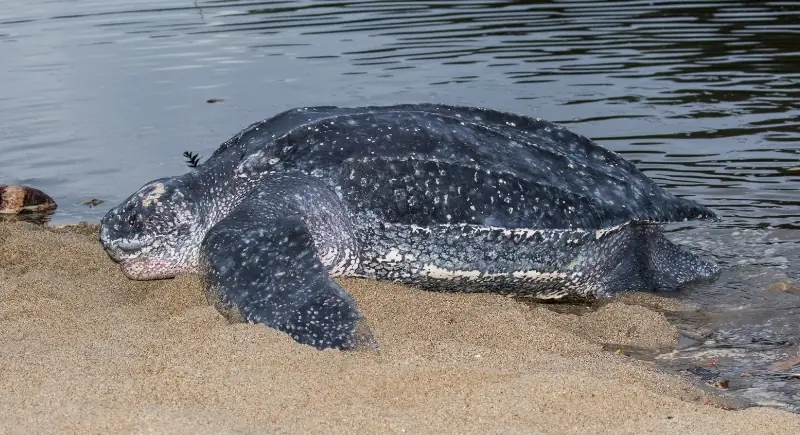
Leatherback sea turtles break almost every assumption about shells. Their shells lack hard scutes and instead have a thick, rubbery surface reinforced by bone. This structure allows them to dive to depths of roughly 2500 feet, where pressure becomes extreme.
The tradeoff comes with sensation. The skin-covered shell transmits force differently than a fully scuted shell. While it still protects vital organs, it does not block vibration as effectively. Touch and impact travel inward faster, increasing the turtle’s awareness of physical contact.
Why Touch Is Still A Problem
Feeling something does not mean enjoying it. Sea turtles do not seek physical contact with humans. Touch can introduce stress, disrupt behavior, and increase disease risk. Even calm reactions do not signal comfort.
Many animals freeze or tolerate contact rather than resist it, especially in unfamiliar situations. There’s also the aspect of shell sensitivity. Pressure that feels harmless to a human hand can still register as an intrusion to a turtle whose shell evolved to interact with water, current, and predators, not people.
Sea turtles feel their shells in a limited but meaningful way. Sensation arrives through vibration and pressure. Shells protect without disconnecting the animal from its environment. Evolution carefully shaped that balance by favoring survival over sensitivity while preserving the ability to detect danger. The shell remains one of the most misunderstood parts of a sea turtle’s body. It looks like armor, but interestingly, it functions like bone.





