
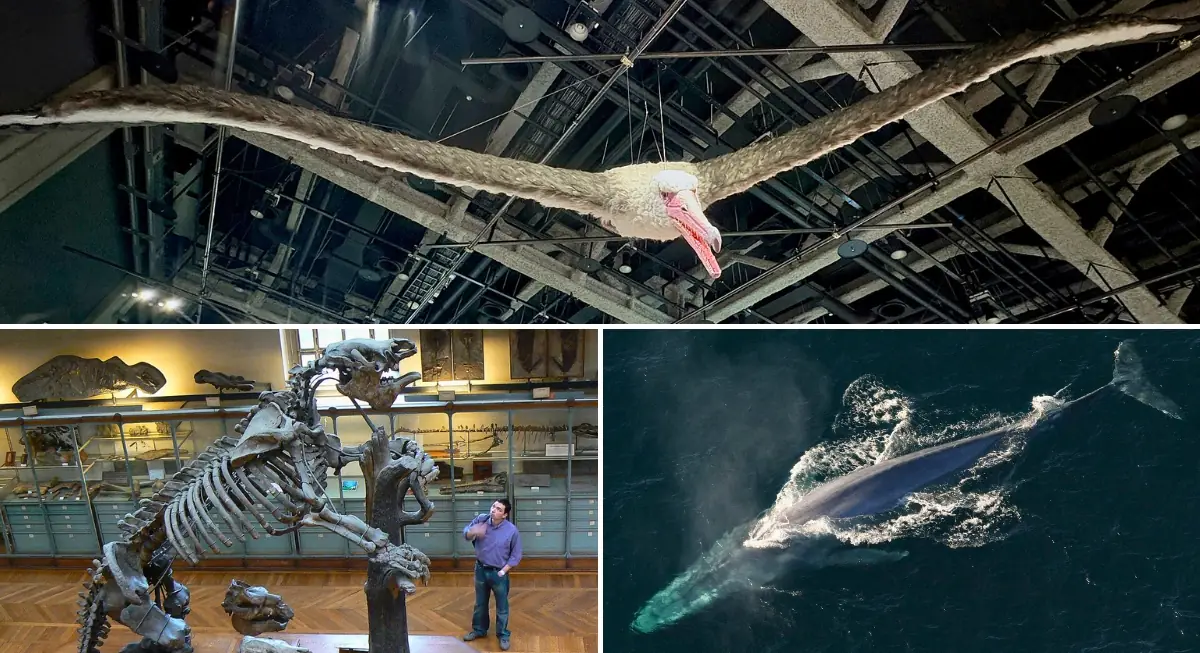
When the asteroid ended the age of non-avian dinosaurs, it cleared ecological space on a global scale. Small survivors adapted quickly, and over the years, their descendants grew into animals that matched or exceeded earlier giants.
Paleontologists have pieced together this long chapter through scattered bones, fossil teeth, and even preserved bite marks. The result is a record of snakes longer than buses, mammals taller than modern elephants, and sharks powerful enough to hunt whales. The age of giants did not vanish. Instead, it evolved.
Titanoboa
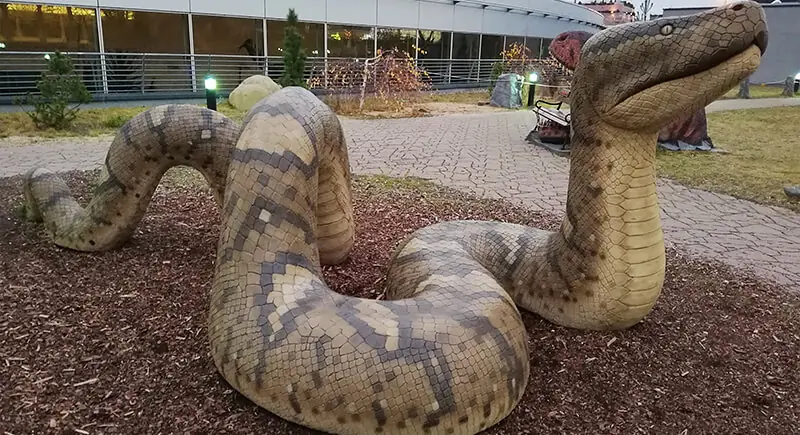
In the coal mines of Colombia, paleontologists uncovered massive vertebrae that belonged to Titanoboa. Those specimens date to about 58-60 million years ago, early in the Paleocene. This snake stretched to more than 40 feet and weighed more than 2,000 pounds. Researchers link its size to warmer global temperatures that allowed cold-blooded reptiles to grow larger than modern species.
Barylambda
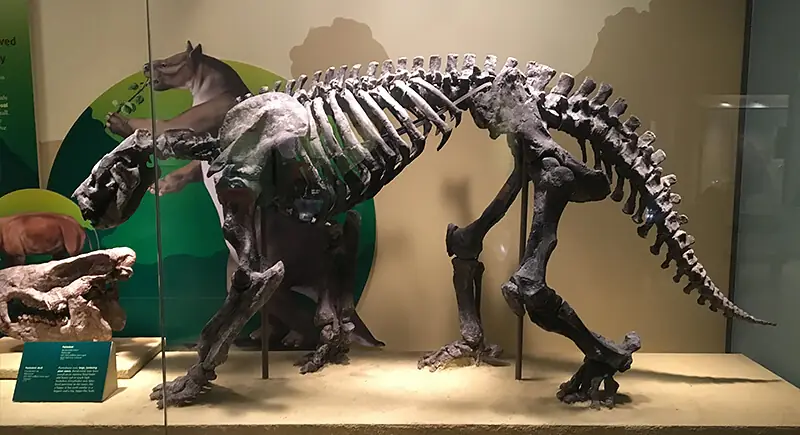
Early mammal evolution produced unexpected giants, and Barylambda stands among them. Fossils show an animal about 8 feet long and weighing close to 1,000 pounds. It belonged to an extinct group called pantodonts. Its body shape resembled later ground sloths in general build. Barylambda held the title of largest mammal in its forest ecosystem during its time.
Barinasuchus
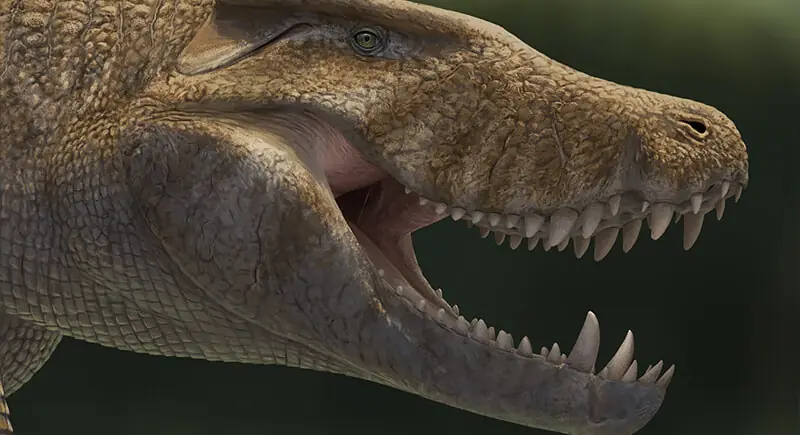
Unlike modern crocodiles that ambush in water, Barinasuchus pursued animals across open ground. Its flattened and blade-like teeth allowed it to slice into prey efficiently. The creature belonged to a group called sebecids, crocodiles that adapted fully to terrestrial hunting. Its size and spread across South America indicate that it thrived in its ecosystems for millions of years.
Paraceratherium
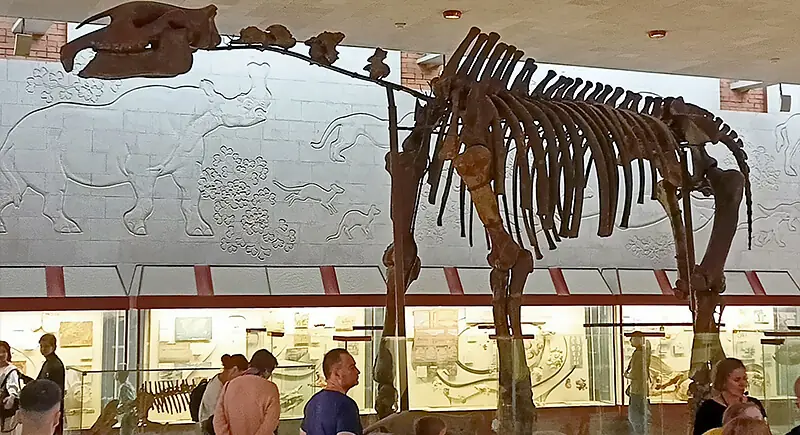
If you visit a museum display of Paraceratherium, the sheer scale immediately stands out. It was over 15 feet tall at the shoulder and weighed around 33,000 pounds. A long neck allowed it to browse high in the trees with ease. Evidence indicates adults grew large enough to deter most predators.
Pelagornis Sandersi

A single remarkable finding in South Carolina revealed Pelagornis sandersi to science. Dating to about 25 million years ago, the skeleton shows a wingspan between 20 and 24 feet. The bird carried bony projections along its beak that resembled teeth and likely helped grip slippery prey.
Blue Whale
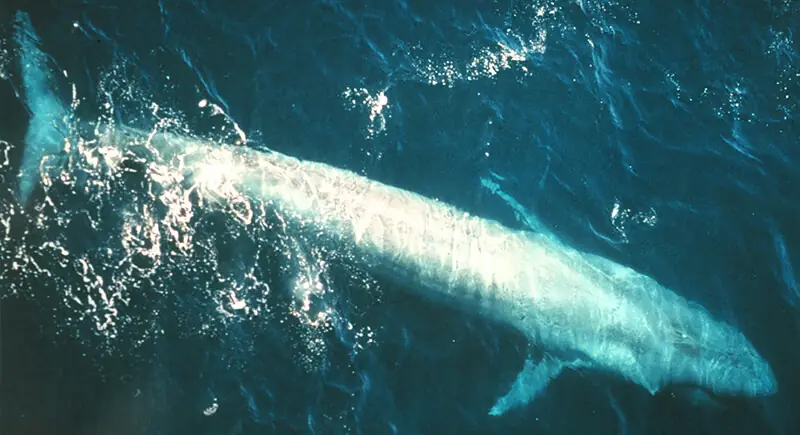
Living oceans still support giants, and the blue whale surpasses all others. This species emerged roughly 1.5 million years ago. Individuals can reach nearly 98 feet in length and weigh more than 200 tons. Blue whales feed on krill and may consume thousands of pounds each day.
Steppe Mammoth
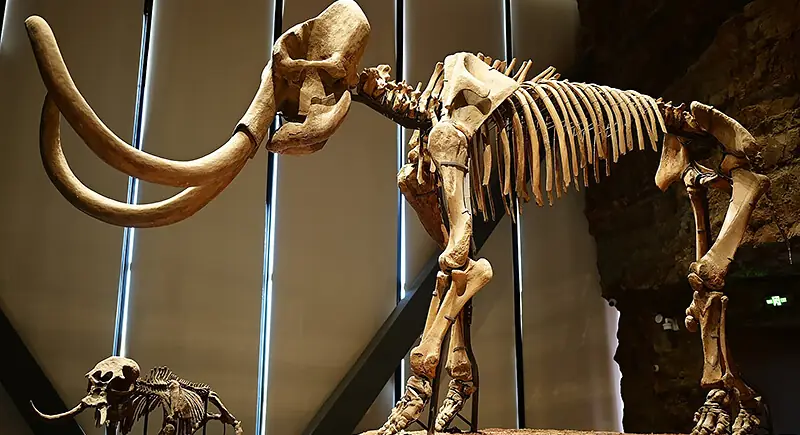
Long before the woolly mammoth became famous, the steppe mammoth dominated Eurasian landscapes. Known scientifically as Mammuthus trogontherii, it lived between 1.8 million and 200,000 years ago. Recovered skeletons show shoulder heights of around 15 feet. Genetic studies indicate that woolly mammoths evolved from steppe mammoth populations.
Otodus Megalodon
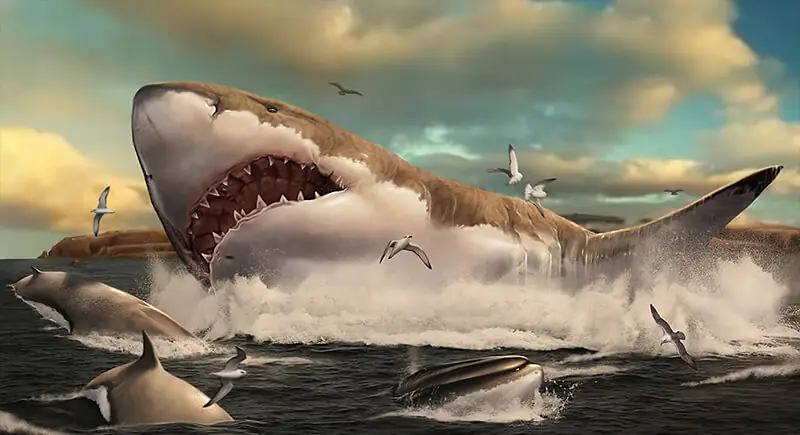
This massive predator appeared around 23 million years ago and vanished about 3.6 million years ago. Otodus megalodon reigned over ancient oceans during that span and grew to extraordinary proportions. Its bite force is estimated at about 182,201 newtons, based on reconstructions of its enormous jaws.
Megalania
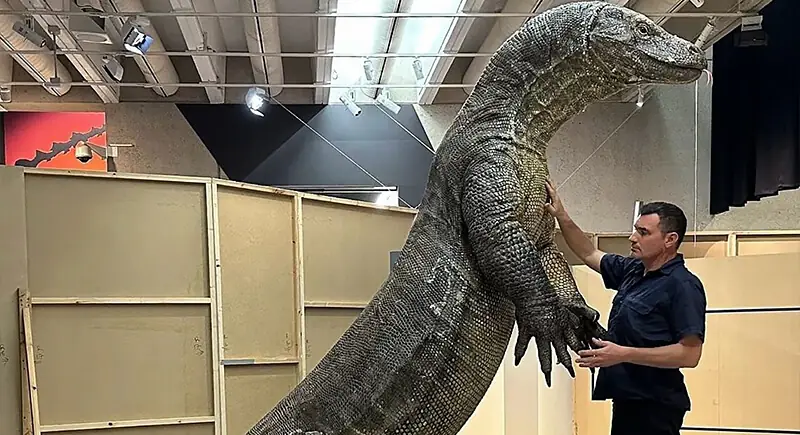
Ice Age Australia supported a formidable reptile known as Megalania. Experts classify it within the monitor lizard family, alongside the modern Komodo dragon. Fossils remain incomplete, which leaves some uncertainty about the exact size, but the tooth shape indicates a powerful predator. Some researchers propose that Megalania delivered venom with its bite, which adds another advantage to its hunting strategy.
Megatherium
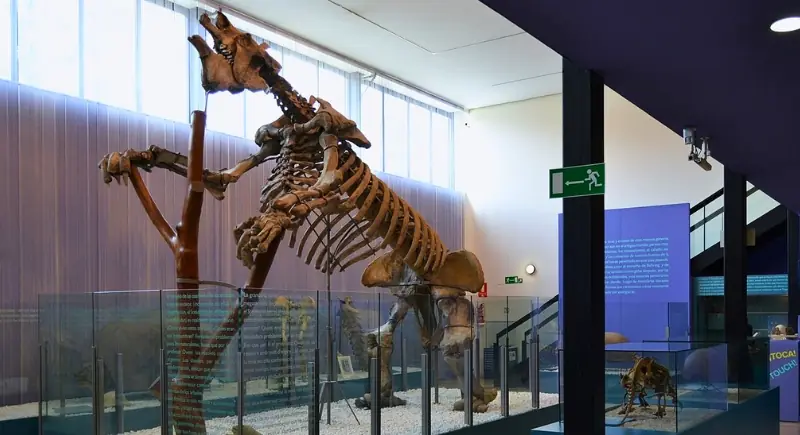
Discoveries of preserved bones across South America reveal the immense scale of Megatherium, one of the largest ground sloths to ever live. This Ice Age herbivore stood nearly 20 feet tall when it reared onto its hind legs and weighed up to four tons. Long, powerful claws allowed Megatherium to pull down branches and strip leaves with ease.





