
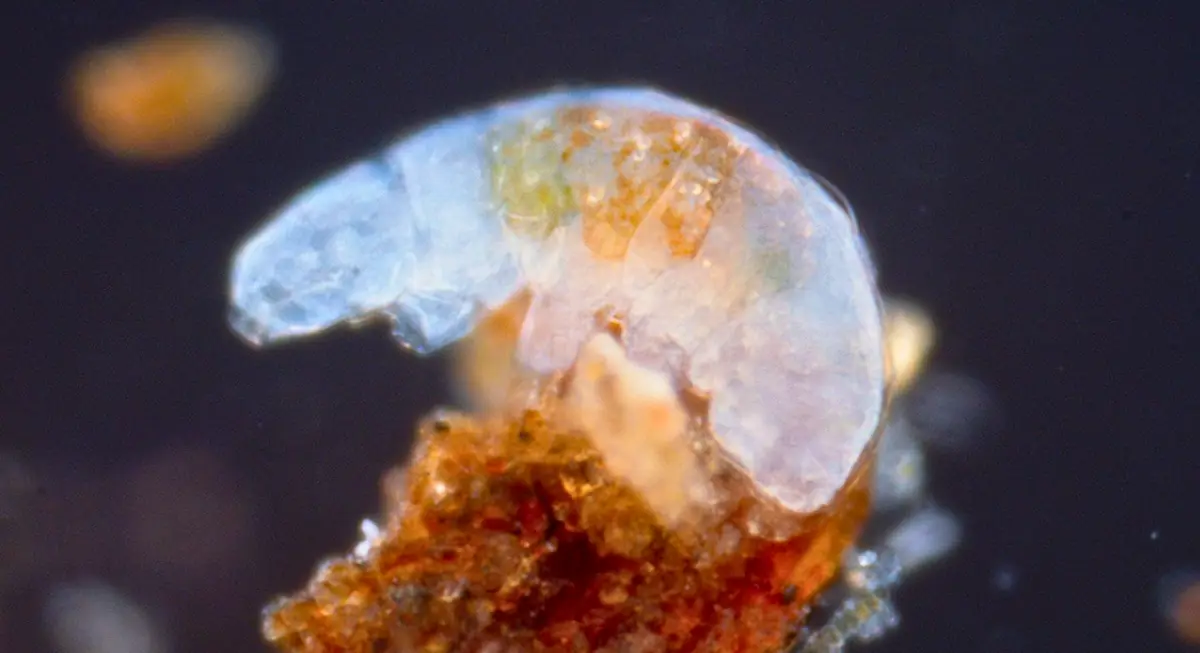
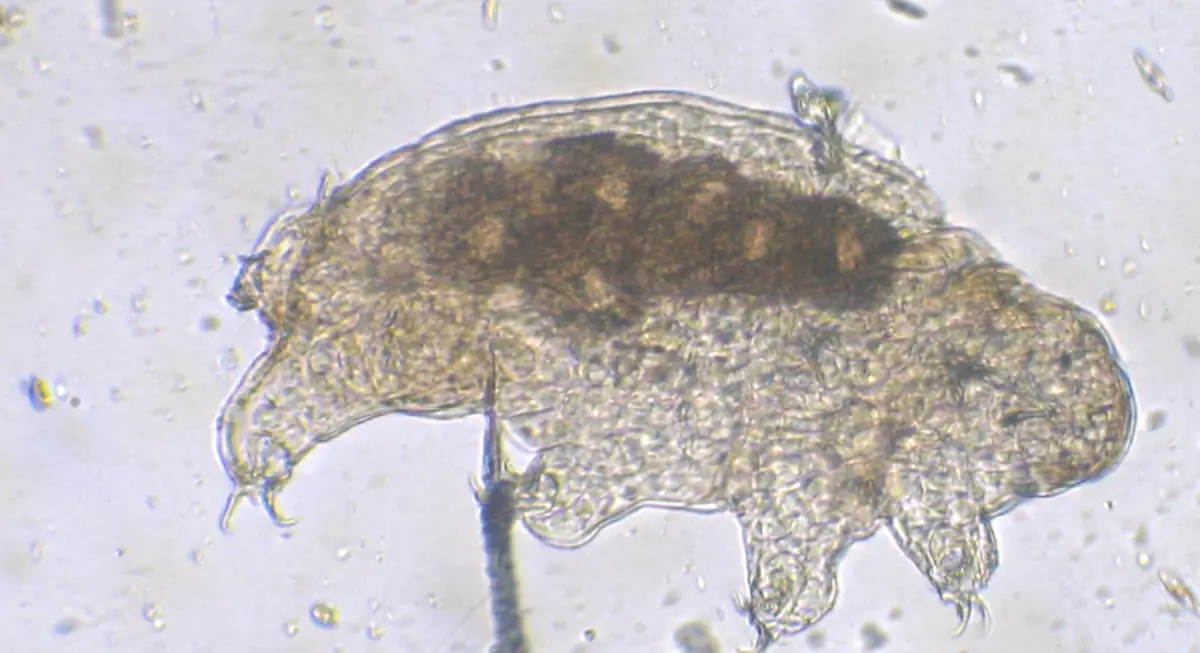
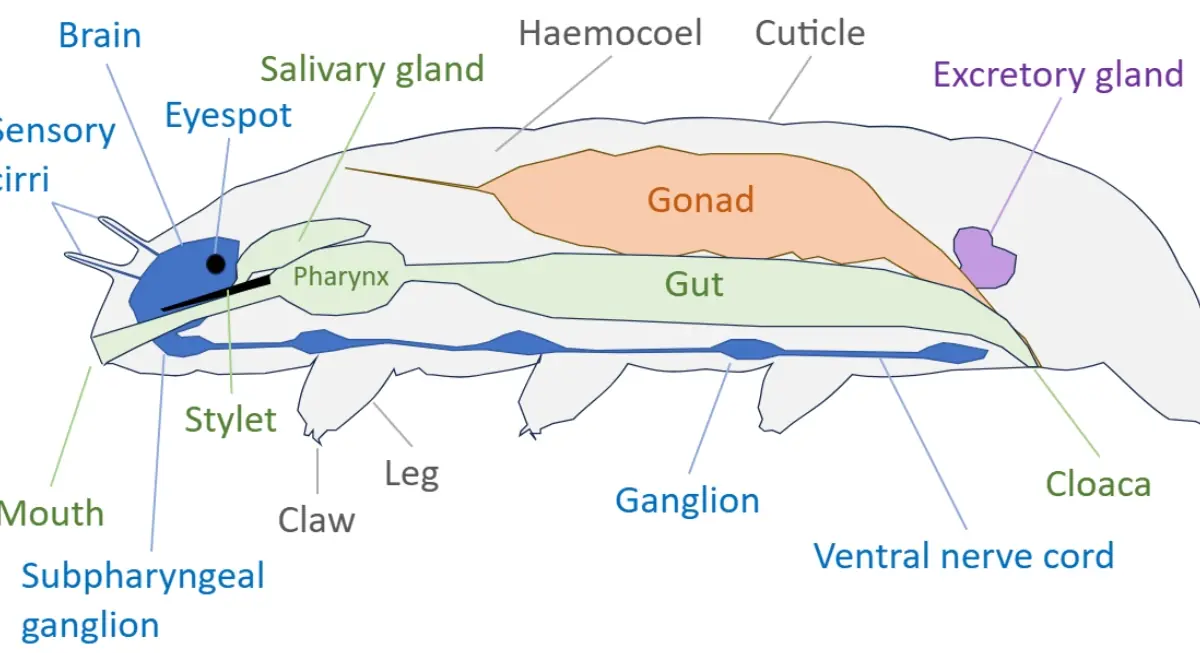
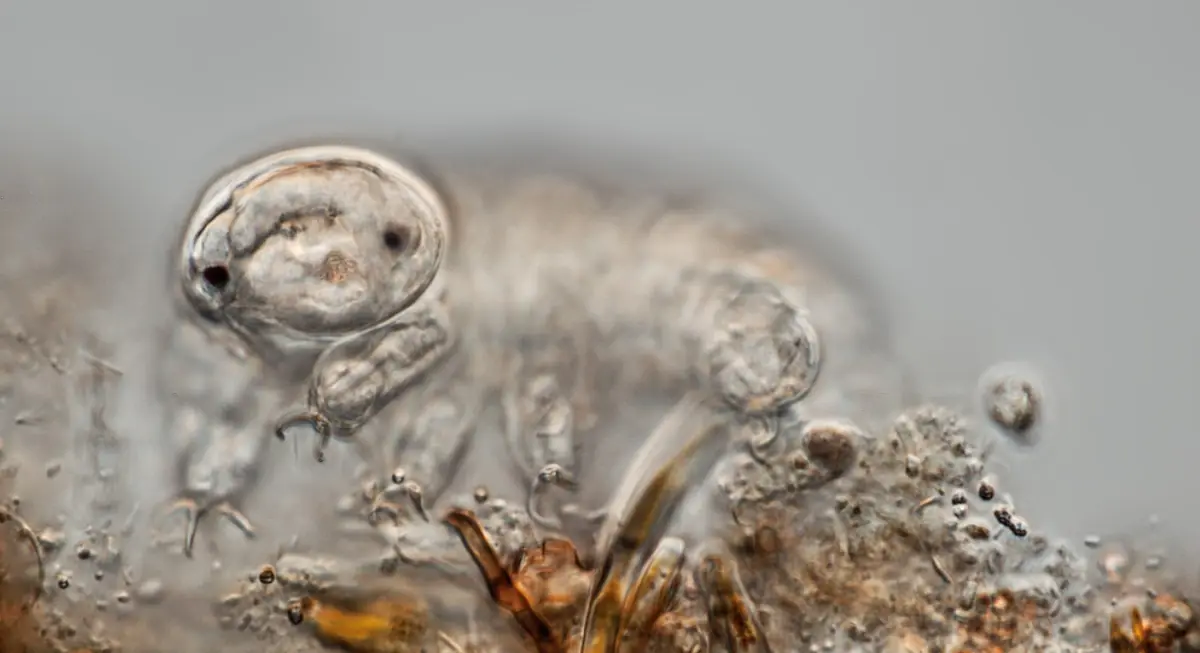
A tardigrade looks like a tiny, chubby bear with eight legs. These creatures are microscopic, but their ability to survive almost anything has made them famous. They can handle extreme heat, cold, total dryness, radiation, and even the vacuum of space. The water bear survives by shutting down its body, stopping its normal life processes, and protecting its cells until safer conditions return.
The Tun Is Its Emergency Pose
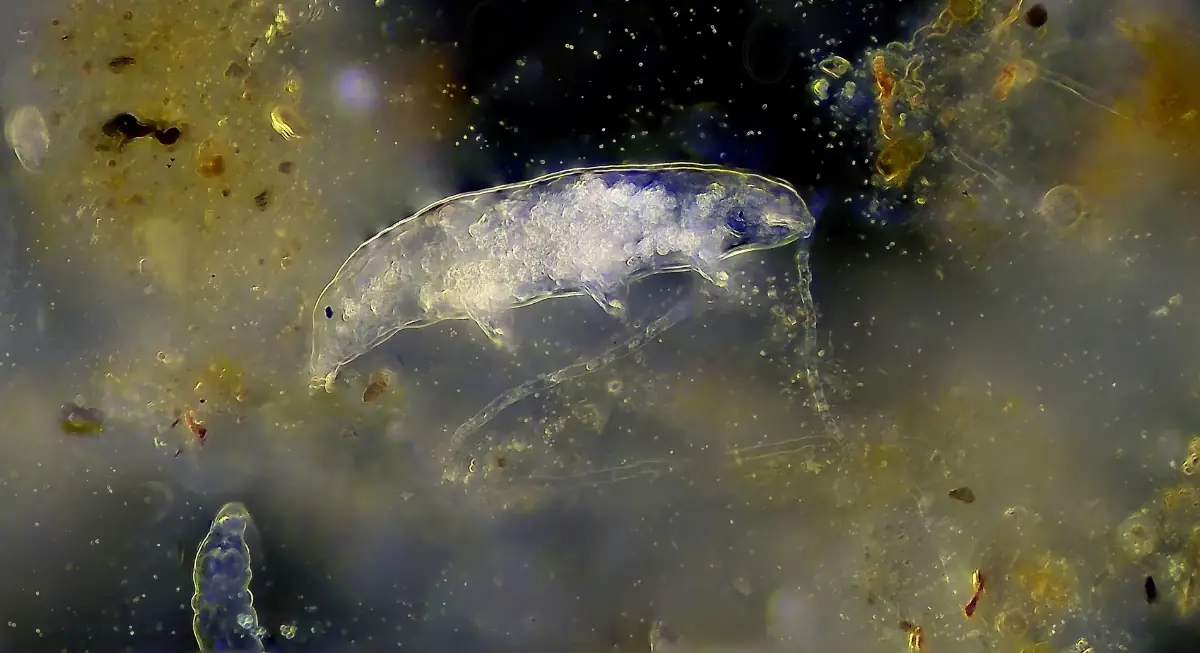
A water bear’s most famous trick starts with a curl. When it’s wet, the home dries up, the tiny animal pulls in its legs and shrinks into a barrel-like shape called a tun. It loses almost all its body water, and its normal activities slow down to a near stop. It stops eating and crawling completely. As soon as water returns, the water bear wakes up, uncurls, and goes back to its normal life.
Its Body Nearly Hits Pause
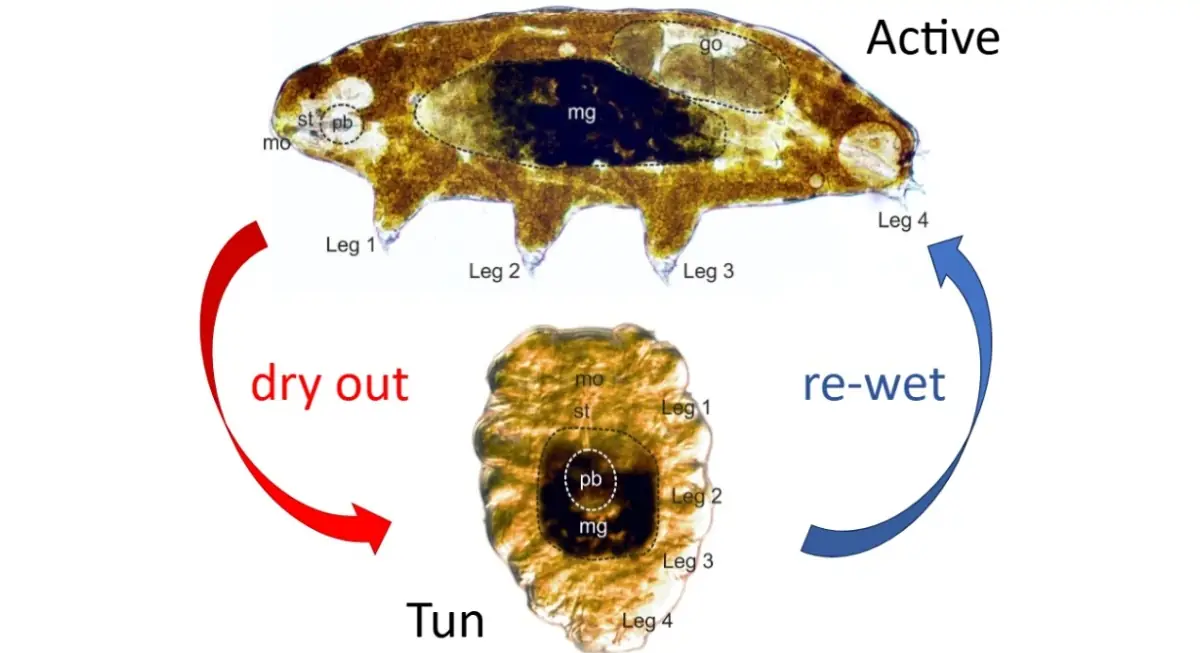
Cryptobiosis lets tardigrades survive by simply waiting out danger. Inside a dried-up shell, the creature’s body almost completely shuts down to save energy during harsh times. This extreme pause is crucial during droughts because normal cells break down without water.
Heat Survival Comes With a Catch
The idea that tardigrades can survive being boiled needs a quick reality check. These tiny creatures handle high heat in labs, especially after drying out. The actual temperature and the amount of exposure time matter a lot. A hydrated water bear stuck in extreme heat for too long will die just like any other animal. Their impressive heat tolerance doesn’t mean tardigrades are invincible.
Freezing Becomes Less Destructive

Freezing damages living things because the water inside cells turns into ice crystals. A dried-out tardigrade solves this problem by removing the water before it causes trouble. In this dry state, called a tun, the animal holds almost no water. Researchers have exposed these dried tardigrades to extreme cold and seen them recover afterward. This survival trick usually works if the animal has already entered its emergency state.
Tested Animals Survived Space Vacuum
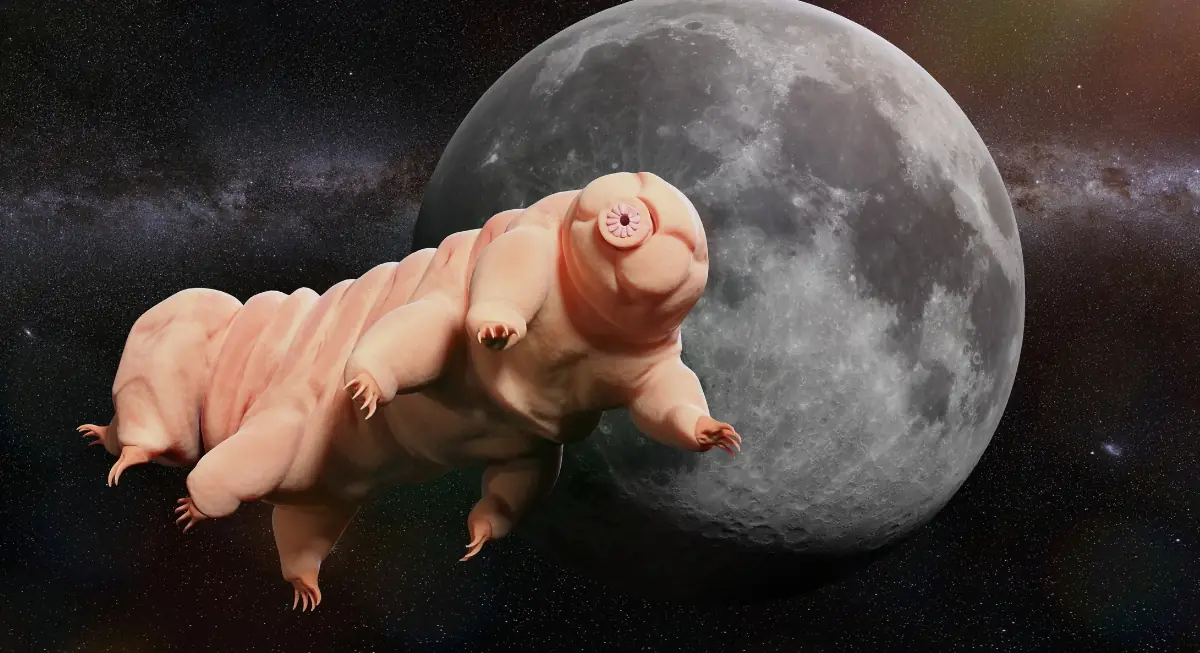
Tardigrades became famous in space during real tests, like the 2007 FOTON-M3 mission. Dried tardigrades were exposed to low Earth orbit conditions for days before returning to Earth for rehydration tests. Many survived the empty vacuum of space. However, direct solar ultraviolet radiation caused more damage, especially without shielding.
Dsup Helps Guard DNA
One tardigrade protein is especially famous in survival research: Dsup, which stands for “damage suppression protein.” Researchers at UC San Diego discovered that Dsup binds to chromatin, the packed DNA inside cells. Once it attaches, it blocks hydroxyl radicals generated by X-rays. Earlier lab tests also showed that this protein may protect human cells grown under controlled experimental conditions from X-ray damage.
The Cloud Blocks Chemical Trouble
Dsup sounds like a high-tech radiation shield, but the protein might have a very normal purpose. A team at UC San Diego found that part of the protein creates a protective cloud around DNA. This cloud blocks harmful molecules before they cause damage. Researchers believe this defense helps tardigrades survive when their mossy homes dry out. Radiation protection was likely a lucky bonus discovered in later lab experiments.
Moss Is The Real Training Ground
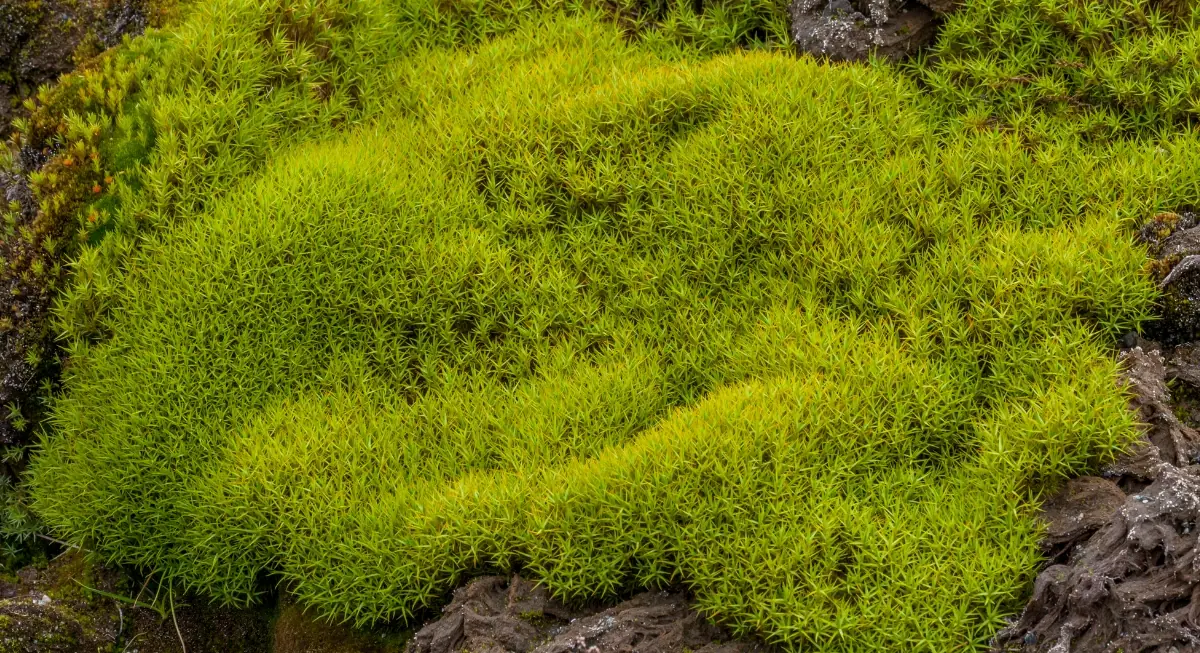
Tardigrades are famous for surviving in outer space, but many live quiet lives in moss, soil, ponds, and other aquatic or damp habitats. These home environments dry up quickly. When the water disappears, the tardigrade simply shuts down its body and waits for rain. This famous survival trick was developed in small, wet patches of nature long before humans started building rockets.
Eggs Are Just As Tough
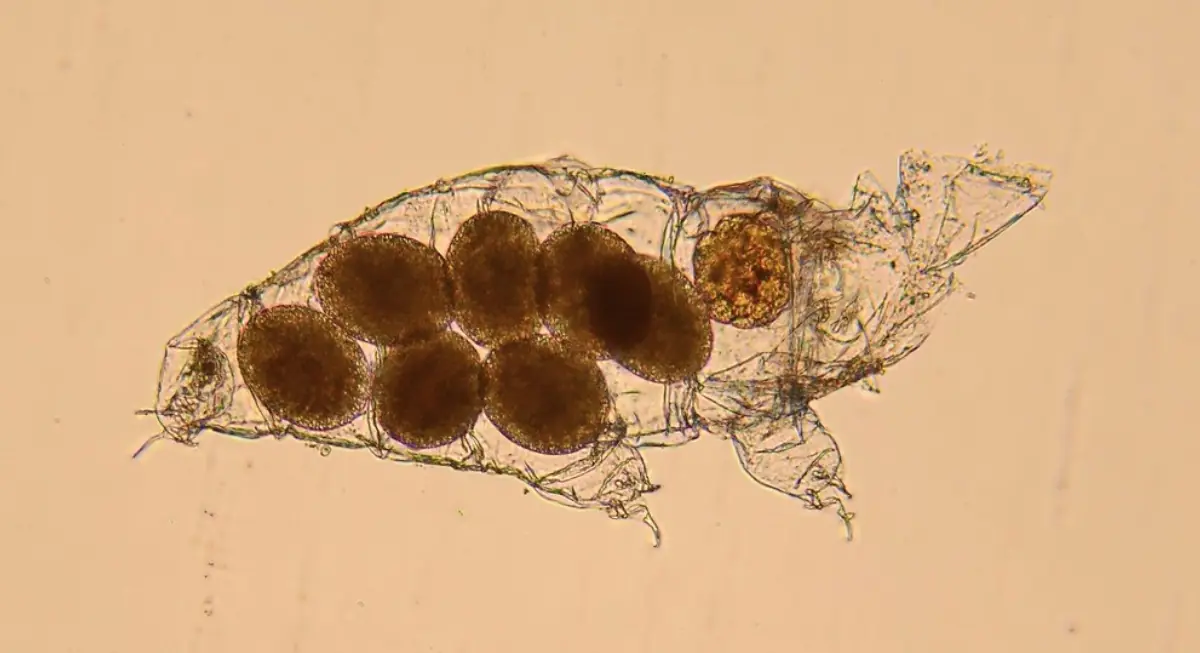
Adult water bears get all the attention, but their eggs have impressive survival skills too. Studies on “Ramazzottius varieornatus” found that dried eggs handled extreme stress tests better than hydrated eggs. These tests included radiation exposure and vacuum-like conditions. This built-in toughness protects the species even before hatching. While a strong adult helps a single animal survive, a hardy egg ensures the next generation has a chance to thrive.
The Research Could Help Cells
Tardigrade research could eventually give scientists a practical way to protect ordinary cells. UC San Diego researchers suggested optimized versions of Dsup could someday protect DNA in different cell types. This discovery could improve cell-based therapies, diagnostic kits, and cultured cells used for pharmaceuticals. The goal is not science-fiction immortality. Scientists simply want to understand how these tiny proteins shield cells from extreme stress.





