
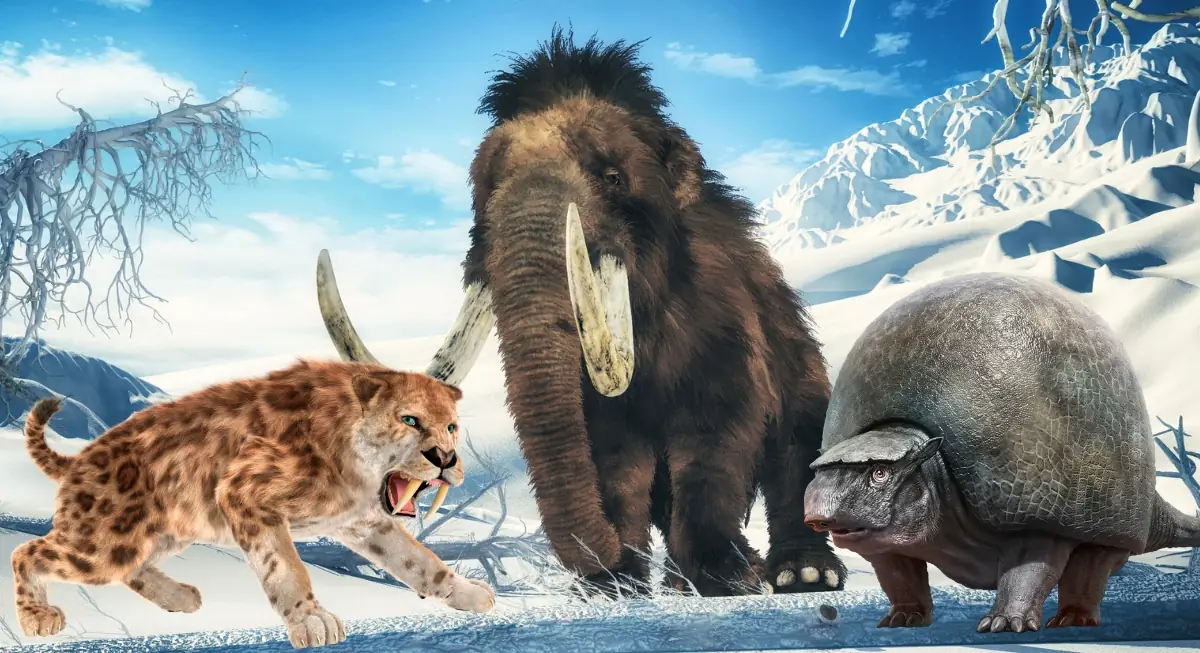
Long before highways and high-rises, Earth was home to some seriously massive, strange, and downright wild animals. These creatures ruled the Ice Age and thrived in frozen landscapes. But as the climate shifted and the world warmed, they vanished before leaving behind bones, legends, and a lot of unanswered questions.
Neanderthal (Homo neanderthalensis)
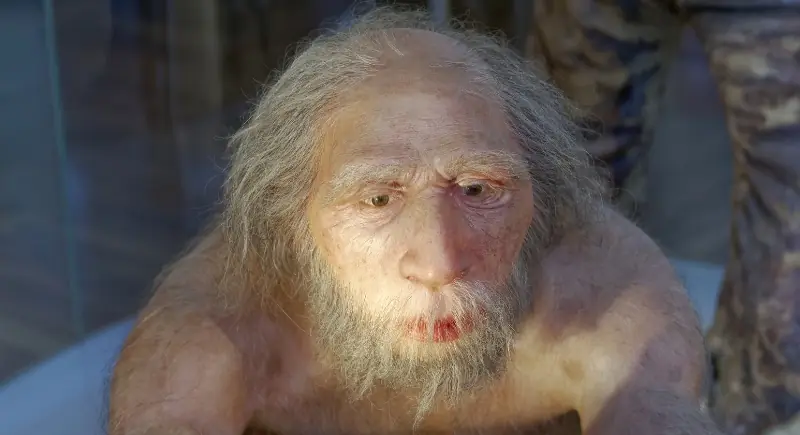
Neanderthals weren’t mindless brutes; they crafted tools, controlled fire, and buried their dead. For over 300,000 years, they thrived in Ice Age Europe and Asia. But their world changed quickly. Shifting climates, dwindling resources, and the growing influence of Homo sapiens pushed them past the point of survival around 40,000 years ago.
Giant Beaver (Castoroides ohioensis)
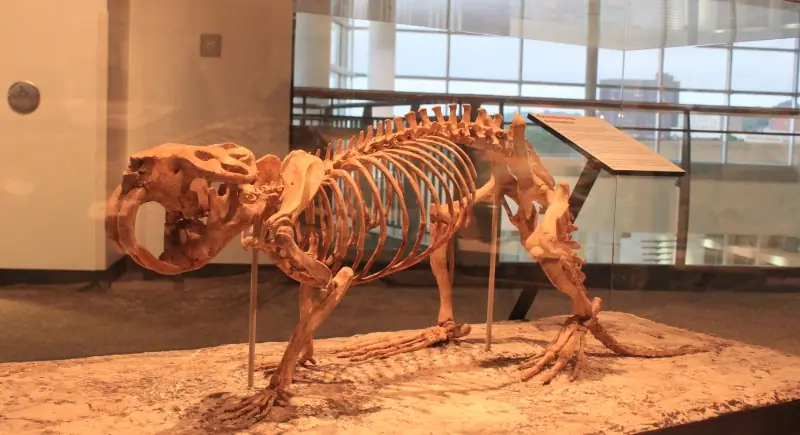
This enormous rodent reached lengths over seven feet and lived in Ice Age wetlands. Unlike modern beavers, it didn’t build dams or lodges. Its blunt, chisel-like teeth were adapted for aquatic vegetation. Habitat loss during warming periods likely caused its extinction roughly 10,000 years ago across North America.
Megalania (Varanus priscus)
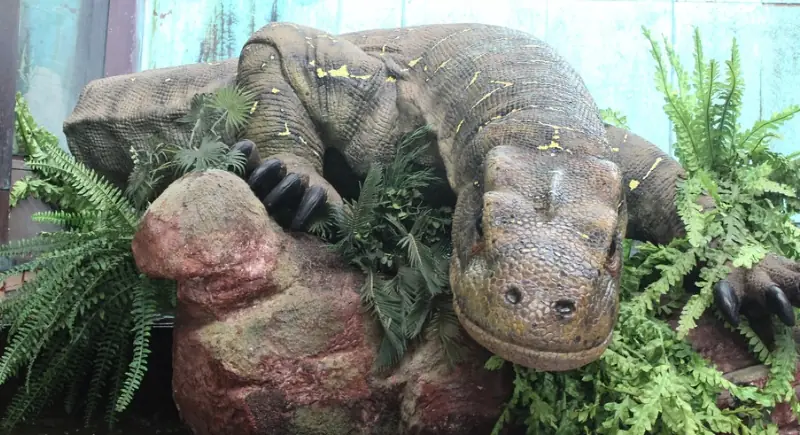
Megalania, a giant monitor lizard from prehistoric Australia, may have exceeded 20 feet in length. It likely ambushed marsupial prey using its strong limbs and toxic saliva. Climate shifts and human colonization disrupted its ecosystem. By 40,000 years ago, this apex reptile vanished.
Diprotodon (Diprotodon optatum)
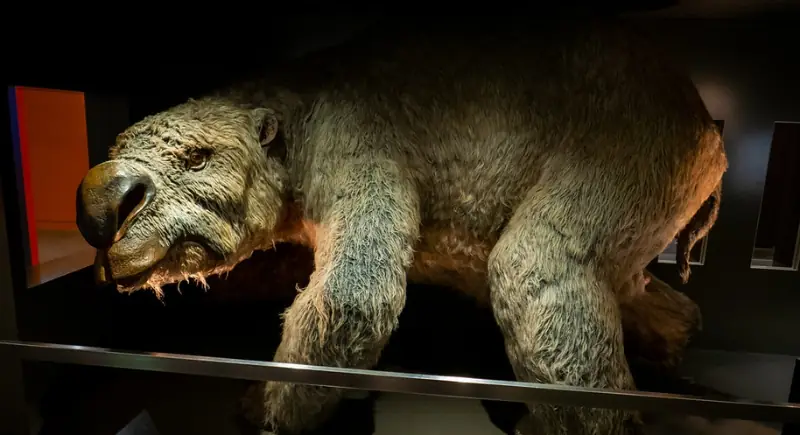
This massive marsupial, resembling an oversized wombat, roamed Ice Age Australia’s woodlands and plains. Diprotodon browsed on low vegetation and traveled in herds. Fossil evidence suggests it vanished about 46,000 years ago, likely due to increasing aridity and hunting by the continent’s earliest human populations.
Woolly Mammoth (Mammuthus primigenius)
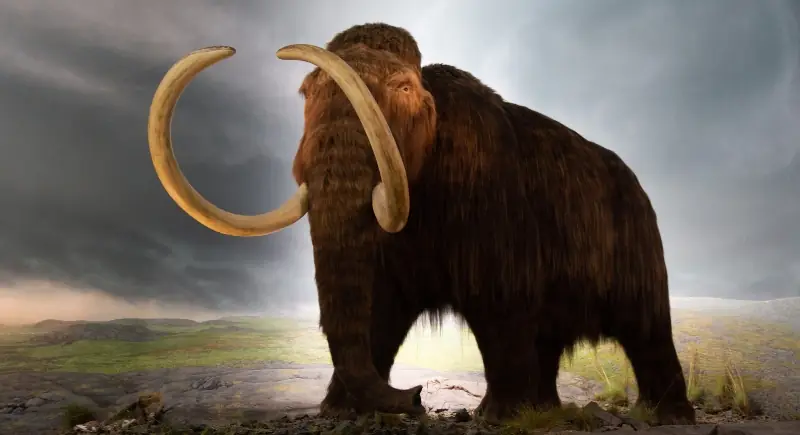
Woolly mammoths were adapted for cold climates, considering that they were covered in thick fur with insulating fat and long tusks for digging snow. They roamed northern grasslands for millennia. Mammoth populations collapsed when temperatures rose and humans advanced. The final isolated groups disappeared from Arctic islands about 4,000 years ago.
Saber-Toothed Cat (Smilodon fatalis)
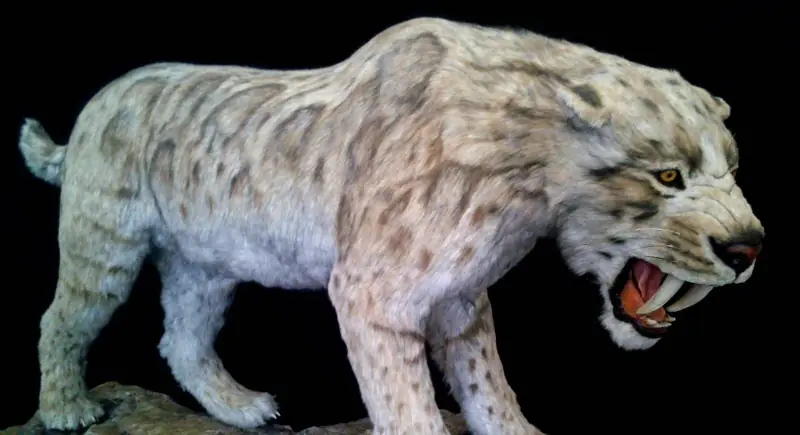
Smilodon wasn’t built for speed but for strength. It likely stalked prey in dense woodlands before using its powerful forelimbs and deadly canine teeth for hunting. With the extinction of large herbivores, their food sources vanished. By the end of the last Ice Age, Smilodon followed its prey into extinction.
Woolly Rhinoceros (Coelodonta antiquitatis)
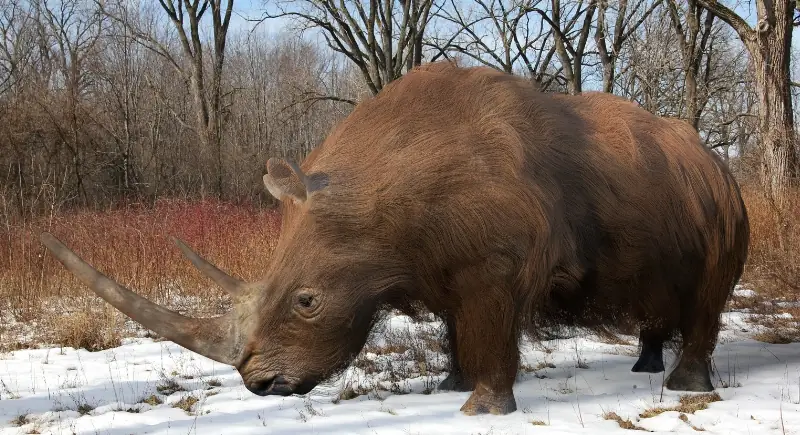
The woolly rhinoceros grazed icy plains across Eurasia, using its large horn to sweep snow aside. As forests replaced grasslands, suitable habitat declined. Combined with human hunting, these changes led to its extinction roughly 10,000 years ago.
Giant Ground Sloth (Megatherium americanum)
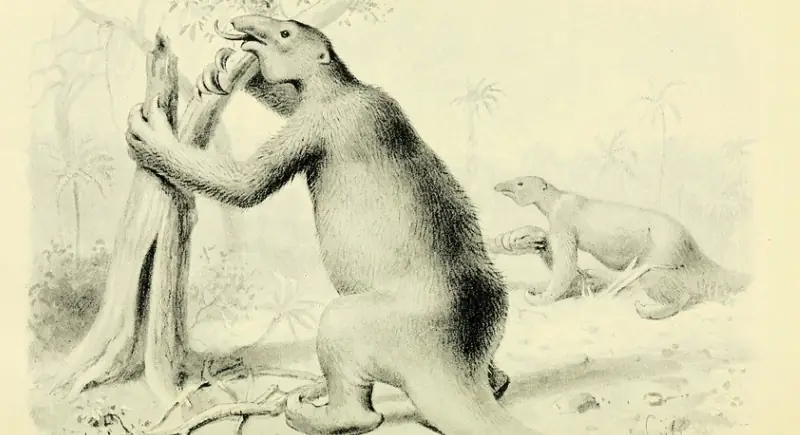
Megatherium was nearly 20 feet long and weighed several tons. It moved slowly while feeding on leaves and shrubs, and could stand up on its hind limbs. Despite its size, it proved vulnerable to climate shifts and hunting. The last known populations disappeared from South America around 10,000 years ago.
Irish Elk (Megaloceros giganteus)
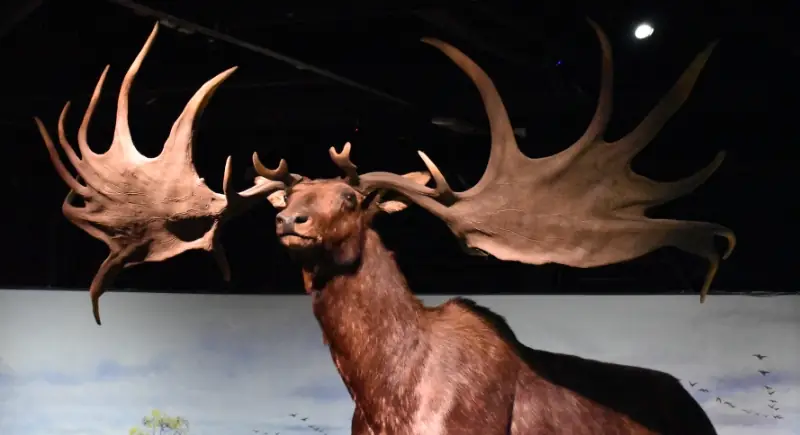
The Irish elk’s antlers stretched over 11 feet wide and were probably a spectacular sight on ancient plains. Despite its name, it actually lived across Eurasia. The species died out approximately 7,700 years ago, unable to adapt quickly enough to the forests replacing open meadows.
Mastodon (Mammut americanum)
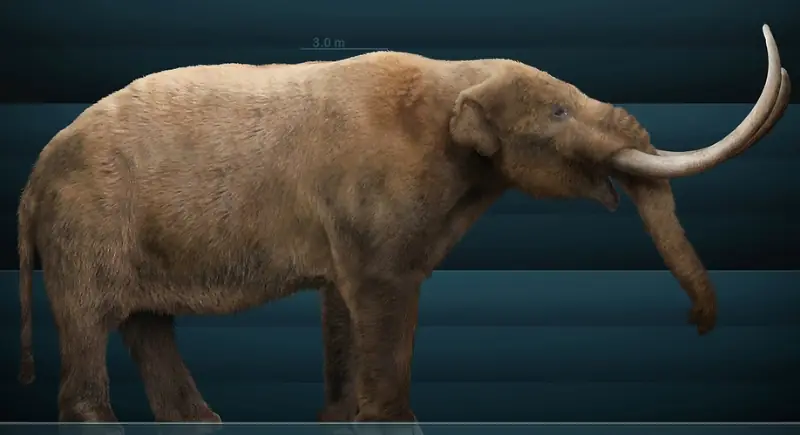
Unlike mammoths, mastodons preferred woodlands and fed on twigs and tree bark. They roamed North America in large numbers. Climate warming and changing vegetation patterns strained their food supply. Coupled with human hunting, these pressures caused their extinction around 10,000 years ago during the megafaunal collapse.
Short-Faced Bear (Arctodus simus)
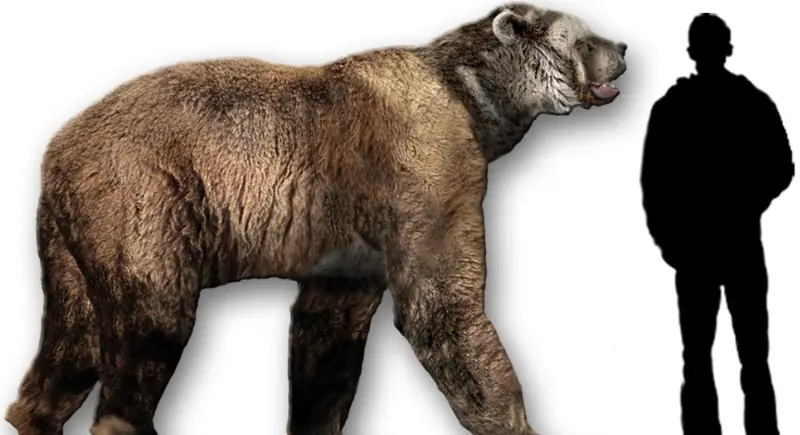
This towering bear stood up to 12 feet tall and had long limbs likely suited for covering great distances. It probably scavenged more than it hunted. Unfortunately, Ice Age megafauna declined, competition increased, and their oversized frame became a burden. The species disappeared from North America about 11,000 years ago.
Glyptodon (Glyptodon clavipes)
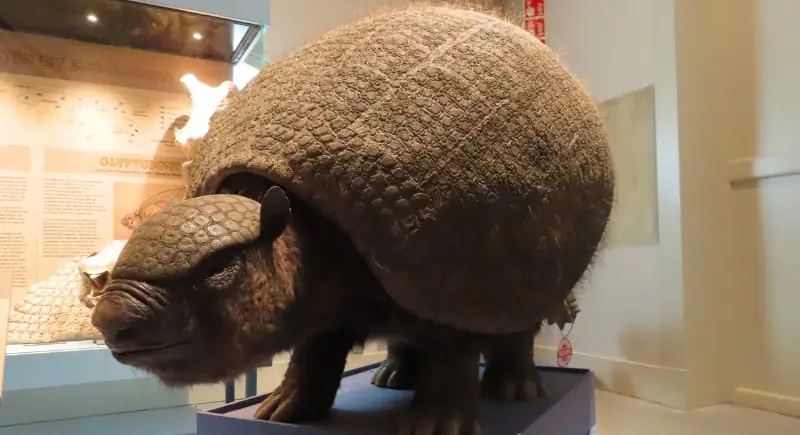
Glyptodon resembled a walking boulder with a domed shell and a tail club for defense. It was native to South America and grazed open grasslands. Though heavily armored, it couldn’t survive rapid environmental change. Human hunting also likely played a final role in its extinction roughly 10,000 years ago.
American Lion (Panthera atrox)
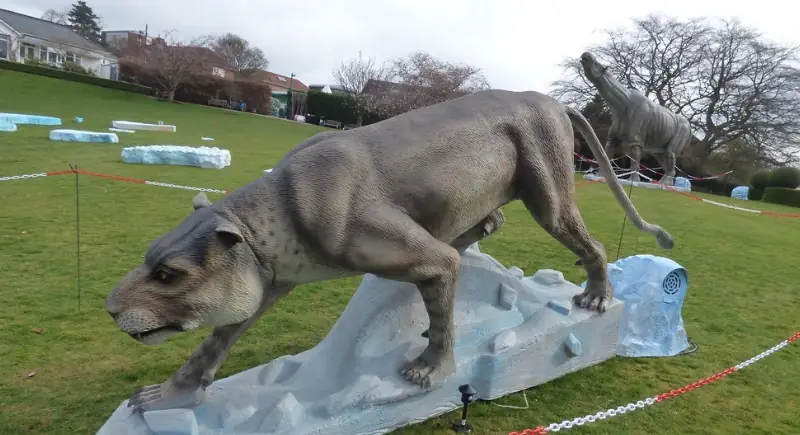
The American lion, larger than modern lions, hunted big game across North America’s plains. It may have stalked prey in solitude by relying on size and strength. When herbivores disappeared and competition increased, it couldn’t sustain its role at the top. It went extinct around 11,000 years ago.
Dire Wolf (Canis dirus)
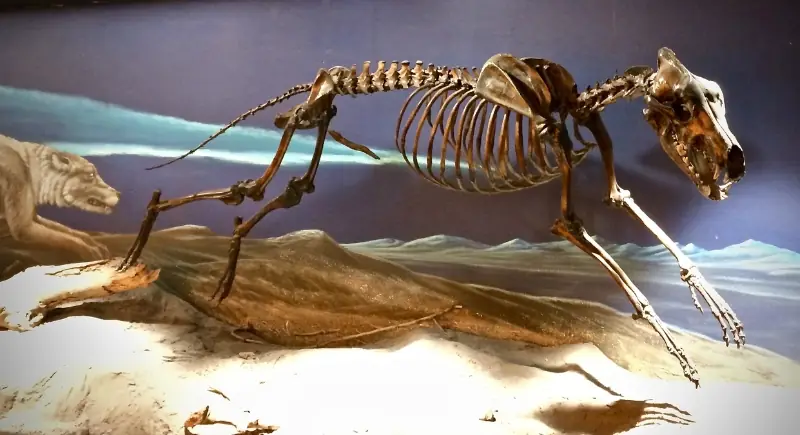
Dire wolves were heavier and more muscular than modern gray wolves, with powerful jaws suited for bringing down large Ice Age prey. Fossils found in the La Brea Tar Pits reveal their widespread presence. They died out about 9,500 years ago without descendants.
Columbian Mammoth (Mammuthus columbi)
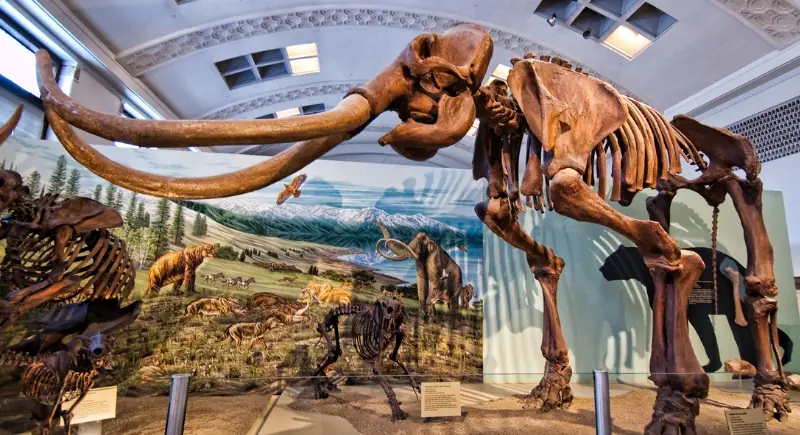
This southern relative of the woolly mammoth preferred warmer climates and roamed the open plains of North America. It stood up to 13 feet tall and grazed on prairie grasses. The Columbian mammoth disappeared around 10,000 years ago, which marked the end of a giant.
Steppe Bison
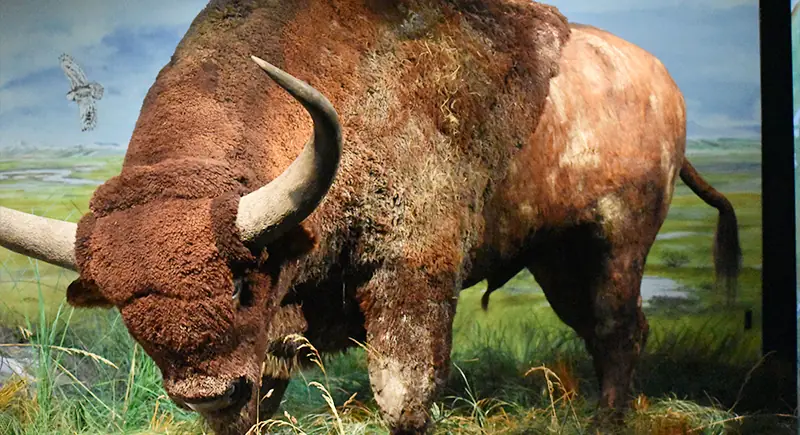
The steppe bison was built for cold grasslands, with heavy shoulders, curved horns, and enough size to make wolves think twice. It roamed across Ice Age Eurasia and North America. Then the mammoth steppe changed. Grasslands shrank, forests spread, and this shaggy giant faded into bones, cave art, and frozen ground.
Cave Hyena
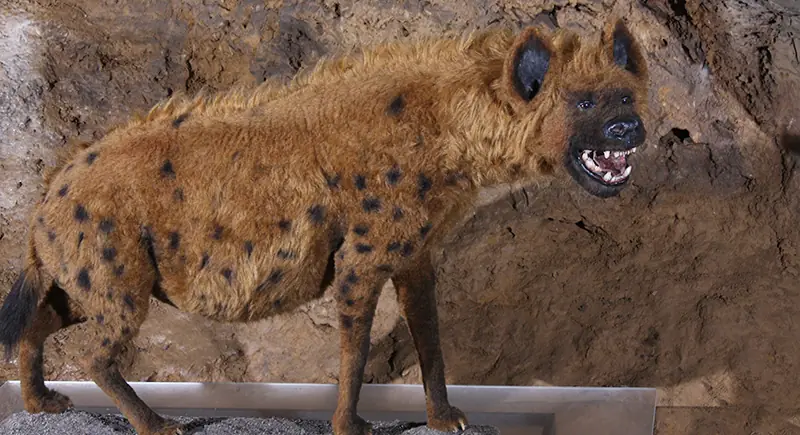
Cave hyenas were not side characters in Ice Age Europe. They cracked bones, stole kills, and dragged leftovers into caves that later became fossil treasure chests. Then the world warmed, prey shifted, and humans added pressure. By the end of the Pleistocene, this bone-crushing hunter had lost its place.





