
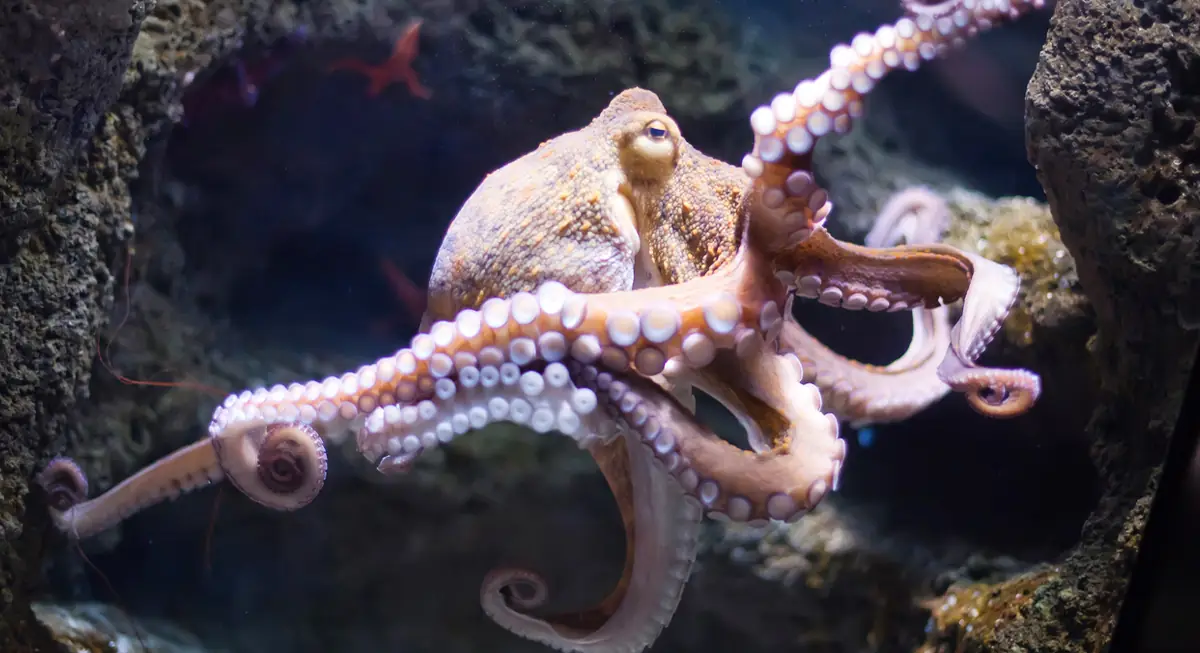
When analyzing long-term underwater footage, researchers documented a repeated behavior that stood out for its consistency and timing. Octopuses gathered debris, adjusted their bodies, and forcefully propelled objects through the water during specific interactions!
Over time, clear patterns emerged. Certain octopuses threw objects far more often than others, and the same individuals showed up repeatedly as targets. The timing aligned with past interactions and close proximity, suggesting that memory and recognition were involved. What initially appeared to be playful motion began to resemble something more deliberate, shaped by tension, familiarity, and individual temperament rather than chance.
A Repeating Pattern
<span data-mce-type="bookmark" style="display: inline-block; overflow: hidden; line-height: 0" class="mce_SELRES_start"></span>
Researchers studying gloomy octopuses in Australia recorded more than 20 hours of footage at a dense site in Jervis Bay. Over that time, they counted 102 separate instances of octopuses gathering debris and forcefully propelling it through the water. Silt, shells, and algae all made appearances. About one-third of these throws are related to den cleaning or post-meal cleanup. The rest showed up around direct interactions with other octopuses.
More than half of the throws occurred within two minutes of an encounter involving mating attempts, physical contact, or territorial jostling. In roughly one-third of those cases, the debris struck another octopus. These hits did not scatter randomly. The same individuals appeared repeatedly, and certain octopuses absorbed more incoming fire than others.
How Octopuses Aim Their Throws
Throwing underwater is not simple. The octopus gathers material in its arms, adjusts its siphon, and releases a jet of water with enough force to move objects several feet. Researchers noticed something important during throws that struck targets. The octopus often shifted its siphon into an unusual position beneath the arm web. That adjustment increased the chance of a direct hit.
High-force throws landed more often. Darker body coloring appeared during many of these moments, a signal previously linked to aggression in this species. In one rare case, an octopus even flung a shell by extending an arm, skipping the usual jet propulsion. These details suggested effort and choice rather than coincidence.
Crowding Changes the Rules
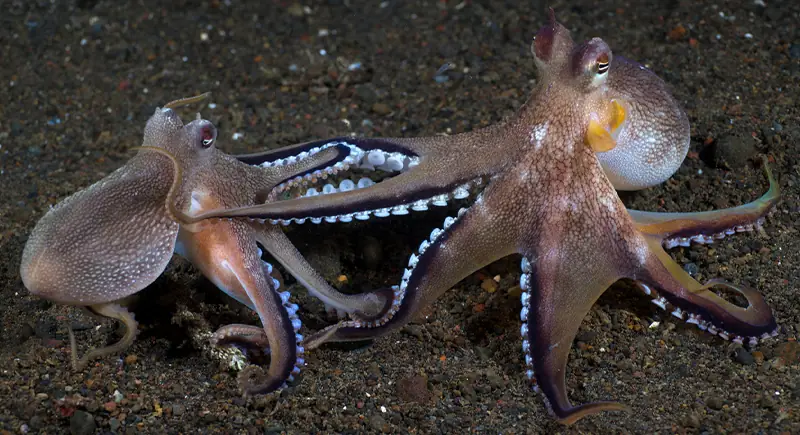
Gloomy octopuses usually live alone, but Jervis Bay pushes them closer together. Fine sediment makes stable dens difficult, while discarded scallop shells offer solid building material. The more octopuses that move in, the more shells appear. Dens end up packed side by side.
Close quarters introduce friction. Solitary animals forced into constant proximity respond somehow. In this environment, throwing objects becomes a low-risk way to send a message without escalating into physical conflict. Several octopuses caught on video reacted defensively. Some raised arms before impact. Others ducked at the last second, but no immediate retaliation followed.
Grudges Underwater
One detail stood out across recordings. Certain octopuses appeared to keep targeting the same neighbors. Females delivered the majority of throws, and males attempting to mate received frequent hits. In some cases, females also targeted other females living nearby. These repeated actions, directed at familiar individuals, raised a bigger question.
Does memory play a role? Octopuses possess large numbers of neurons, rivaling those of dogs, spread between a central brain and nerve clusters in each arm. When throws follow specific encounters and repeat toward the same targets, it starts to resemble something close to a grudge.
Researchers stopped short of calling the behavior emotional, yet the consistency mattered. Throws rarely triggered fights. They did not lead to retaliation. They created space. That outcome suggests a controlled response rather than a chaotic one.
In a few cases, octopuses even appeared to aim at the research cameras. The behavior stayed flexible, targeted, and situational. Objects flew when proximity felt unwanted, and stopped when distance returned. Octopuses continue to surprise scientists, not through dramatic displays, but through quiet persistence.





