
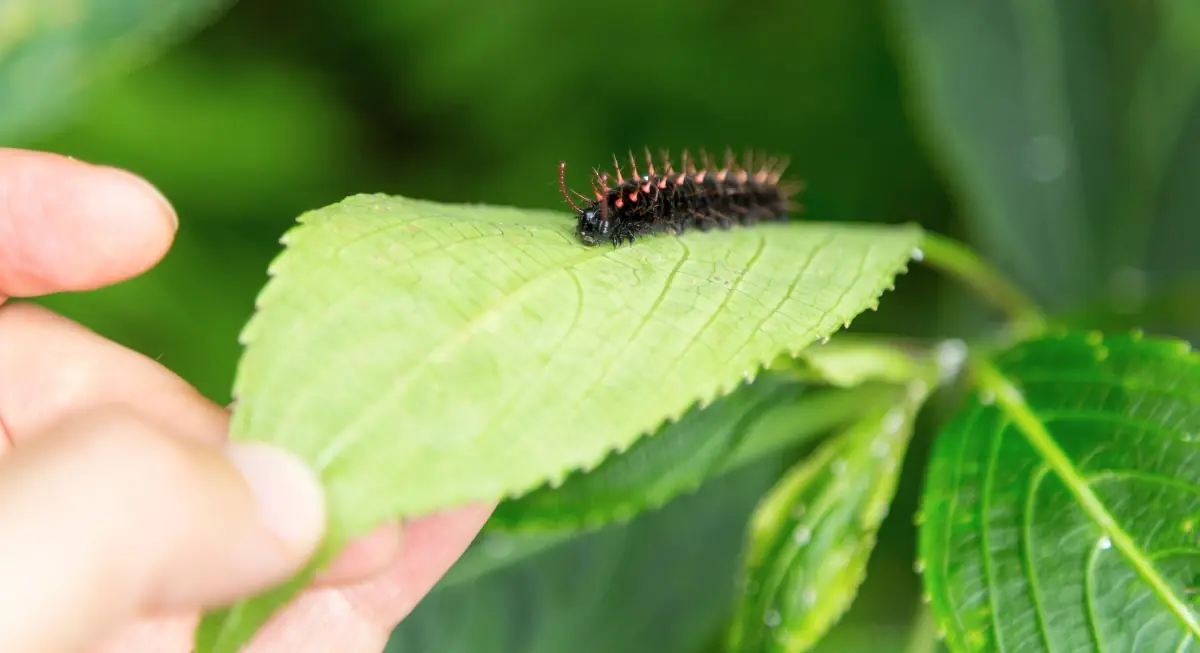
Most caterpillars spend their days chewing leaves and preparing for the long transformation into butterflies or moths. That peaceful image falls apart when you meet the creature scientists now call the “bone collector.” This newly described caterpillar behaves less like a garden insect and more like a tiny battlefield scavenger.
Instead of leaves, it hunts meat. And instead of blending in with twigs or dirt, it builds a suit of armor from the body parts of insects it devours. Researchers studying insects in Hawaii discovered that this bizarre caterpillar survives in one of the most dangerous places imaginable: the middle of a spider’s hunting ground.
A Carnivorous Caterpillar Living in Spider Webs
<span data-mce-type="bookmark" style="display: inline-block; overflow: hidden; line-height: 0" class="mce_SELRES_start"></span>
The bone collector caterpillar lives on the Hawaiian island of Oahu, where scientists have documented it creeping along spider webs in small cavities such as tree holes, rock crevices, and hollow logs. It uses these webs as hunting platform.
When insects become trapped in the sticky threads, the caterpillar moves in and eats the spider’s immobilized prey. This makes the insect a rare predator in an overwhelmingly plant-eating group. Out of roughly 200,000 known species of butterflies and moths, scientists estimate that only about 300 caterpillars feed on meat.
The bone collector belongs to the genus Hyposmocoma, a group often called Hawaiian fancy case caterpillars. Many members of this group build protective silk cases that they carry around like portable shelters. The bone collector takes that strategy to an entirely new level.
A Suit of Armor Made From Dead Insects
Lead researcher Daniel Rubinoff of the University of Hawaii at Mānoa first encountered the strange caterpillar nearly two decades ago while surveying insects in the Waianae Mountains. At first, he assumed the caterpillar’s insect-covered shell was a coincidence. But after repeated encounters, it became clear that the behavior was intentional.
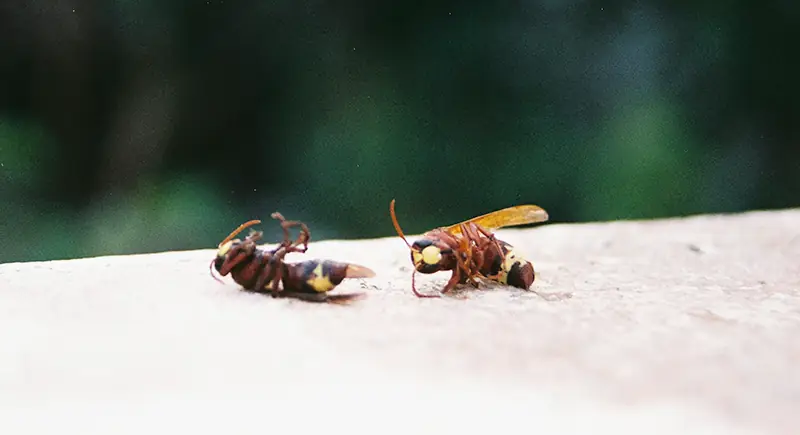
After feeding on trapped insects, the caterpillar carefully collects the remains and attaches them to the outside of its silk case. Researchers have found cases covered in an unsettling mix of insect fragments, including ant heads, beetle abdomens, fly wings, and spider legs.
The caterpillar does not simply glue random debris onto its shell. Scientists observed the larvae inspecting each fragment before attaching it. If a body part is too large, the caterpillar chews it into a more manageable shape before weaving it into place.
Living inside a spider’s web is a risky strategy. Spiders are carnivorous hunters that routinely capture insects far larger than the bone collector. Scientists believe this gruesome yet portable camouflage suit helps disguise the caterpillar as it prowls through spider webs.
The smell and appearance of dead insects likely make it harder for spiders to recognize the caterpillar as prey. Without that protection, the spider might pierce the caterpillar’s case and eat it.
One of the Rarest Insects Scientists Have Found
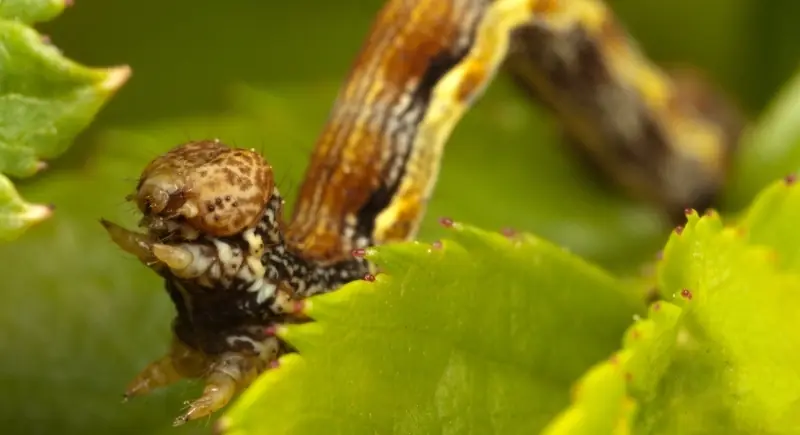
The bone collector is extraordinarily rare. Over more than 20 years of observation, scientists have documented only 62 bone collector caterpillars, all within a limited mountain forest range spanning roughly 15 square kilometers.
The species also belongs to an ancient evolutionary lineage. Genetic analysis suggests the caterpillar’s ancestry dates back at least six million years, which means its lineage existed long before the island of Oahu itself formed. Researchers believe the insect’s ancestors may have lived on older Hawaiian islands that have since eroded.
Unlike other Hyposmocoma groups that evolved into multiple species across the Hawaiian Islands, the bone collector appears to be the only species in its particular lineage.
A Discovery That Shows How Little We Know About Insects
The discovery highlights how many unusual creatures remain hidden in remote ecosystems. Even today, scientists continue to find species with behaviors that seem almost unbelievable.
Insects make up the vast majority of animal life on Earth, yet many remain poorly studied. Researchers estimate the planet may contain around 20 quadrillion ants alone, and countless insect species have never been formally described.
The bone collector caterpillar is a reminder that some of the most surprising evolutionary strategies belong to the smallest animals. This tiny predator survives by turning its victims into camouflage, allowing it to hunt in one of the most dangerous places an insect could live.
For a creature only a few centimeters long, it may be one of the strangest survival strategies scientists have ever seen.





