
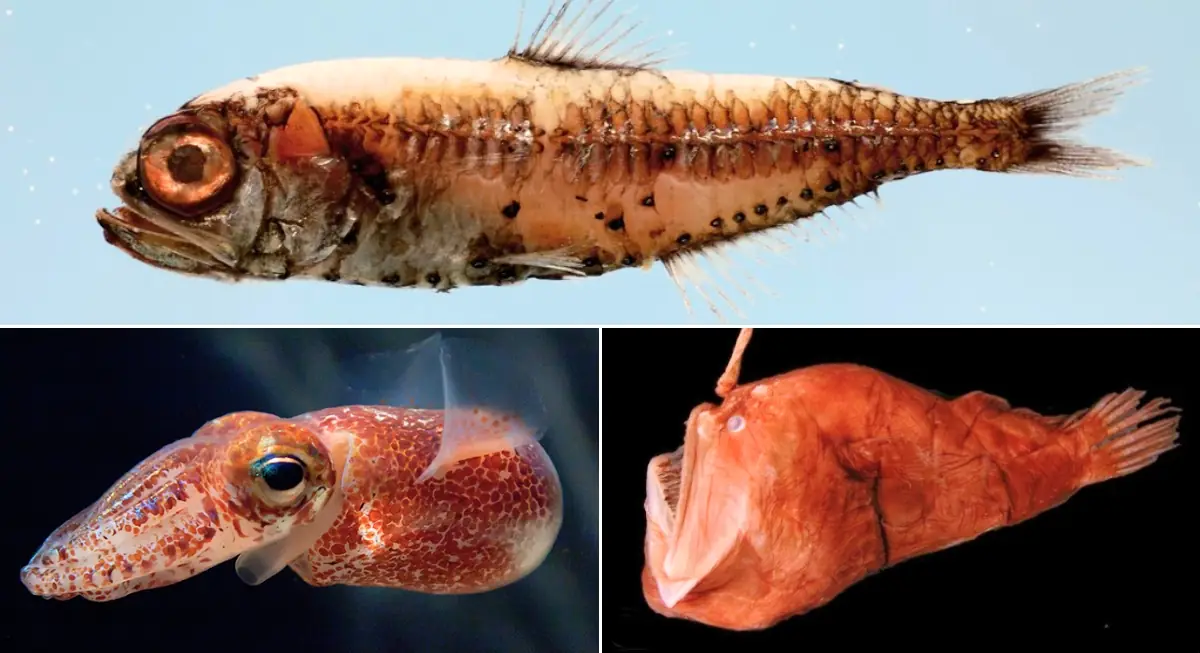
Darkness dominates most of the ocean. Sunlight fades quickly as you descend, and by the time you reach the deep sea, natural light disappears entirely. Yet the ocean is far from black. Many marine animals generate their own illumination through bioluminescence, a chemical reaction in which molecules such as luciferin react with oxygen to produce visible light. This glow plays a direct role in helping creatures hunt, communicate, hide, or escape danger.
Deep-Sea Anglerfish
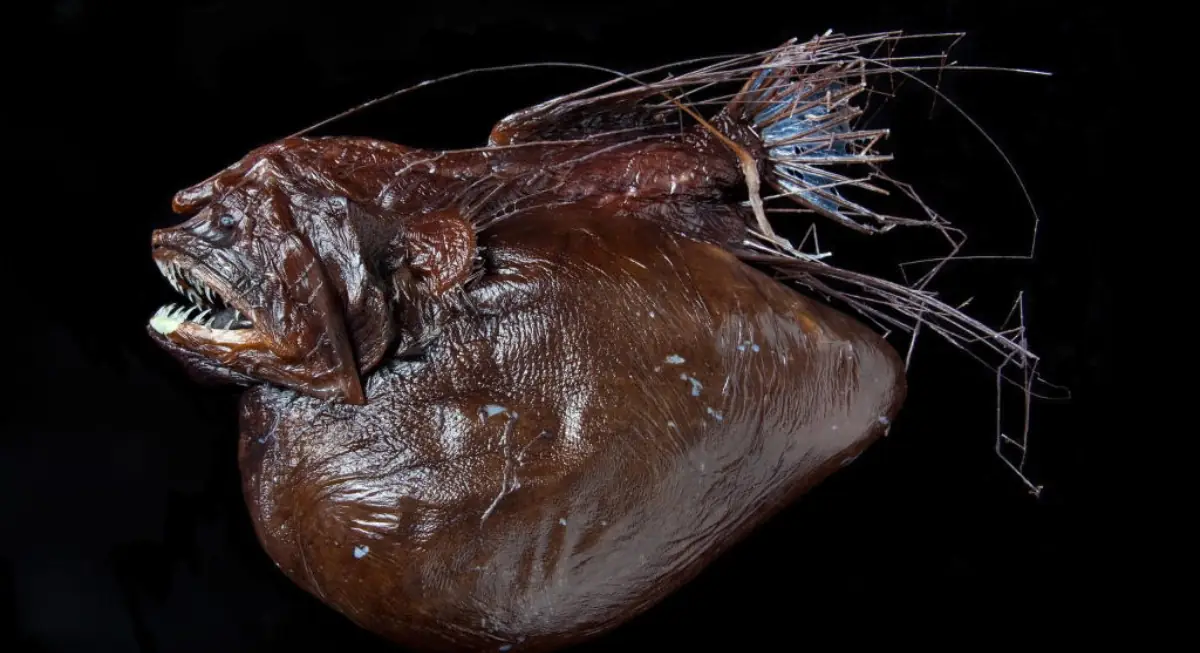
The anglerfish’s glowing lure is a direct hunting strategy. A flexible rod extends from the fish’s head, ending in a bulb called an esca filled with light-producing bacteria. In the darkness of the deep ocean, small fish and crustaceans approach the glow out of curiosity. The anglerfish waits motionless until prey drifts close enough to be swallowed by its large, tooth-filled mouth.
Lanternfish
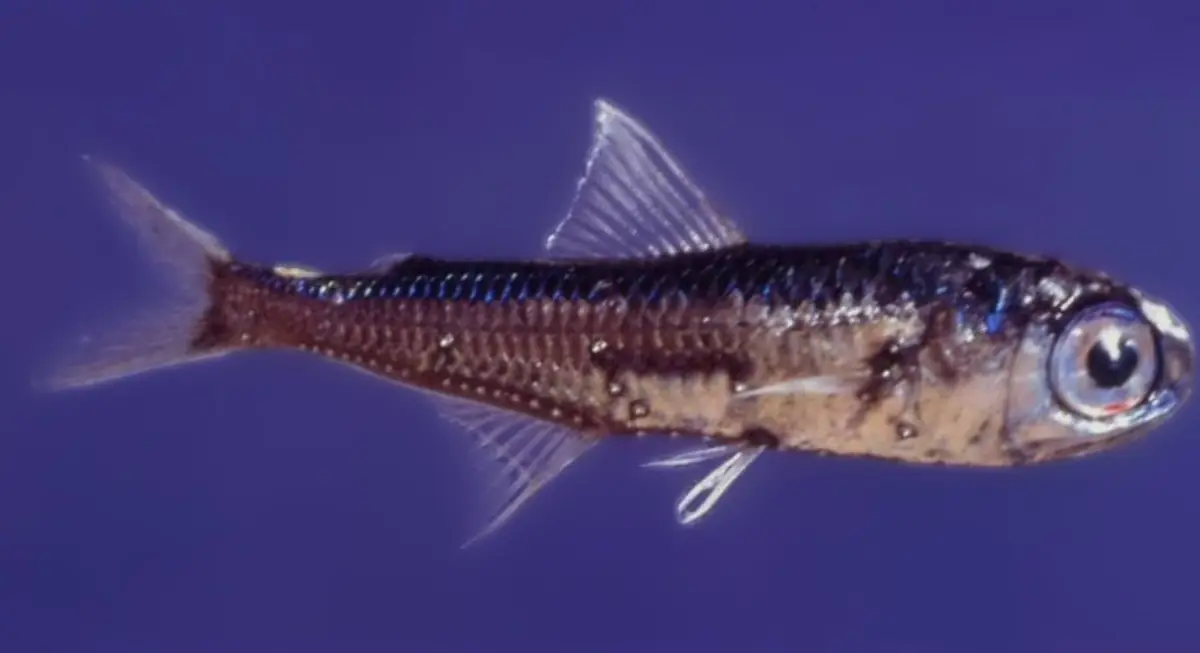
Lanternfish use light to disappear. Rows of light-producing organs called photophores line their bellies and emit a faint glow that matches the dim light filtering down from the ocean surface. This technique, known as counterillumination, hides the fish’s silhouette from predators looking upward. From below, the lanternfish blends into the background.
Stoplight Loosejaw Dragonfish
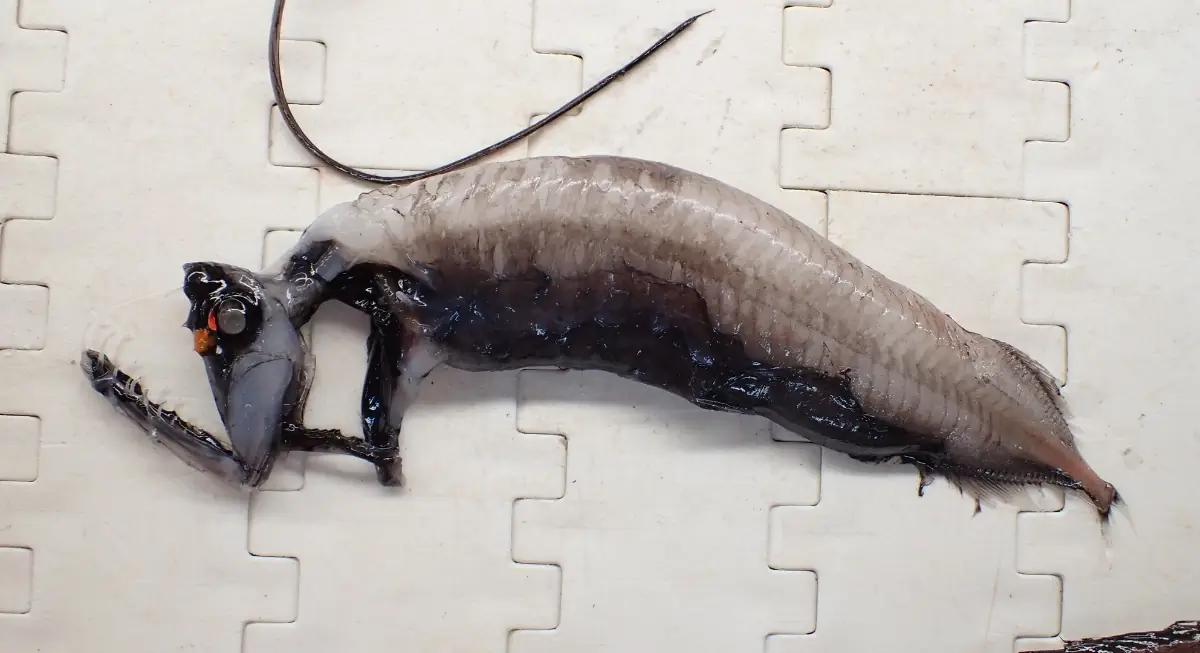
This deep-sea predator carries one of the most unusual lighting systems in the ocean. Specialized organs beneath its eyes emit red light that acts like a narrow flashlight. Most deep-sea animals cannot detect red wavelengths, which means the dragonfish can illuminate prey while remaining invisible to them. The result is a stealth hunting advantage in a place where vision is already limited.
Vampire Squid
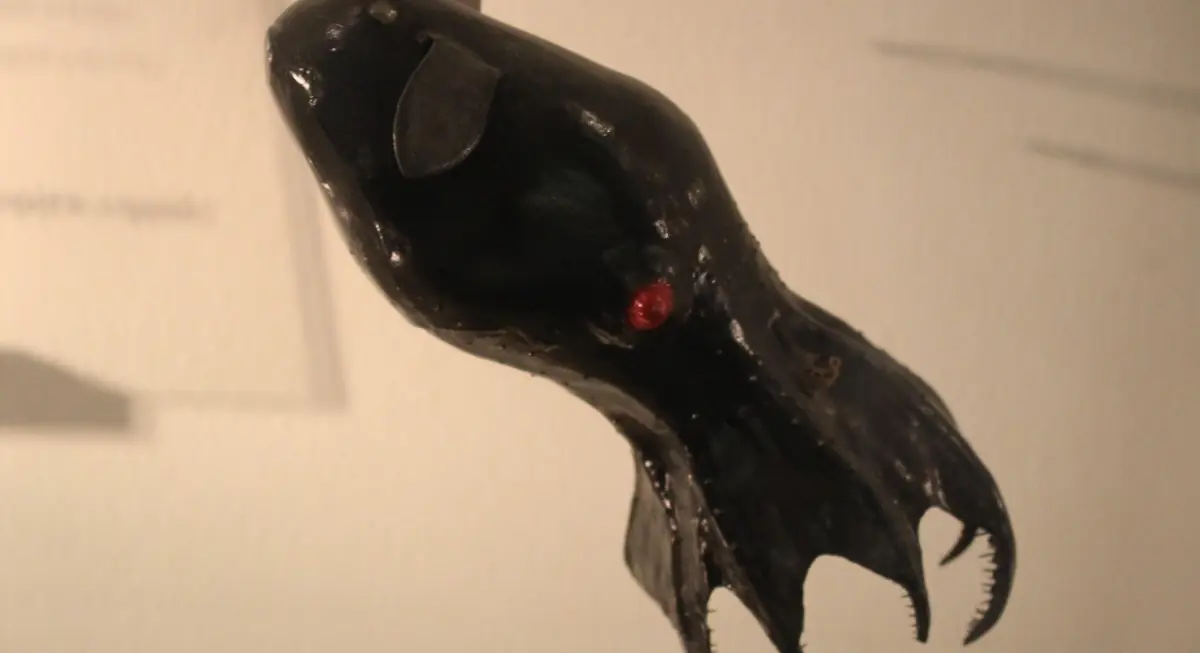
When threatened, the vampire squid releases a cloud of glowing mucus instead of ink. The sticky material lights up the water around a pursuing predator, creating a sudden burst of brightness that confuses and distracts the predator. While the predator deals with the glowing mess, the squid propels itself away into the surrounding darkness.
Cookiecutter Shark
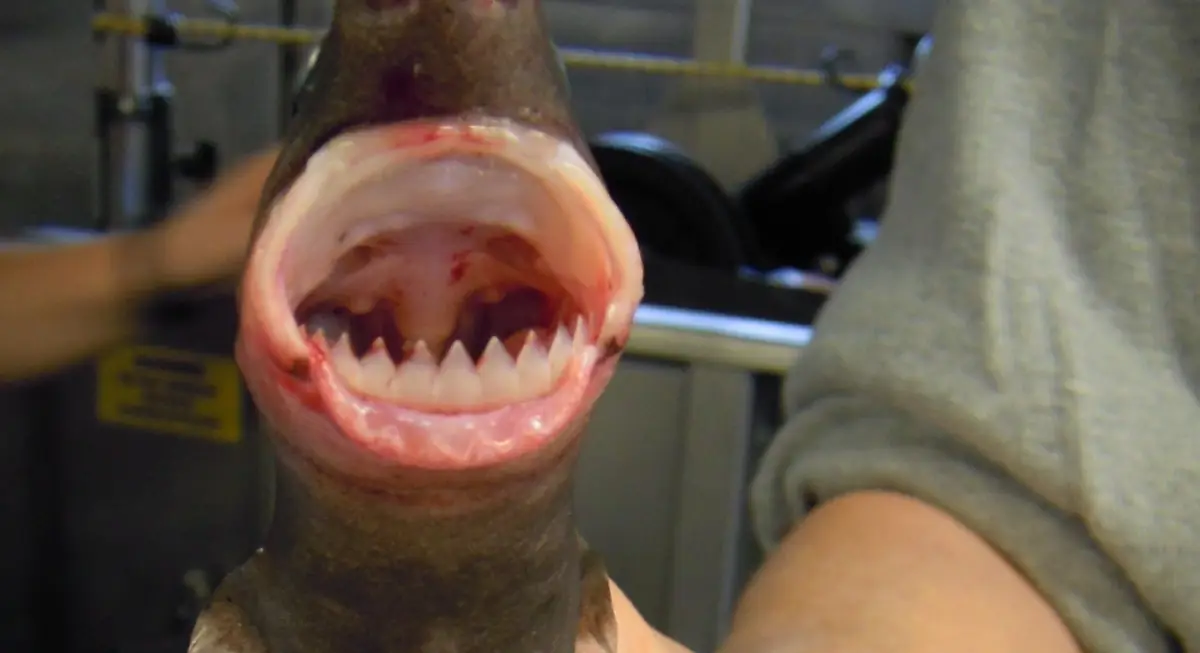
The cookiecutter shark turns light into a trap. Its underside glows with bioluminescent organs that resemble small prey when viewed from below. Larger predators, such as whales or large fish, approach the glow in search of food. When they get close, the shark lunges forward and rips out a plug of flesh with its circular-saw-like teeth, leaving a distinctive round wound.
Hawaiian Bobtail Squid
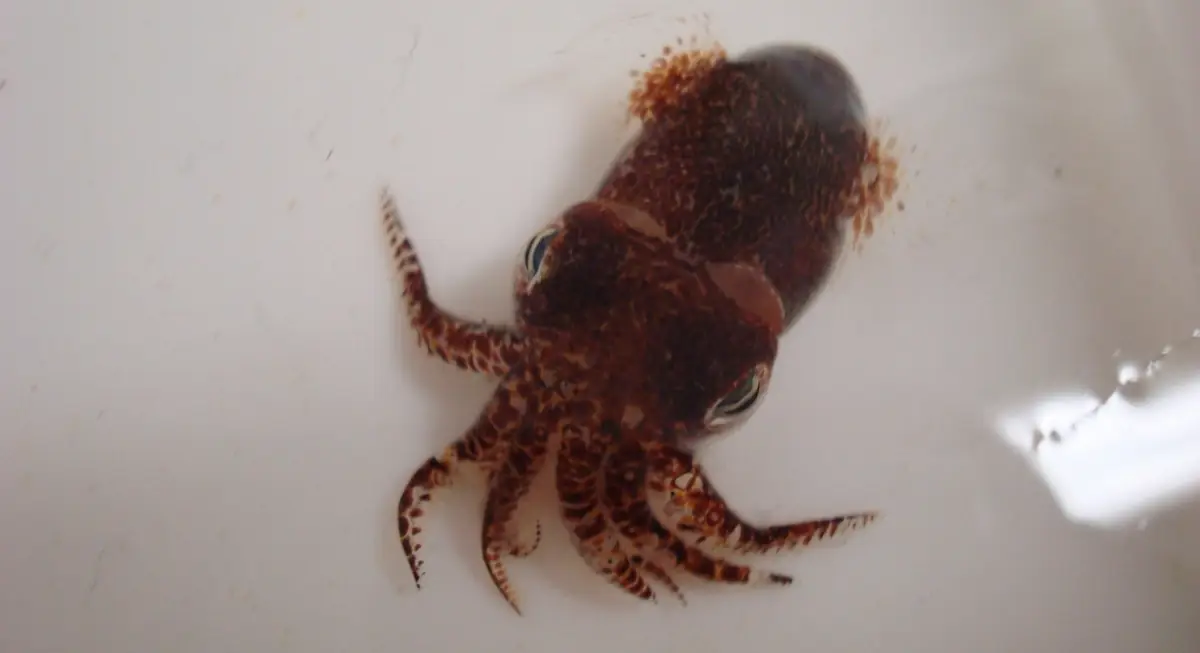
This small squid begins life by forming a partnership with glowing bacteria. Shortly after birth, microbes colonize a special light organ inside its body. The bacteria emit light downward, allowing the squid to match the faint illumination coming from above. The camouflage hides the squid from predators watching from below while it hunts in shallow waters at night.
Stauroteuthis Octopus
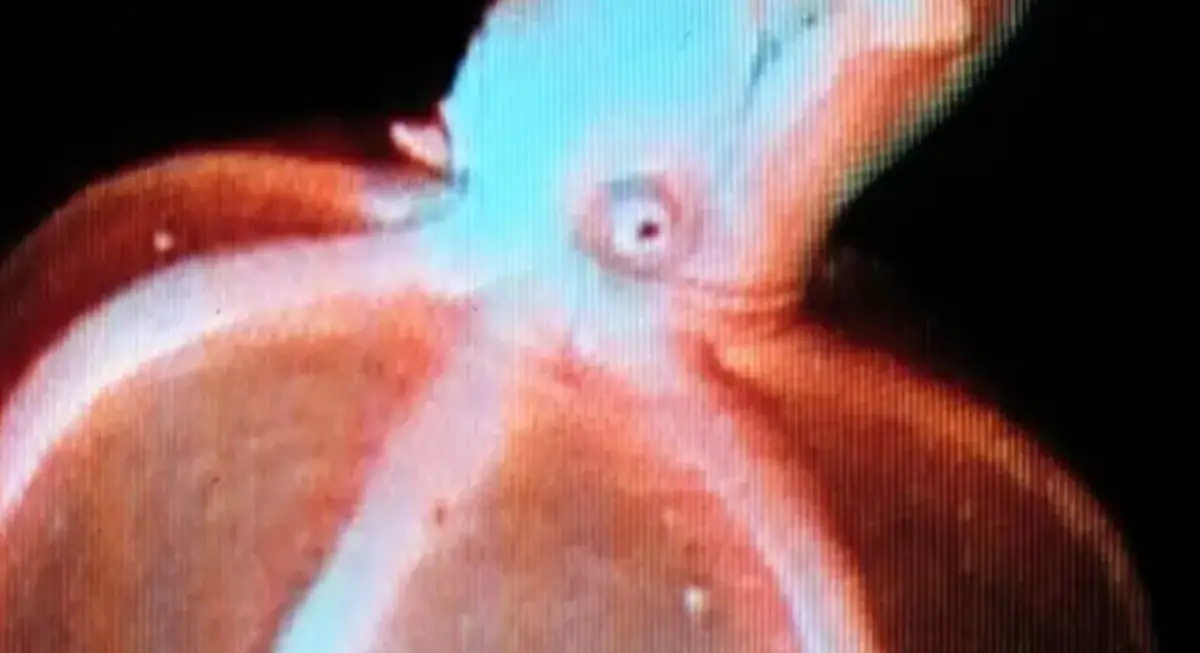
The deep-sea octopus Stauroteuthis uses light to help capture prey. Small bioluminescent organs near its mouth produce a faint glow that attracts plankton drifting in the surrounding water. Curious organisms move toward the light and are caught by the octopus’s webbed arms. In the deep sea, where food can be scarce, even a subtle glow can guide a meal closer.
Syllid Fireworm
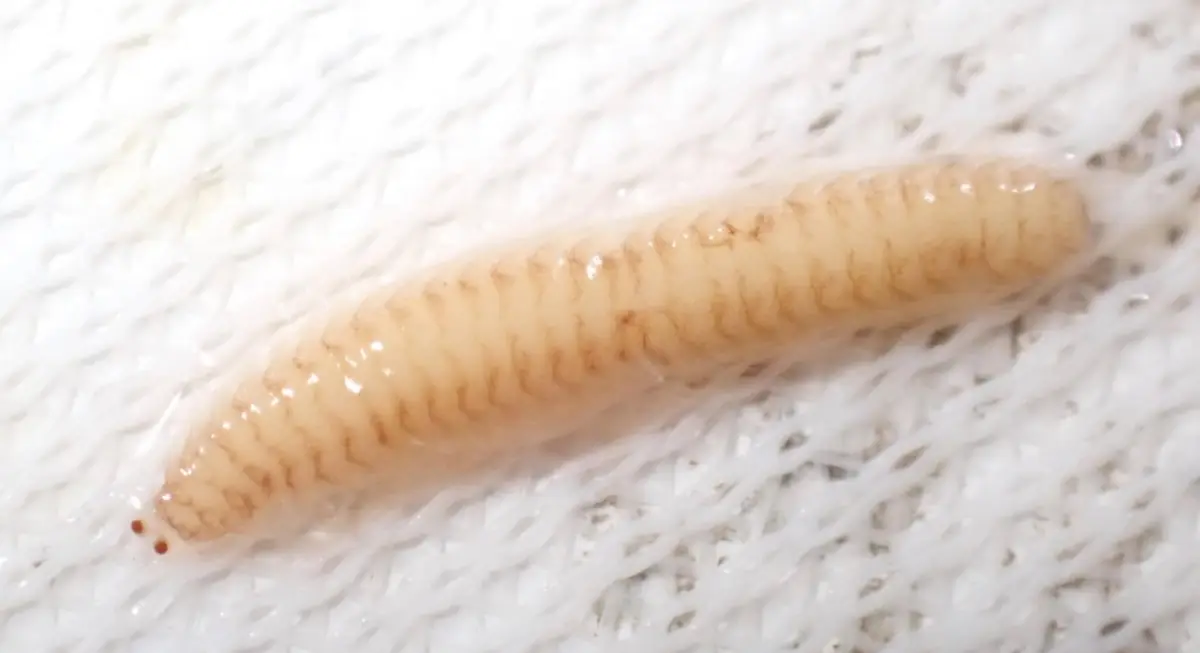
Not all bioluminescent displays are about hunting. Syllid fireworms use light for reproduction. During certain lunar cycles, females swim in circular patterns near the surface while releasing glowing signals that guide males toward them. The synchronized light show turns the dark water into a temporary mating display where individuals locate partners through flashes of green light.
Caribbean Ostracod
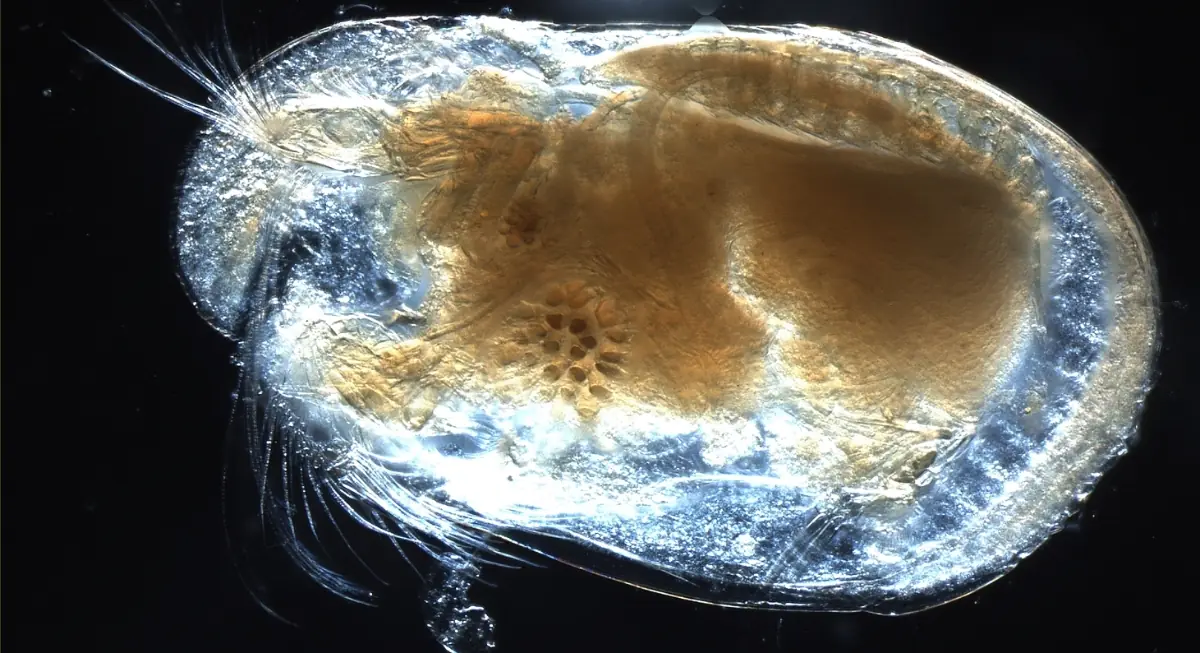
These tiny crustaceans perform elaborate glowing courtship displays. Male ostracods release pulses of bioluminescent chemicals while swimming through the water in carefully timed patterns. The flashes form bright trails that attract females nearby. Each species produces its own distinctive light sequence, turning the ocean into a nighttime display of glowing signals.
Green Bomber Worm
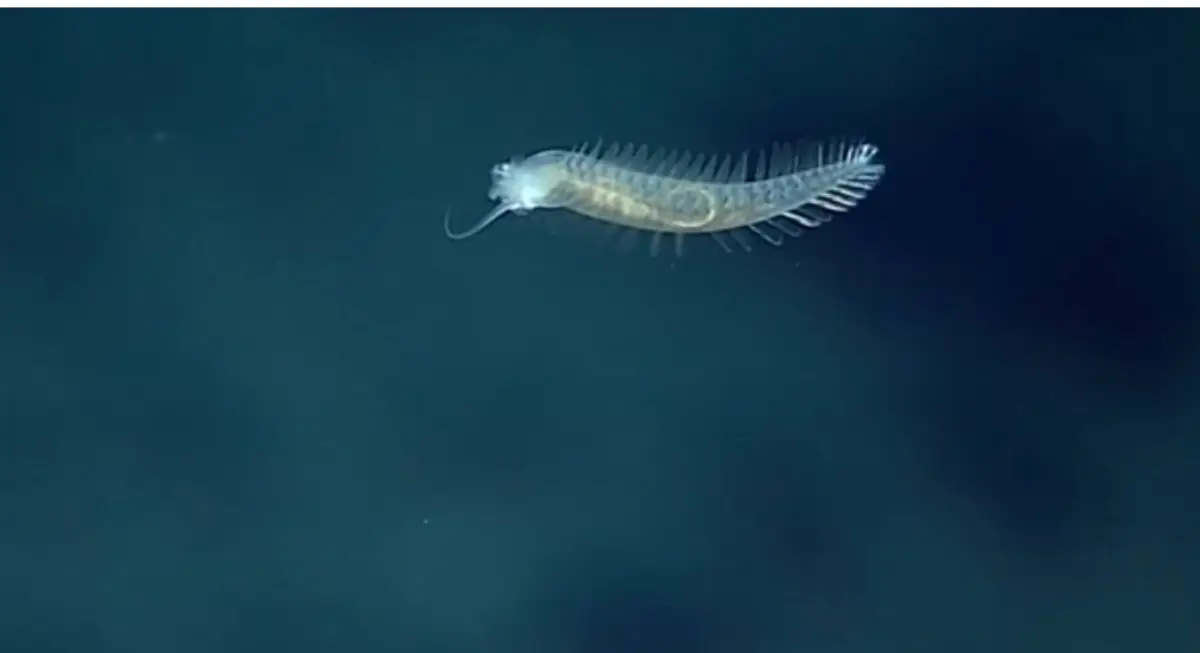
The deep-sea “green bomber” worm relies on bioluminescence for defense. When attacked, it ejects glowing sacs from its body that drift through the water like floating sparks. These bright decoys distract predators and draw attention away from the worm itself, giving it enough time to slip away into the darkness.





