
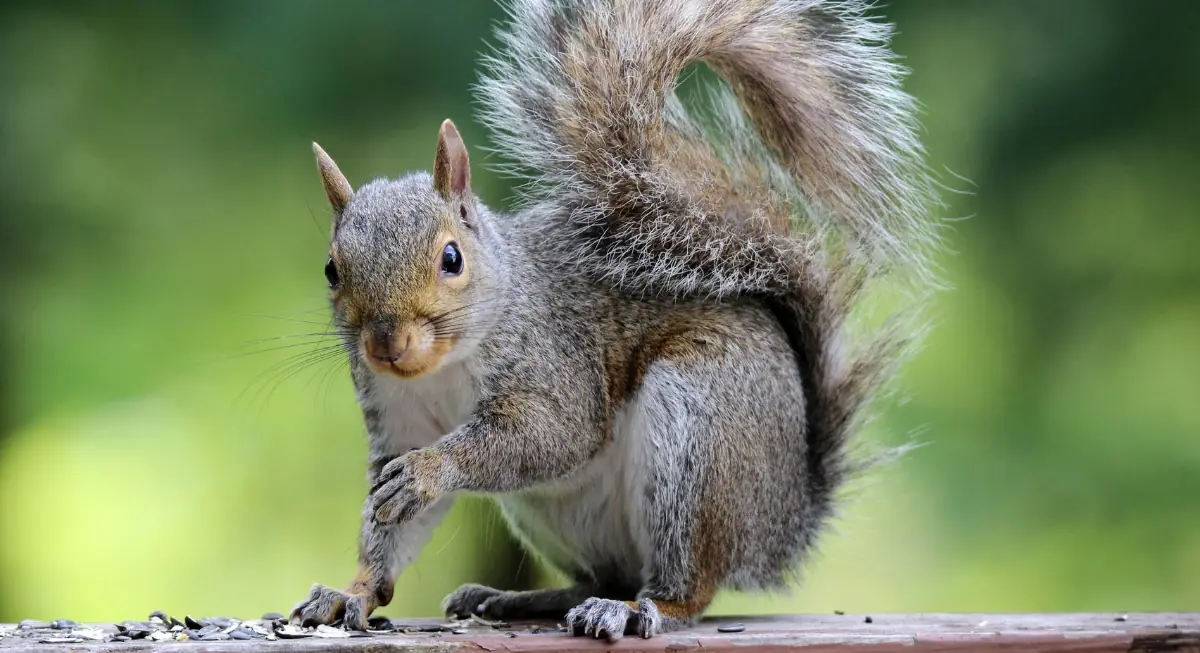
If you have ever paused a slow-motion clip of a squirrel jumping from a tree, you might have noticed something funny. Right before it hits the ground, it spreads its legs, drops low, and lands in a crouch that looks straight out of a comic book. The internet quickly labeled it a “superhero landing,” and the comparison stuck.
The photos are hard to ignore. The stance really does resemble the dramatic crouch popularized in movies, especially after Deadpool poked fun at how tough that landing would be on anyone’s knees. Once people started sharing side-by-side images, meme pages and wildlife accounts ran with it.
It looks theatrical, but squirrels are not striking a pose for effect. There is a practical reason behind that stance, and it says a lot about how well their bodies are built for life in the trees.
The Real Physics Behind How Squirrels Land
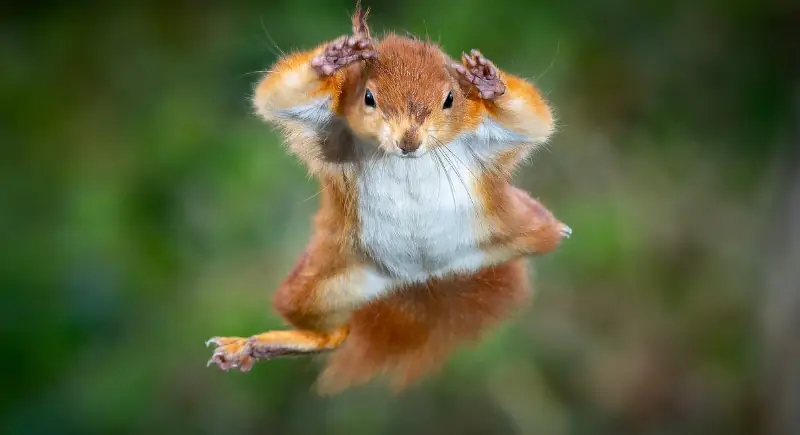
Squirrels survive huge falls because of physics. They are small, lightweight animals, which means gravity pulls on them with less force than it would on larger animals. That alone reduces the impact when they hit the ground. Then their body shape does the rest of the work.
When falling or jumping down, squirrels spread their legs outward. This increases air resistance, slightly slowing the fall. It works on the same basic principle as a parachute or a skydiver spreading their arms and legs.
That wide-limb position also spreads impact force across the body rather than concentrating it on a single joint. Instead of crashing onto a single paw or limb, they hit the ground with their body acting like a shock absorber. If they land on soil, grass, or leaves, they usually walk away without injury, even from surprisingly high drops.
There is another survival advantage that often gets overlooked. That low, wide landing position lets them move immediately. A squirrel does not land and pause. It lands and runs, which is especially useful when predators like hawks, foxes, or coyotes are nearby. Speed alone is not their only defense. The ability to recover instantly after impact is just as important.
The Viral Photos That Fooled Everyone
Pop culture comparisons get even funnier when you look closely at some viral photos. Biologists have pointed out that many images that look like “superhero landings” are actually squirrels scratching themselves.
The raised back foot, which often looks dramatic in photos, is usually a grooming motion. Many mammals use their back legs to scratch their sides or bellies. In a still photo, that movement can look like an action pose, especially if the front paws are braced on the ground. So in many cases, the internet accidentally turned a normal grooming moment into a superhero meme.
The Real Superpowers Squirrels Actually Have
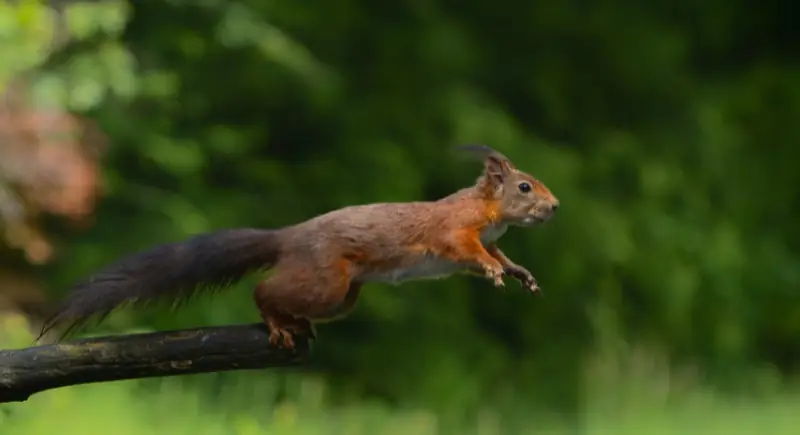
Even without the memes, squirrels still have impressive real-world abilities. Tree squirrels can run up to about 20 miles per hour and change direction quickly thanks to flexible ankles that rotate almost 180 degrees. That allows them to run down trees headfirst, something most animals cannot do. They can also jump vertically about 5 feet and clear gaps between branches that are over 10 feet wide.
Flying squirrels take things even further. They do not actually fly, but they glide using a skin membrane called a patagium that stretches between their limbs. Many species can glide distances close to a football field length under the right conditions.
Why The Comparison Still Feels Right
Even without the meme exaggeration, squirrels are fast, agile, and incredibly durable for their size. They survive falls that would seriously injure larger animals. They move through trees like parkour athletes and react to danger faster than most predators can adjust.
They are not really striking a pose for the camera. They are surviving, moving, and doing what squirrels have been doing long before comic books or action movies existed. The science explains the mechanics, but the visual is still pretty cool.





