

There’s something oddly hypnotic about watching a giraffe move, like it’s gliding through the air on stilts. Still, a lot of what people believe about them misses the mark. This list clears up the biggest mix-ups and highlights what giraffes are like once you look beyond the height.
Giraffes Aren’t Quiet Animals
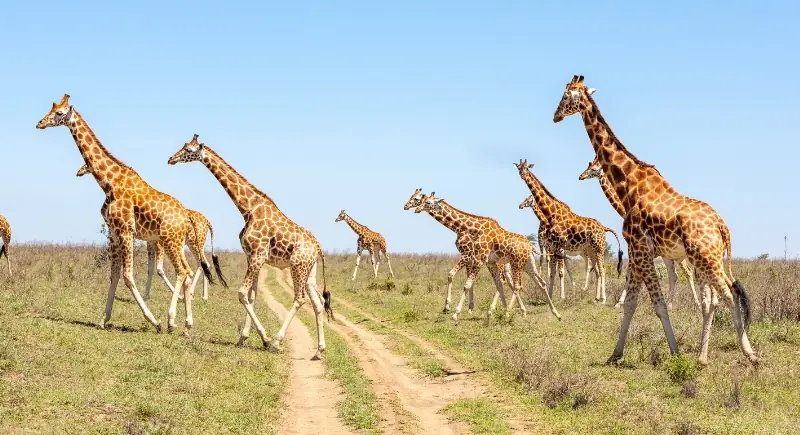
Contrary to popular belief, giraffes are not mute. They communicate through various vocalizations, including hums, snorts, hisses, and growls. Scientists have recorded soft hums at night, likely serving as a means of communication when visual signals are ineffective in the dark. These sounds help them convey warnings, courtship cues, and mother-calf calls.
Their Tongues Are Remarkably Distinctive
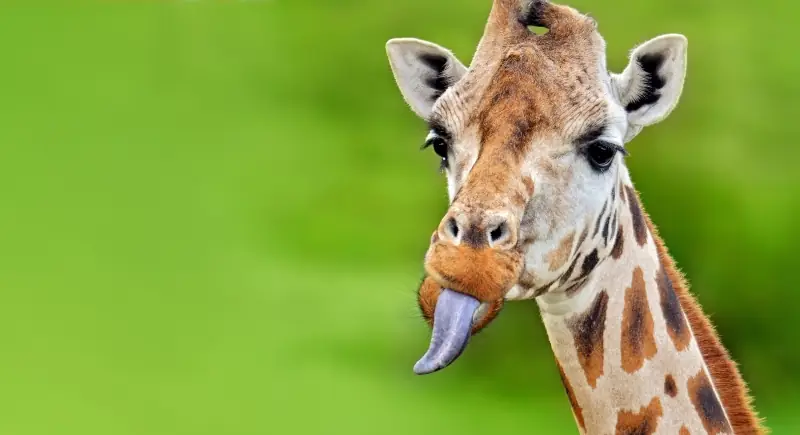
Giraffes possess prehensile tongues, around 18 inches long, uniquely colored in a bluish-purple hue. This dark pigmentation offers crucial protection against sunburn while they browse on leaves for extended periods. Their remarkable dexterity also allows them to strip foliage from thorny branches.
Giraffe Hearts Exhibit Extraordinary Strength
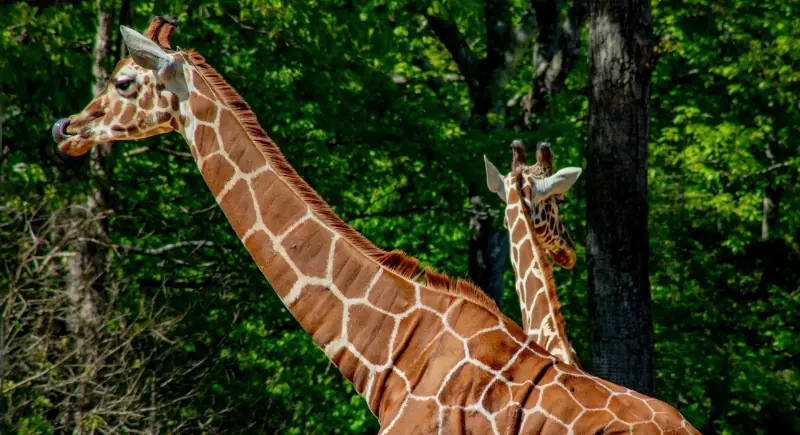
Pumping blood to a brain located far above the heart requires immense power. A giraffe’s heart can weigh up to 25 pounds with exceptionally thick ventricular walls. This muscular organ generates a resting blood pressure of approximately 280/180 mmHg, nearly double that of a human, to ensure that vital oxygen reaches the brain effectively.
A Giraffe’s Spots Serve Multiple Functions
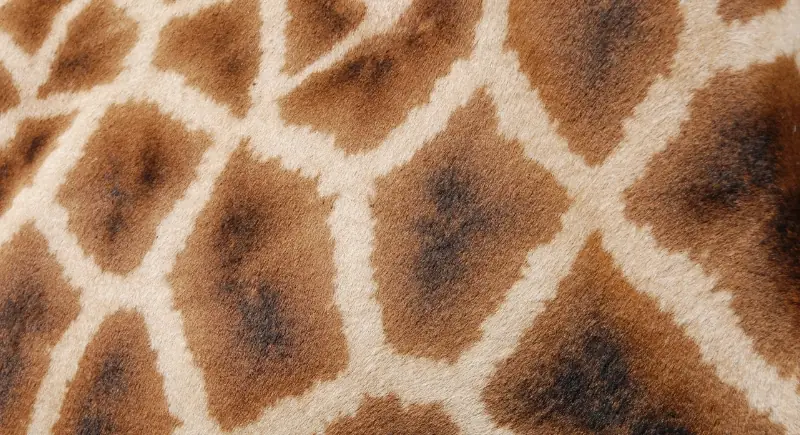
A giraffe’s unique spot patterns act as individual identifiers, much like human fingerprints. These dark patches play a vital role in thermoregulation. Intricate networks of blood vessels beneath the spots facilitate heat dissipation and help giraffes manage their body temperature in the scorching savanna environment.
Giraffes Don’t Drink Water Daily
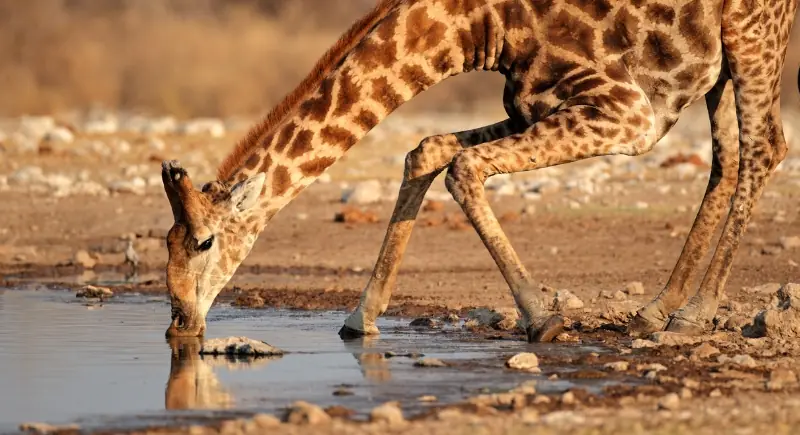
While water is essential, giraffes typically drink only once every few days. They obtain a significant portion of their hydration from the dew-rich foliage they consume. Their long neck forces them into a vulnerable and awkward posture when drinking by requiring them to splay their legs wide or kneel to reach the water source.
Giraffes Can Indeed Swim
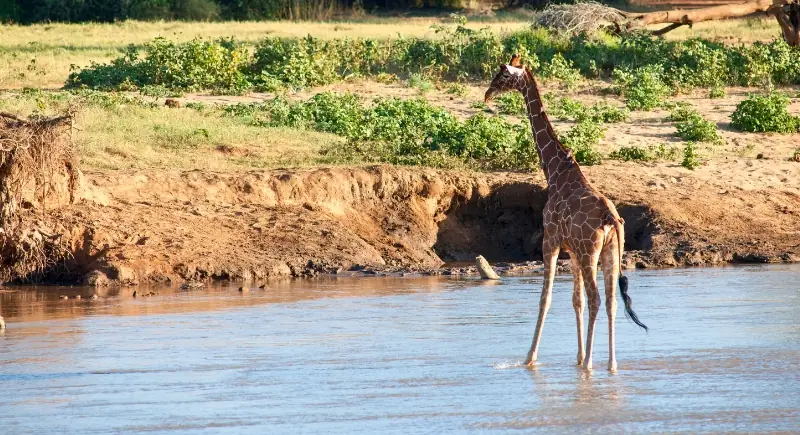
Despite a long-held assumption that giraffes cannot swim, scientific models have demonstrated their ability to float in deep water. Their unique anatomy, while making movement in water slow and somewhat awkward, does not physiologically prevent them from swimming. They generally avoid rivers due to the effort involved, but they are not incapable.
Calves Are Mobile Soon After Birth
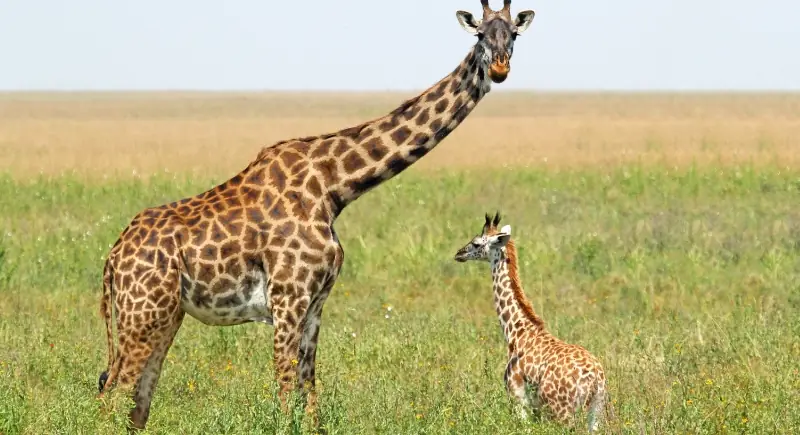
Giraffe calves are born remarkably developed, standing about 6 feet tall and weighing around 220 pounds. Within an hour of birth, they can stand and walk, a crucial survival mechanism. This rapid mobility is essential for avoiding predators, as staying on the move is key to their safety in the wild.
Giraffes Possess the Same Number of Neck Bones as Humans
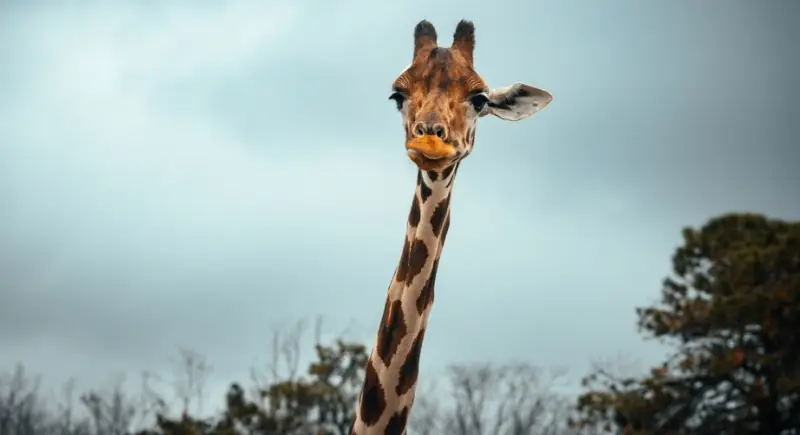
Despite their incredibly long necks, giraffes share the same number of cervical vertebrae as humans and most other mammals: seven. However, each individual vertebra in a giraffe’s neck is massively elongated and reaches up to 11 inches in length. These stretched bones provide the iconic height necessary for reaching treetops and scanning for danger.
They Sleep for More Than Just Minutes
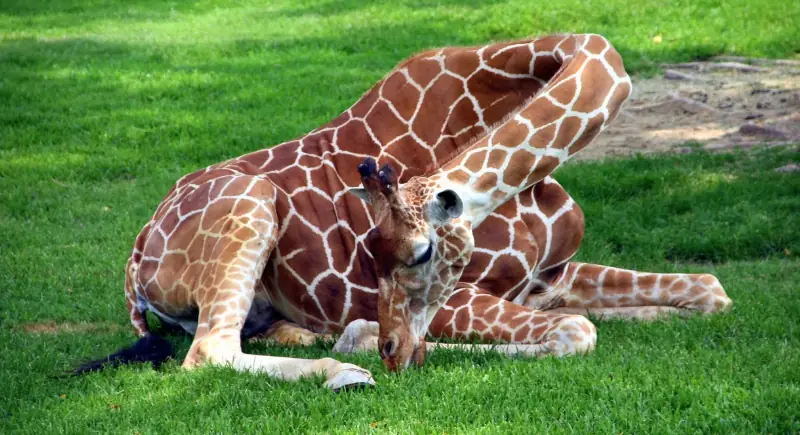
Giraffes actually sleep for approximately 4.6 hours each day, typically cycling through a series of short naps, mostly under 35 minutes. They frequently rest while standing to maintain vigilance, but they also lie down for brief periods of deeper sleep when conditions feel safe, often curling their neck back to rest their heads on their hindquarters.
Giraffes Consume Significant Amounts of Food

As large herbivores, giraffes are prolific eaters, capable of consuming up to 75 pounds of vegetation daily, primarily acacia leaves. Their digestive system includes a four-chambered stomach that allows them to chew cud like cows.
Giraffe Lineage Originated Beyond Africa

While modern giraffes are currently found exclusively in Africa, their evolutionary lineage traces back to southern-central Europe around 8 million years ago. Early giraffe ancestors migrated into Africa much later, where the expansive savanna environments played a crucial role in shaping their subsequent evolution into the species we see today.
Giraffes Don’t Exclusively Sleep Standing Up
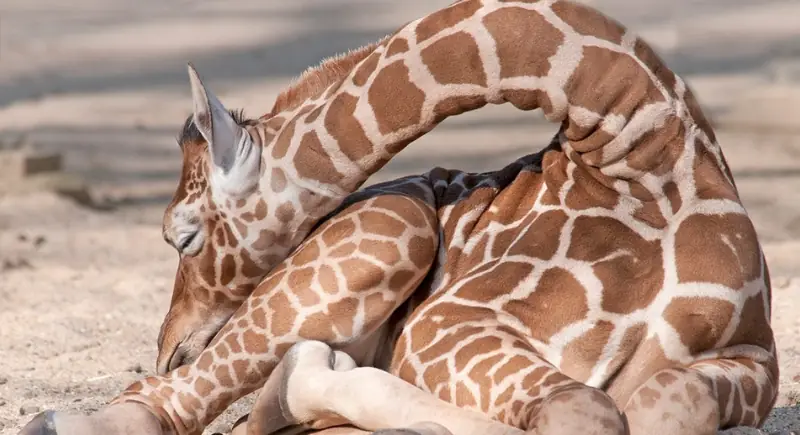
While standing naps are common for vigilance against predators, giraffes do lie down for deeper sleep when they feel secure. In captive environments, where predator threats are absent, they have been observed engaging in deep sleep for extended periods, sometimes nearly six hours, occasionally using their hips as a natural pillow.
Multiple Giraffe Species Exist

Recent genetic research has revolutionized our understanding of giraffe taxonomy by revealing at least four distinct species: the Northern, Southern, Reticulated, and Masai giraffes. The genetic differences among these groups are comparable to those seen between some bear species.
Giraffes Aren’t Always Peaceful
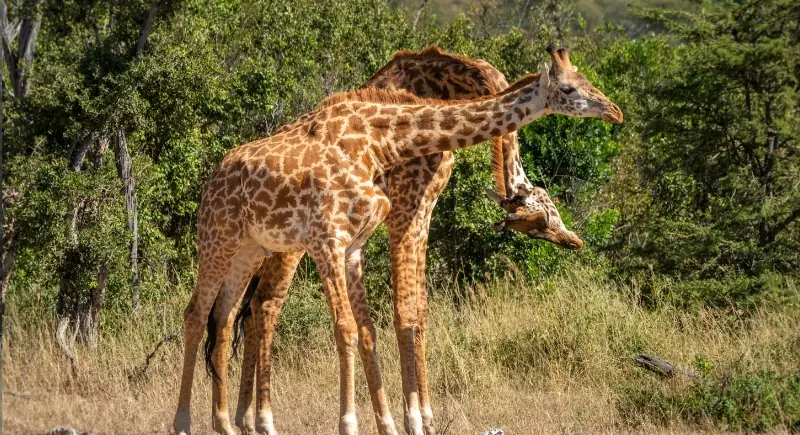
Male giraffes engage in a behavior known as “necking” to establish dominance and win mating rights. During these bouts, they swing their long necks like sledgehammers, using their ossicones (horn-like structures) to strike opponents with considerable force. These fights can last minutes and range from gentle sparring to intense, bone-jarring clashes. Despite the violence, serious injury is uncommon, and the winner usually earns priority access to nearby females.
Wild Giraffe Populations Are Declining

Sadly, giraffe populations are not thriving in the wild. Their numbers have plummeted significantly, dropping from an estimated 155,000 in 1985 to under 100,000 today. Habitat loss, illegal hunting, and the impacts of climate change have contributed to a devastating 40% decline.
Giraffes Run on Serious Pressure
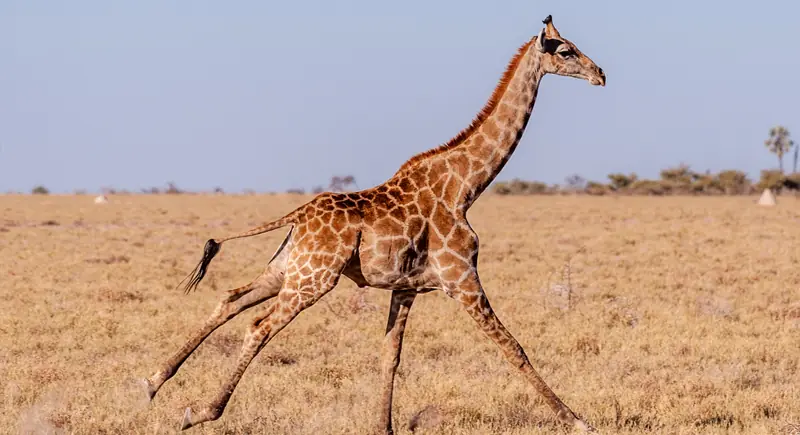
A giraffe’s heart is not just big for show. To push blood up that long neck, it has to work under pressure that would alarm a doctor in a human exam room. Giraffe blood pressure can reach about 280/180 mmHg. Wild, right? For them, it is normal life.
They Give Birth Standing Up
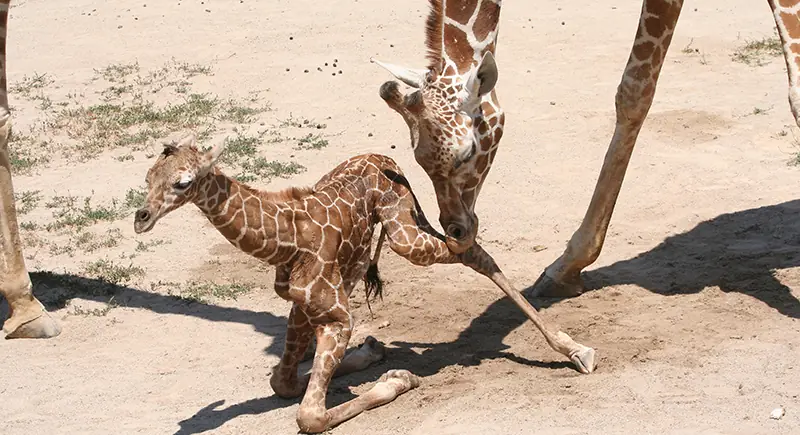
A giraffe calf does not get a soft landing into the world. The mother gives birth while standing, and the newborn drops to the ground before trying those long legs. It sounds rough but it works. Within a short time, the calf can stand, walk, and begin keeping close to its mother.





