
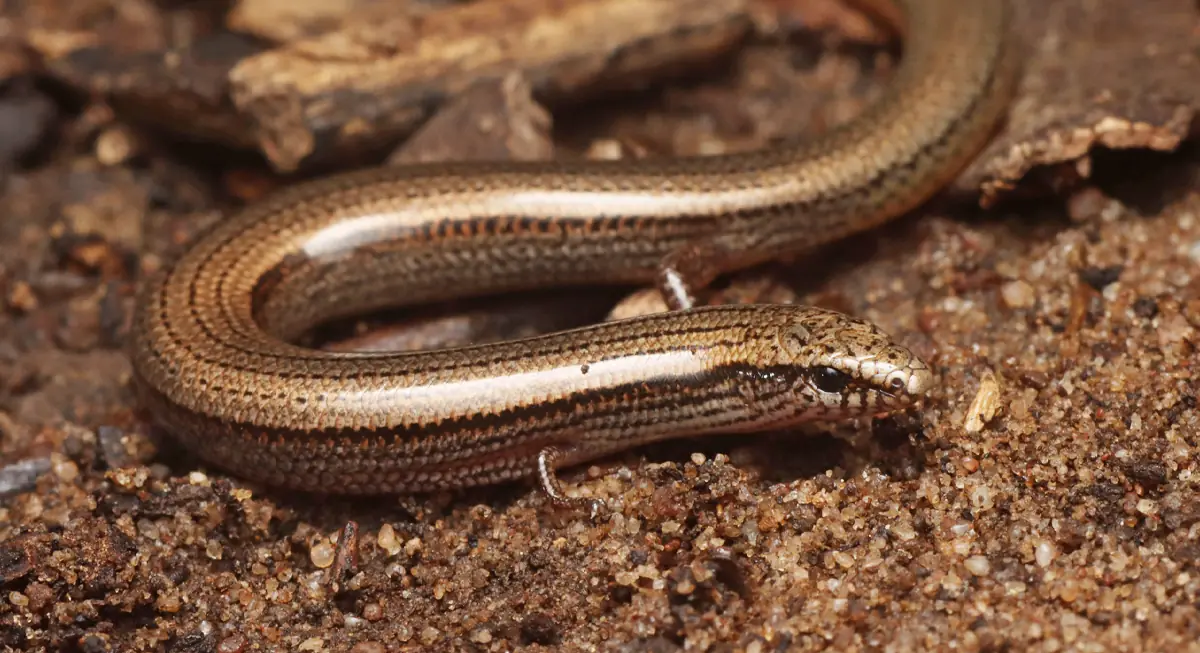
Biologists studying an Australian lizard observed something no one had ever documented in a vertebrate before. A single female produced offspring through two different reproductive methods during the same pregnancy. This finding challenges long-held assumptions about how animal reproduction works and suggests these biological categories may be far less rigid than scientists once believed.
Most vertebrates stick to one reproductive strategy: eggs or live birth. But the three-toed skink has never fully committed to that script. Some populations lay eggs, while others give birth to live young. The split typically aligns with geographical boundaries across eastern Australia. That alone made the species fascinating. Then one female changed the conversation.
During routine observation, researchers documented a pregnancy that resulted in both eggs and a live baby, from the same mother and the same reproductive cycle. No vertebrate had ever been recorded doing that before. The eggs developed normally, and one hatched into a healthy offspring. Weeks later, a live baby arrived.
Why Scientists Took This Seriously
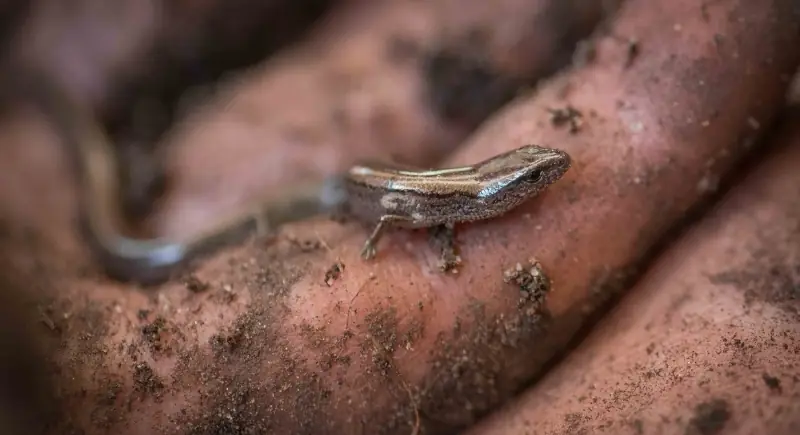
Biologists track evolutionary shifts by looking for patterns across generations. Seeing a potential transition happen inside a single pregnancy is almost unheard of. Evolution usually leaves fossils, genetic evidence, or population trends behind as clues, but this case provided a live demonstration.
The skink exhibited traits associated with both egg-laying ancestors and live-bearing descendants simultaneously. Researchers already knew that reptiles have shifted between egg-laying and live birth more than 150 times across evolutionary history. This skink offered something rarer: a chance to study the mechanics of that shift as it happens.
The Advantage of Staying Flexible
Adaptability is emerging as a key explanation. Carrying embryos internally offers protection during cold or dry conditions. Laying eggs reduces physical strain on the mother and allows for faster recovery. Each strategy involves clear trade-offs.
A species that can alternate between these approaches is better equipped to cope with unstable environments than one restricted to a single method. This flexibility may help explain why this skink is able to survive across such varied terrain. The shift does not involve conscious choice. Instead, it likely reflects how the reproductive system responds to internal developmental signals.
A Species Caught Between Eras
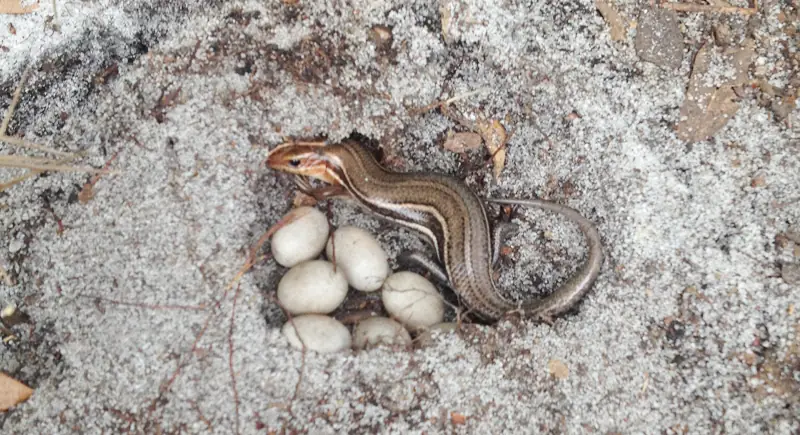
The structure of the skink’s uterus adds another aspect to this. When it lays eggs, embryos are already near full development, so hatching happens quickly. That setup blurs the line between egg-laying and live birth even further. Some scientists think this suggests the species sits close to a branching point.
Others argue it may represent a rare reversal, with live-bearing populations giving rise to egg-laying ones. Both possibilities challenge long-held assumptions about how irreversible evolutionary paths really are. No one claims to know which direction this species will take, and that uncertainty is part of the appeal.
This skink did not invent a new trait. It revealed how old traits can overlap, pause, and resurface. For evolutionary biology, that is gold. It turns abstract theory into something observable. For everyone else, it’s just proof that nature does not always wait on long timelines to surprise us.





