
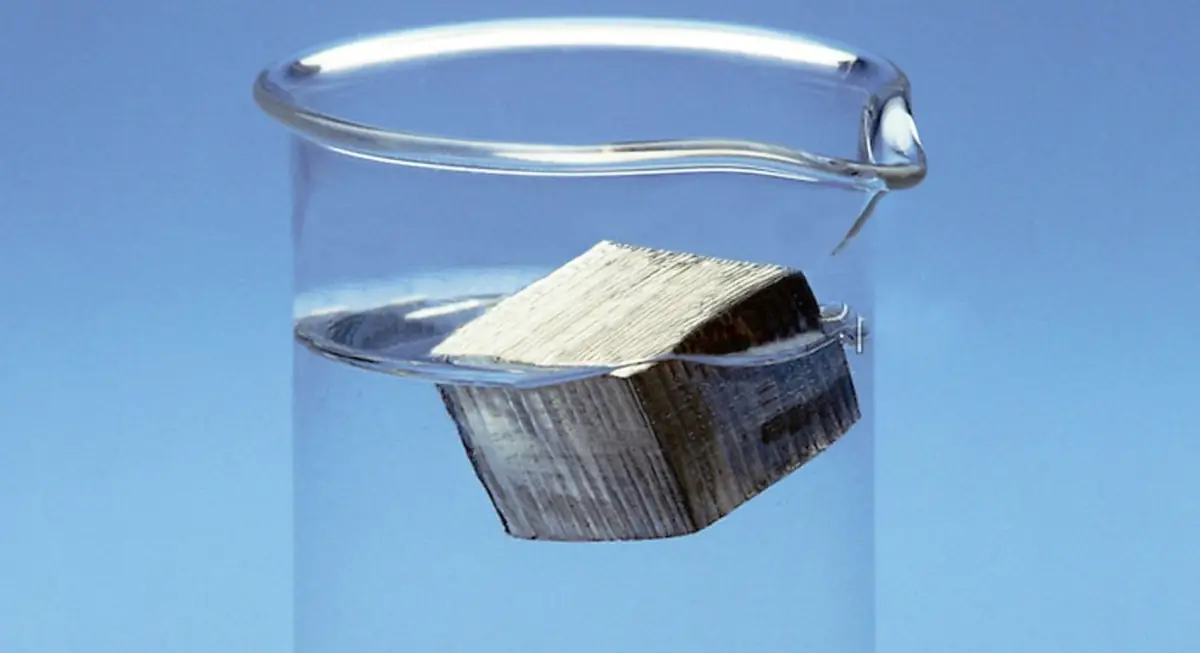
Most of us grow up assuming metal sinks. Toss a coin or a bolt into water, and it drops straight down, so the rule feels settled. That is why researchers managed to surprise people when they showed aluminum that stays afloat instead of disappearing beneath the surface.
Scientists have designed aluminum structures that keep floating even after being punctured with holes. Their idea came from an unexpected source: a spider that lives almost entirely underwater and uses trapped air to survive.
The Spider Trick That Changed Materials Science
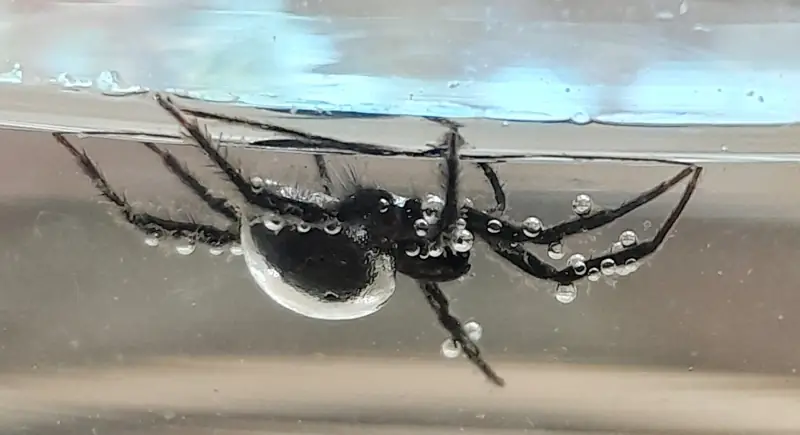
The key inspiration came from diving bell spiders. These spiders live underwater but still need oxygen. To solve that problem, they trap air bubbles against their bodies using extremely fine hydrophobic hairs. They also build underwater web chambers filled with air, creating a personal oxygen supply.
Scientists realized that the same air-trapping idea could be copied into metal structures. Instead of spider hairs, researchers used advanced lasers to carve microscopic grooves and patterns into aluminum surfaces.
These tiny structures trap air in place and prevent water from pushing it out, resulting in metal that works very differently in water than normal metal would.
How Scientists Made Metal That Refuses to Sink
Researchers at the University of Rochester used femtosecond laser pulses to etch micro and nanoscale patterns into aluminum. These patterns create what scientists call superhydrophobic surfaces, meaning water strongly repels from them.
But superhydrophobic surfaces alone were not enough for long-term floating. The major breakthrough came when researchers created enclosed air trapping structures inside the metal. When submerged, air stays locked inside these compartments.
Surface tension helps keep water from entering, while the trapped air provides buoyancy. Even when the metal is pushed underwater or damaged, enough air remains trapped to keep the structure floating.
In lab tests, aluminum tubes stayed buoyant for weeks, even in rough water conditions.
Why Even Punctured Metal Still Floats
Normally, once water enters a floating object, it sinks. This new design changes that rule. The internal air chambers divide the structure so that even if one section loses air, others keep the object buoyant.
Scientists tested this by punching holes into the metal structures. The tubes still floated. In some experiments, structures stayed submerged under force for months and then immediately returned to the surface when released.
That level of durability is what makes researchers excited about real-world applications.
Nature Has Been Solving This Problem for Millions of Years
The spider was not the only inspiration. Fire ants also influenced the design. During floods, fire ants link together and trap air between their bodies to form floating rafts that can survive on water for days.
These natural examples show that air trapping combined with water-repelling surfaces can create reliable buoyancy systems. Scientists are now applying that principle to materials engineering.
What This Could Mean for Ships, Energy, and Ocean Tech
The potential applications are huge. Engineers are exploring whether these structures could help build ships that remain afloat even if damaged. Floating platforms could help generate electricity from ocean waves. Durable floating sensors could stay deployed in the ocean for long periods.
In simple terms, it works more like a boat hull than a solid metal block. The difference is that this design keeps working even if the structure gets damaged.
The technology can likely be scaled up. Laser systems used to create the micro patterns are already far more powerful than earlier versions, making larger production possible.





