
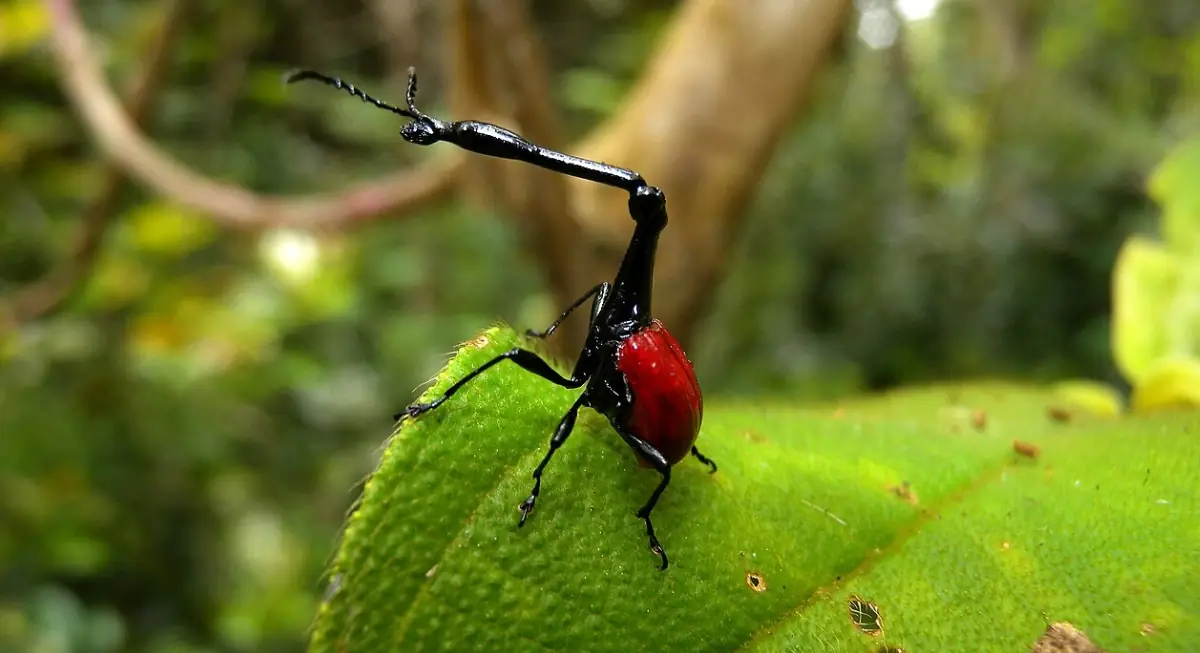
Insects usually get overlooked, but a few species go so far off the biological script that it’s hard not to be curious. Some have eyes perched on stalks, legs used as display tools, or bodies so fluffy they resemble small animals. These unusual traits make them difficult to place at first glance. Here’s a look at ten insects that sit well outside the ordinary.
Venezuelan Poodle Moth
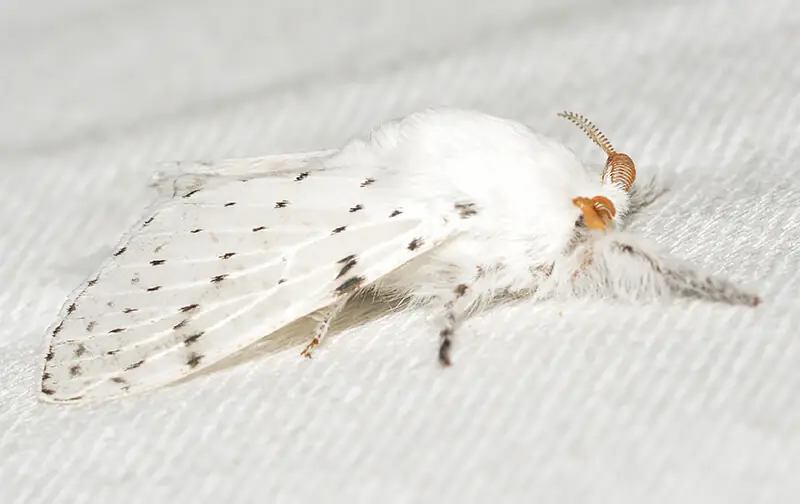
The Venezuelan poodle moth, discovered in 2009, baffled scientists and the internet alike. With its white, fuzzy scales, it looks more like a stuffed animal than a real insect. Zoologist Dr. Arthur Anker spotted it in Gran Sabana, Venezuela, but details about its behavior and biology remain mostly unknown.
Giraffe Weevil
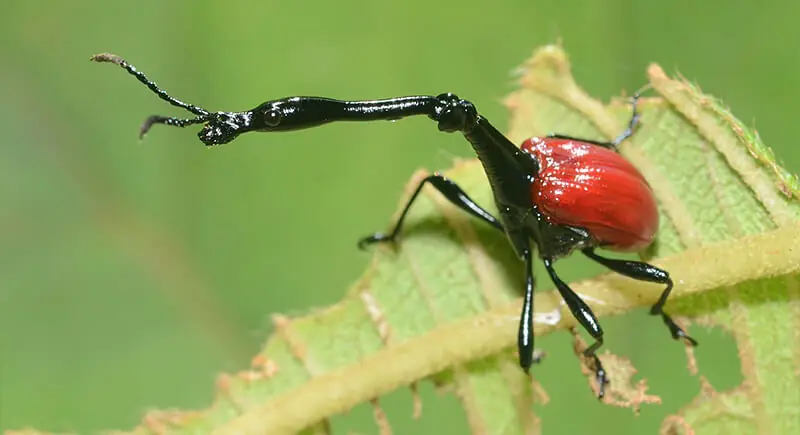
Male giraffe weevils have dramatically elongated necks, often as long as or longer than their bodies. The elongated neck helps them joust with rivals during mating season. Females use plant leaves to wrap and roll their eggs into protective pods, slicing them free so they fall to the forest floor.
Thorn Bug
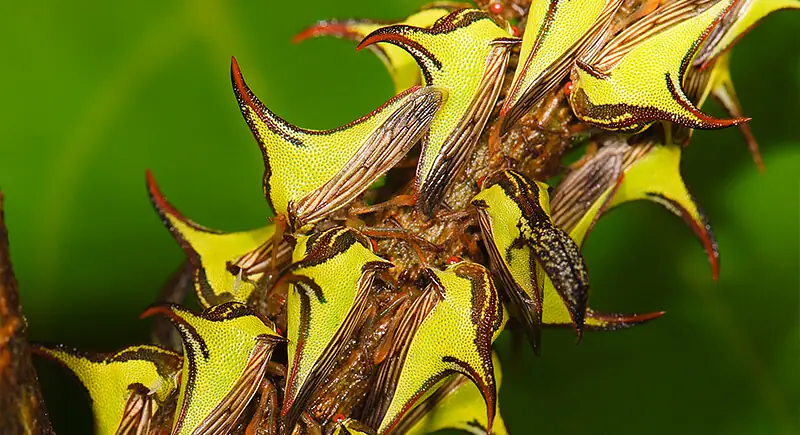
This insect pulls off a convincing thorn disguise, complete with a sharp spine-like projection rising from its back. These bugs pierce plant stems to sip sap, often in large, noisy groups. Their odd shape helps them avoid predators, but farmers consider them pests.
Stalk-Eyed Fly
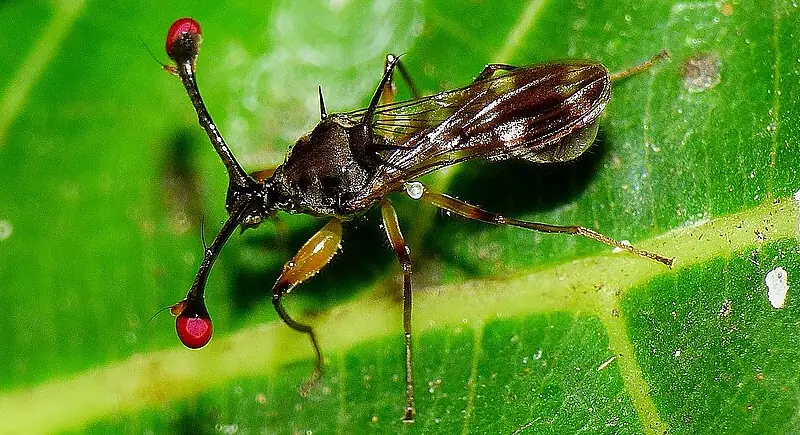
These flies don’t keep their eyes where most insects do. Males grow long lateral stalks from the sides of their heads, with bright red eyes sitting on the ends like tiny cherries. It’s all about competition—females often choose mates with the widest spacing. Males use their rigid eye stalks as visual signals during rival confrontations.
Lanternfly
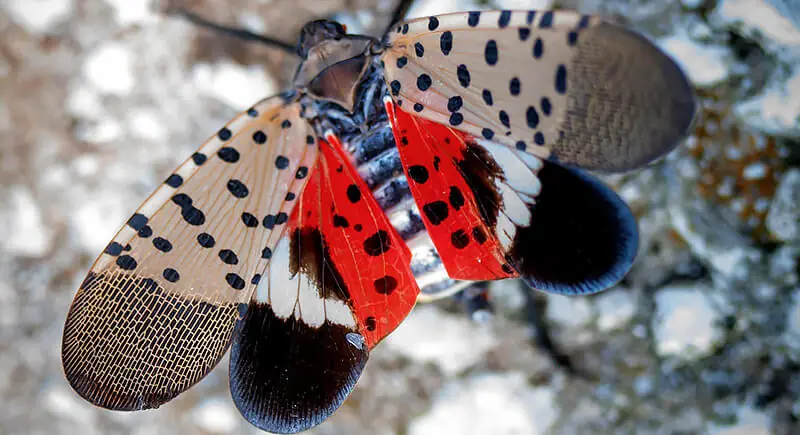
Despite its name, the lanternfly doesn’t glow. The swollen “lantern” on its head led early naturalists to believe otherwise. Some species have heads shaped like peanuts or snouts. Their excess sugar intake creates a constant stream of waste, which specialized moths sometimes collect midair. The headgear’s true purpose is still up for debate.
Planthopper Nymph
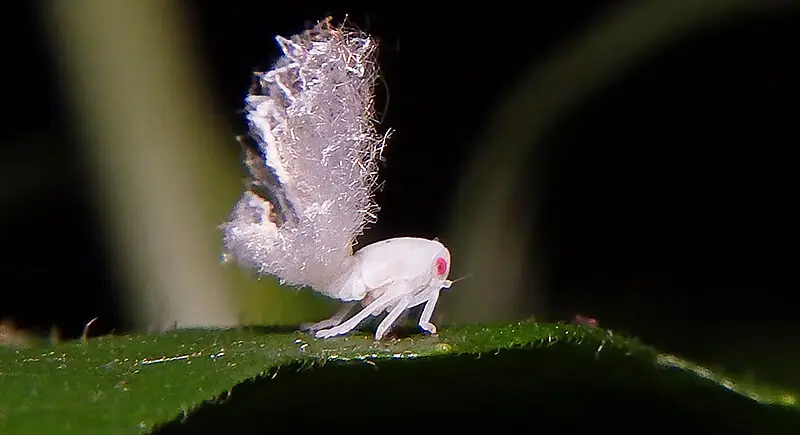
These young insects grow intricate waxy tails that can resemble feathers, fungi, or fiber optics. The structures may deter predators or distract them long enough for an escape. Some species even use these secretions to attract ants, which in return offer protection.
Devil’s Flower Mantis
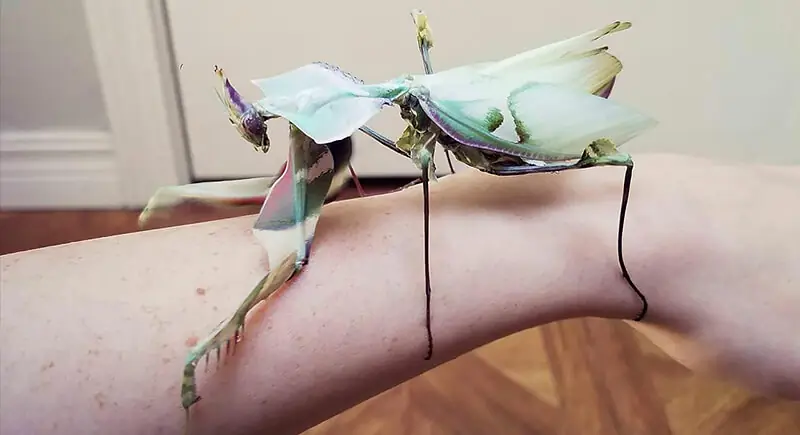
Native to East Africa, devil’s flower mantis camouflages itself as an orchid, then waits motionless for unsuspecting prey. Its wings flash with warning colors when threatened, but when hunting, it’s nearly invisible. The mantis grows large—up to 5 inches—and prefers other insects that mistake it for a real flower.
Giant Weta
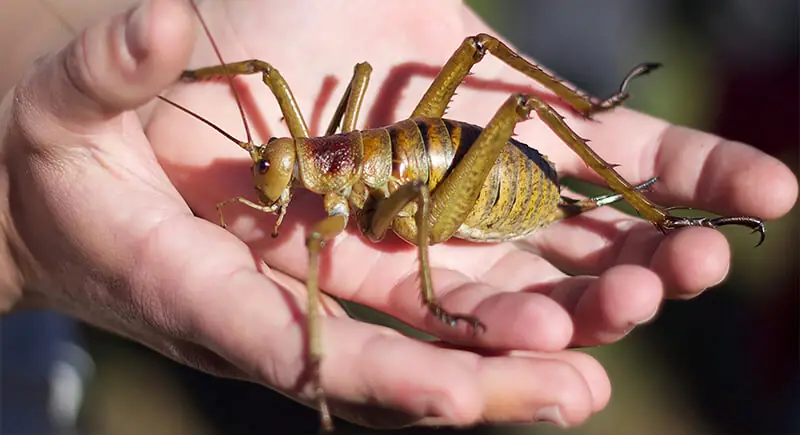
New Zealand’s giant weta is a large cricket relative found mainly on protected offshore islands. Some individuals can weigh more than a sparrow and rank among the heaviest insects known. They do not fly and move slowly. Conservation efforts focus on keeping their habitats free from introduced predators.
White Beetle
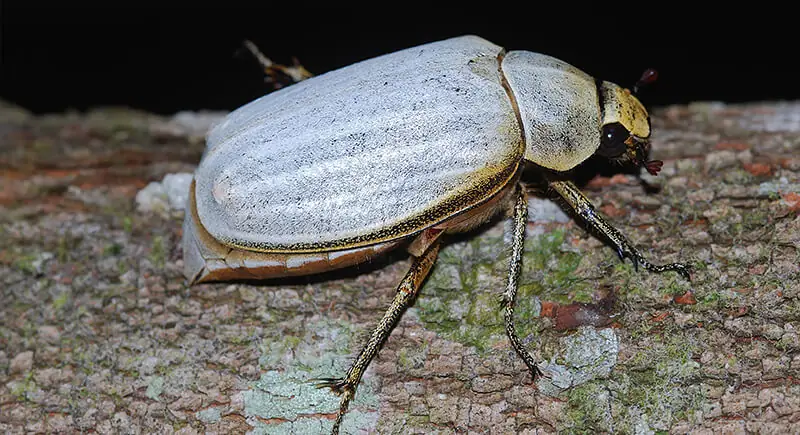
The Cyphochilus beetle is famous for its color. Its body is covered in ultra-white scales made of randomly arranged filaments. These reflect light in a way that makes the beetle appear brighter than paper. Its structure has inspired researchers studying more sustainable, non-toxic white pigments for applications such as paint, paper, and cosmetics.
Flag-Footed Bug
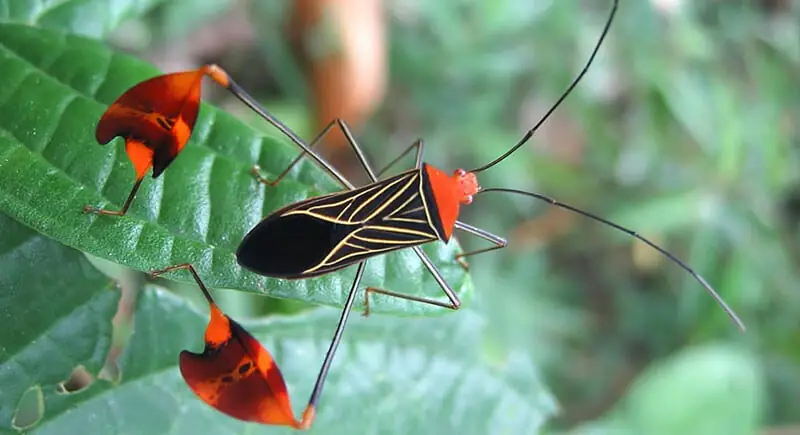
No one could accuse this insect of being subtle. Males of the flag-footed bug species flash brightly colored, leaf-like extensions on their hind legs during mating rituals. If a predator bites, the insect can drop the whole leg and scurry off. They spend their lives feeding on plant sap and avoiding becoming someone else’s lunch.





